
Ashburton | Bovey Tracey | Brixham | Buckfastleigh | Dawlish | Exeter | Teignmouth | Totnes | Torquay | Paignton | Newton Abbot
07950 609768
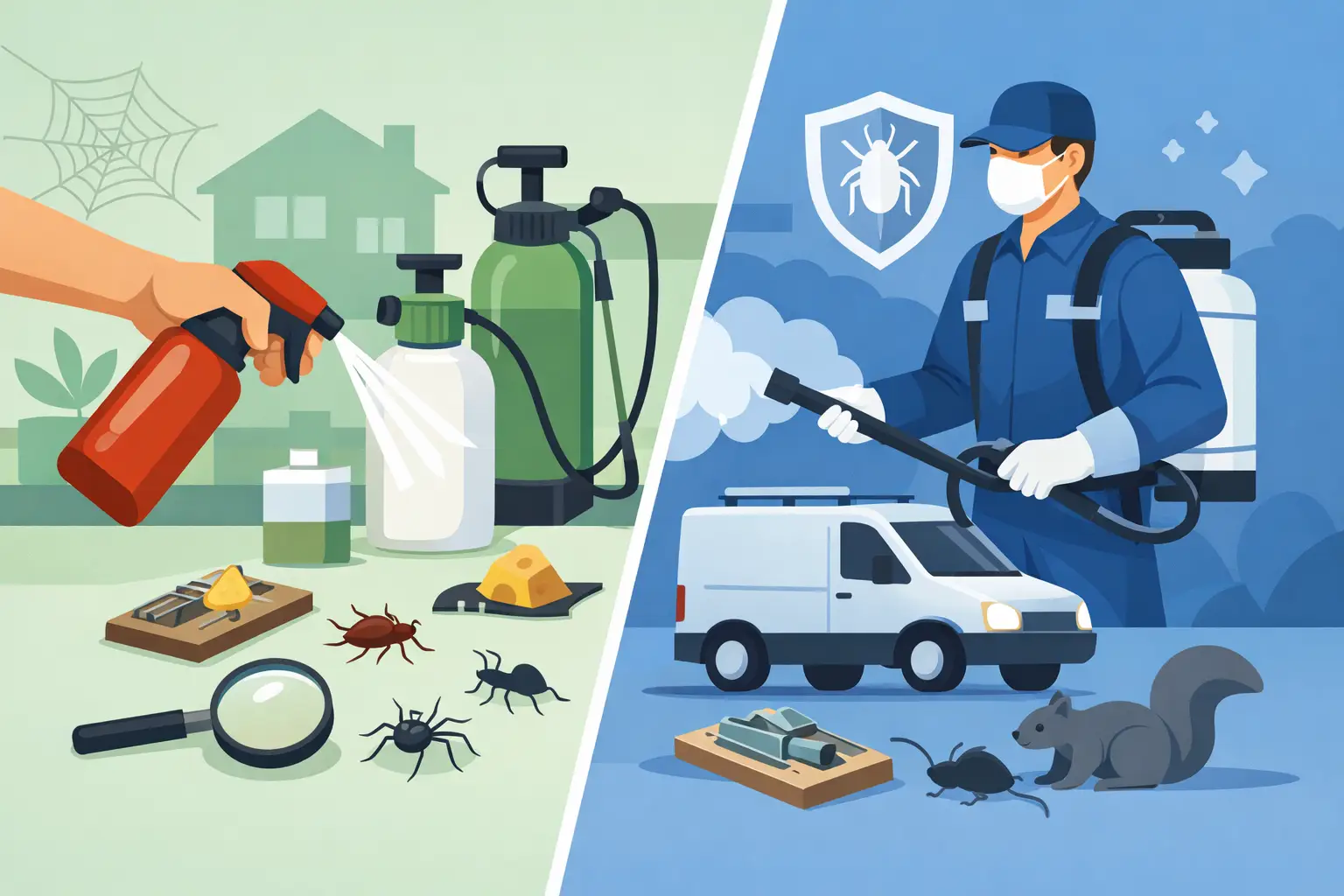
A rat running behind the kitchen units, a wasp nest above the back door, or bites appearing after a night in bed can make anyone reach for the nearest spray or trap. When weighing up DIY pest control versus professionals, the right choice depends on the pest, the scale of the problem, and how confident you are that you have found the true source.
A small, isolated issue may be manageable with sensible home measures. But pests rarely stay isolated for long. The cost of a DIY attempt can quickly outweigh the cost of professional treatment when activity continues, damage spreads, or the wrong method makes the problem harder to solve.
DIY action is often worthwhile as a first response to a minor problem, particularly where there is a clear cause and no sign of an established infestation. Ants trailing in through one gap, a single mouse sighting with no droppings, or a few plant pests on a garden crop may respond well to practical housekeeping and carefully selected treatments.
Start with the basics. Remove accessible food, clean up crumbs and spillages, keep bins closed, store dry goods in sealed containers, and reduce clutter where pests can hide. Outside, clear fallen fruit, manage compost properly, and check that vents, pipes and damaged brickwork are not providing an easy route indoors.
For some pests, a correctly placed trap or approved shop-bought treatment can deal with a small amount of activity. Read the label in full, follow the stated safety instructions, and keep products away from children, pets and non-target wildlife. More product does not mean better control. Overusing sprays, powders or bait can create unnecessary risks and may simply move pests to another part of the property.
DIY is also useful after a professional visit. Good prevention is a joint effort. Once the immediate issue is under control, sealing entry points, improving storage and maintaining a clean environment can greatly reduce the chance of a repeat problem.
The main difficulty with home treatment is that the visible pest is often only part of the problem. One mouse may point to a route behind a cupboard or beneath the floor. A few fleas can mean eggs and larvae are developing in carpets, pet bedding or soft furnishings. A nest in a loft, wall void or outbuilding may be far larger than it first appears.
Identifying the pest accurately matters. Different species behave differently, feed differently and need different control methods. Treating the wrong pest wastes time and money. It can also mask the evidence a specialist needs to trace the source.
Timing is another issue. Pest activity can rise and fall, which may make a DIY product appear successful when the underlying infestation is still present. Rodents may avoid a poorly positioned trap. Insects may reappear when newly developing stages emerge. A treatment that only deals with what is currently visible is rarely enough for a well-established problem.
There is also the question of access. Pests often nest in roof spaces, wall cavities, drains, under decking, farm buildings and other difficult areas. Trying to reach them without the right equipment can damage the property or put you at risk. Ladders, lofts, contaminated spaces and defensive stinging insects are not jobs to take lightly.
Professional pest control is not simply about using stronger products. A proper service begins with inspection. The aim is to establish what pest is present, where it is active, what is attracting it, how it is gaining access and whether there are risks to people, pets, livestock, food or the building itself.
That diagnosis shapes the treatment. In a home, the priority may be discreet, safe control around children or animals. In a café, rental property, farm or holiday let, the work may need to consider food safety, records, tenant communication, business continuity or livestock welfare. There is no one-size-fits-all answer.
A professional can also monitor progress rather than relying on a single treatment. This is particularly valuable with rats, mice, bed bugs, fleas, squirrels, moles and recurring bird issues, where follow-up visits or changes to the control plan can be essential. The objective is not merely to reduce sightings for a few days. It is to deal with the cause and give clear advice to prevent a return.
For commercial and agricultural clients, professional support brings additional reassurance. Pest activity can affect stock, stored feed, customer confidence and compliance. Documented inspections, planned monitoring and prompt action are usually far more cost-effective than waiting for a problem to become obvious.
Some jobs are best passed on straight away. If you have repeated rodent sightings, noises in walls or ceilings, chewed wiring, droppings in food areas, or signs that pests are moving through several rooms, professional help is sensible. Rodents can contaminate surfaces, damage insulation and wiring, and establish themselves quickly if access points are not found.
Bed bugs and fleas also need a thorough approach. Their life cycles mean that missing part of the problem can lead to fresh activity after an apparently successful treatment. Before buying several products, it is worth getting the pest identified and the treatment plan right.
Nests near entrances, rooflines, lofts or working areas need careful handling. Disturbing them can increase the risk of stings and may leave the nest active. The same applies to pests in difficult-to-reach locations, where a quick fix from ground level is unlikely to solve the issue.
Call for advice promptly if you are a landlord, manage a holiday property, run a food premises, or have a pest issue around livestock, feed stores or crops. Delays can lead to complaints, damage, lost income and a larger treatment area.
DIY can appear cheaper because the first outlay is small. A trap, aerosol or bait station costs less than a visit from a specialist. But the real comparison is between the cost of solving the problem and the cost of repeatedly trying to manage it.
A failed DIY attempt may mean buying more products, replacing contaminated food, repairing chewed materials, cleaning affected rooms and eventually arranging treatment anyway. For a business, it may also mean staff time, disruption, negative reviews or lost trade.
Professional treatment is most valuable when it prevents that escalation. You should expect a clear explanation of what has been found, what treatment is recommended, any preparation required, and the steps needed after the visit. Straight answers matter, especially when the issue is affecting your home, tenants, customers or animals.
Ask three straightforward questions. Do you know exactly what pest you are dealing with? Is the activity limited and easy to reach? Can you treat it safely without putting people, pets, livestock or the property at risk?
If the answer is yes to all three, measured DIY action may be reasonable. Keep an eye on the situation and do not assume one quiet day means the issue has gone. If activity continues, spreads or returns, move quickly rather than changing products at random.
If you are unsure of the pest, cannot find the source, or need the problem handled discreetly and properly, professional help is the better route. Elimipest South West provides practical, tailored pest control across homes, businesses, farms and estates, with the experience to deal with the problem in front of you and the reasons behind it.
The best time to act is when the signs first appear. A clear plan now is usually far simpler, safer and less expensive than dealing with a full infestation later.


