
Ashburton | Bovey Tracey | Brixham | Buckfastleigh | Dawlish | Exeter | Teignmouth | Totnes | Torquay | Paignton | Newton Abbot
07950 609768
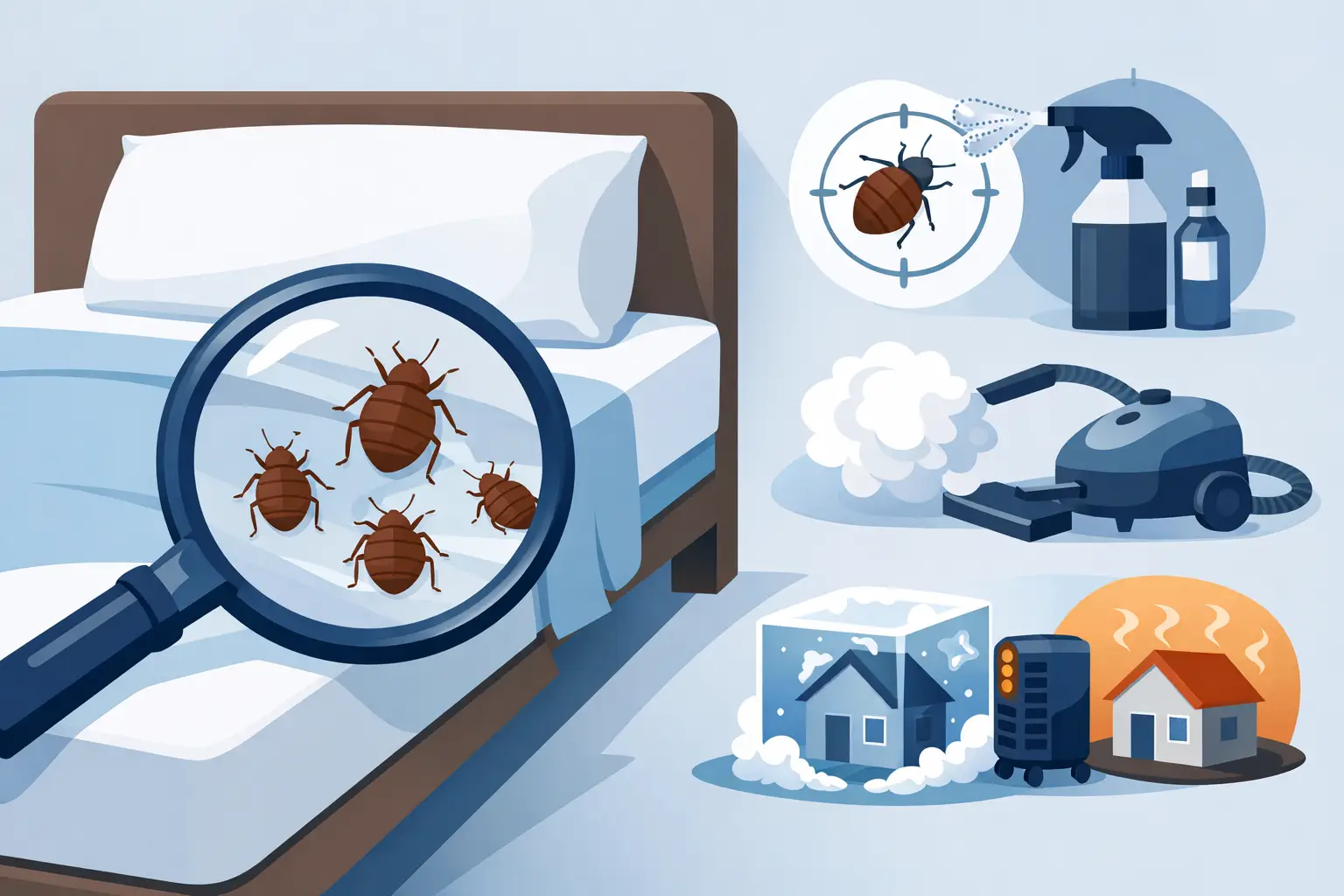
Waking with itchy marks is worrying enough. Finding a small, flat insect near the bed or dark spotting on a mattress seam can make it feel far more urgent. So, are bed bugs hard to eliminate? They can be, but a confirmed infestation is not a lost cause. The difficulty comes from their hiding habits, their eggs and the fact that rushed or incomplete treatment often leaves enough behind for the problem to start again.
Bed bugs are not a sign that a home is unclean. They are usually brought in on luggage, second-hand furniture, clothing or belongings after travel or visitors. Once indoors, they can settle quietly in a bedroom, guest room, flat, holiday let or staff accommodation before anyone realises they are there.
Bed bugs feed mainly at night and spend the rest of their time hidden in narrow gaps. The mattress is only one possible location. They may be tucked into the bed frame, headboard, skirting boards, bedside furniture, curtain folds, picture frames, electrical fittings or loose wallpaper. In a larger infestation, they can move beyond the bedroom.
Their eggs make matters more complicated. An adult insect may be dealt with during an initial treatment while eggs hidden nearby remain protected. Those eggs can hatch later, which is why follow-up visits are often part of a proper control programme. Stopping after the first signs disappear is one of the main reasons bed bugs return.
They are also easy to misidentify. Fleas, carpet beetles and other household insects can be mistaken for bed bugs, while bites alone cannot confirm the cause. People react differently to bites, and some people have no visible reaction at all. A reliable inspection saves time, expense and unnecessary treatment.
Bites may appear in small clusters or lines on skin exposed during sleep, but they are not proof on their own. Look instead for physical signs around sleeping areas: live insects, pale shed skins, tiny white eggs, or black and brown spotting on mattress piping, the headboard and nearby furniture.
Adult bed bugs are reddish-brown, oval and roughly the size of an apple seed when unfed. Young bed bugs are smaller and paler, so they are much easier to miss. Check carefully with a torch, especially in cracks and joins. Avoid moving items from one room to another while checking, as this can spread the infestation.
If you live in a block of flats, a shared property or have adjoining rooms in a hotel, care home or workplace accommodation, the inspection may need to consider neighbouring areas as well. Bed bugs can travel through gaps around pipework, electrical points and shared walls.
A successful treatment is rarely just a quick spray around the bed. It begins with identifying the extent of the activity and agreeing a practical preparation plan. The right approach depends on the property, the level of infestation, who lives there and whether there are adjoining rooms or multiple sleeping areas.
Professional treatment may use carefully selected insecticides, applied only where they are needed, alongside physical control measures. Treatment is directed into harbourage points such as frame joints, cracks, furniture edges and other known hiding places. The aim is to reach the insects where they rest, not simply where bites are being noticed.
Preparation matters because clutter gives bed bugs more places to hide and makes treatment less effective. Bedding, sleepwear and washable fabrics may need laundering at a suitable hot temperature and dried thoroughly. Items that cannot be washed may need a different controlled approach. A pest controller should give clear, property-specific instructions before treatment rather than asking you to guess.
You may be asked not to vacuum treated areas immediately, not to move treated furniture, and not to sleep elsewhere unless advised. Leaving the room can encourage bed bugs to follow their food source and spread into other parts of the property. Follow the instructions given for your particular treatment, including any re-entry times.
A second inspection or treatment is not a sign that the first visit failed. It is often the sensible way to deal with eggs that have hatched since the first application. Timing is important: too soon and eggs may not yet have hatched; too late and new adults may have had time to establish themselves.
A good treatment plan includes monitoring between visits. You may still see some activity shortly after treatment, depending on the method used and the level of infestation. What matters is whether evidence is reducing over time and whether the follow-up inspection finds ongoing live activity.
The temptation to act immediately is understandable, but some actions make bed bug control more difficult. Foggers and smoke bombs are a common example. They may kill insects exposed in the open, but bed bugs tend to be deep in cracks and crevices. The disturbance can also cause them to disperse further into the room or neighbouring areas.
Throwing away a mattress without treating the room is another costly mistake. The bed bugs may be in the frame, furniture or skirting, so a replacement mattress can become infested too. If an item genuinely needs removing, it should be handled carefully to avoid spreading insects through communal areas or to other properties.
Avoid repeatedly applying shop-bought chemicals in the hope that more product will solve the issue. Misuse can put people and pets at risk, leave residues in the wrong places and make a professional inspection harder. It can also delay proper action while the infestation grows.
There are a few sensible things you can do while arranging help. Keep bedding contained until it can be laundered, reduce clutter around the bed, and avoid taking bags, cushions or clothes into other rooms unnecessarily. If you have found an insect, place it in a sealed container or take a clear photograph for identification.
They can be more involved where responsibility is shared. Tenants should report suspected bed bugs promptly and keep a record of what they have found. Landlords and managing agents need to arrange an assessment quickly, particularly where there is a risk of spread between flats. The cause is not always obvious, so the focus should be on resolving the problem rather than making assumptions.
For hotels, holiday lets, care settings and staff accommodation, discretion and a quick response are essential. A single report should trigger a structured inspection of the affected room and appropriate adjacent areas. Staff also need straightforward guidance on avoiding the movement of linen, luggage or furnishings that could carry insects elsewhere.
For businesses, treatment must fit around customers, residents, staff and safety requirements. A tailored approach is more useful than a one-size-fits-all answer, especially in premises with regular overnight stays or high turnover.
Call for professional advice as soon as you find live insects, eggs, spotting around the bed, or repeated unexplained bites combined with other signs. Early treatment is generally simpler than dealing with a well-established infestation across several rooms.
Choose a pest controller who will inspect before promising a cure, explain the preparation needed, and set out whether follow-up work is likely. Discreet attendance can be particularly valuable for homes, landlords and hospitality businesses. Elimipest South West provides practical, tailored bed bug control for properties across South Devon and the wider area, with clear advice on what happens before and after treatment.
The reassuring point is that bed bugs can be eliminated when the treatment is thorough, the preparation is done properly and follow-up is not skipped. Act early, avoid spreading belongings around the property, and get a clear plan in place before a small problem becomes a much bigger one.


