
Ashburton | Bovey Tracey | Brixham | Buckfastleigh | Dawlish | Exeter | Teignmouth | Totnes | Torquay | Paignton | Newton Abbot
07950 609768
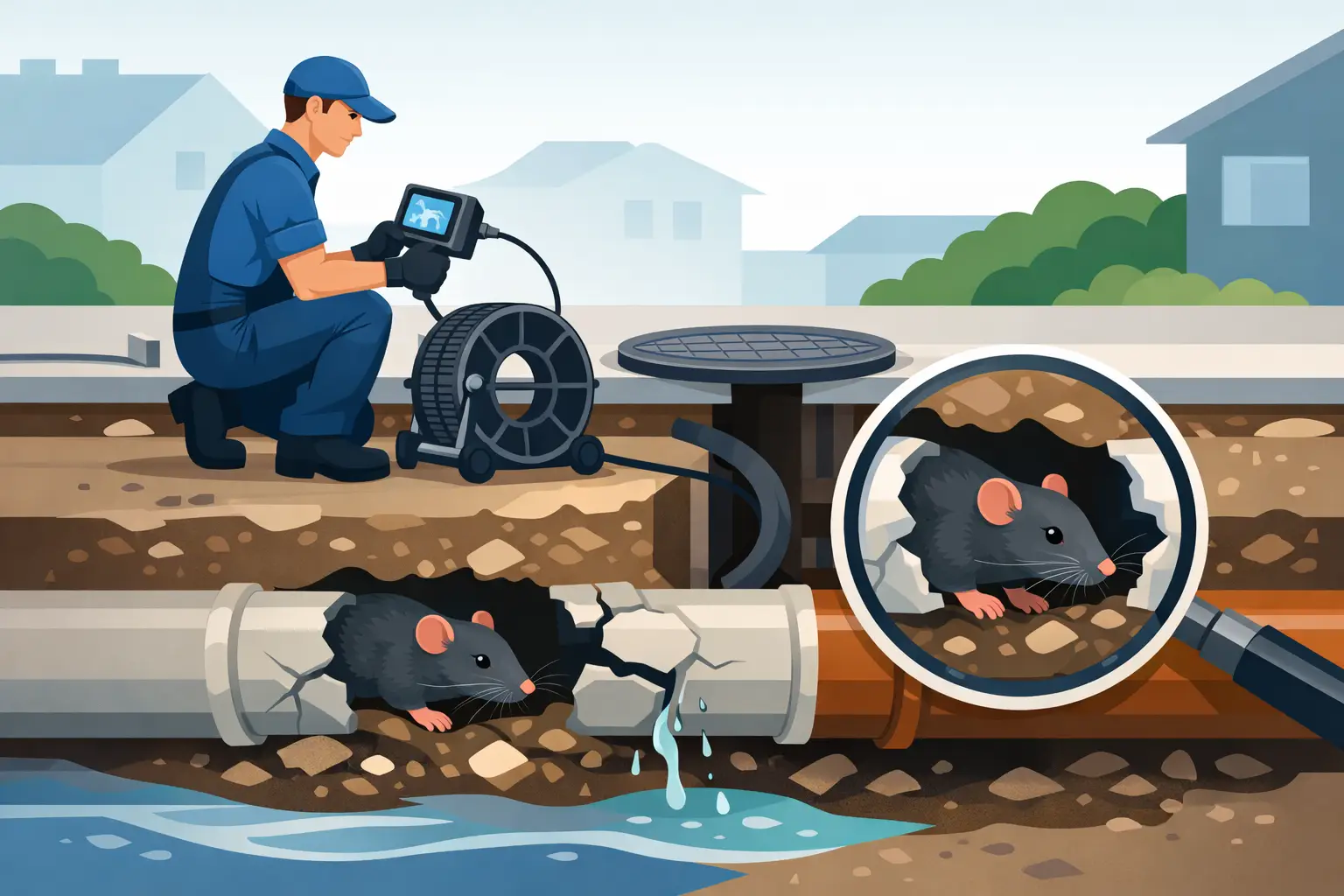
A rat problem that keeps returning often starts below ground. The importance of checking drains for rat ingress through broken pipes is easy to underestimate, especially when the first signs appear indoors – scratching in walls, droppings in a loft, or damage around feed stores, kitchens, bins, or utility areas. By that stage, the rats may not be getting in through an obvious hole in the building at all. They may be travelling through damaged drainage and surfacing inside the property.
This is one of the most overlooked causes of persistent rat activity in homes, farms, rental properties, restaurants, and commercial sites. If the drain system has a break, a displaced joint, or a collapsed section, it can give rats a direct route from the sewer into the building footprint. Treating the visible activity without checking the drains can mean the problem settles for a short while, then starts again.
Rats are strong, agile, and far better at exploiting hidden routes than most people realise. A broken pipe does more than create a maintenance issue. It can become a sheltered access point that keeps rats out of sight and close to food, warmth, and nesting areas.
In many cases, the drainage defect is not obvious from the surface. There may be no dramatic flooding or smell, just a small failure underground that allows movement in and out. Old clay pipes, poorly fitted joints, ground movement, root damage, and wear over time can all create the sort of gaps rats use.
Once inside the drainage system, rats can travel along pipe runs and emerge through toilet connections, damaged inspection chambers, floor voids, or cavities around services. In a domestic property, that can lead to repeated infestations in kitchens, bathrooms, extensions, or basements. On farms and business premises, the consequences can be wider, affecting feed stores, stock buildings, hygiene standards, and customer-facing areas.
The main reason drain checks matter is simple – if you do not identify the route in, you are only dealing with the symptom. Baiting and trapping can reduce numbers, and in many situations they are a necessary part of the job, but they do not repair a broken drainage line. If the access remains open, more rats can follow.
This is where experience makes a real difference. Rat activity around drains does not always look dramatic. Sometimes it shows as repeated low-level sightings, occasional noises, or fresh droppings appearing after treatment. Sometimes there is external burrowing near inspection covers, gullies, manholes, or along walls where the drain run sits below. Those patterns can point towards an underground access issue rather than a simple surface-level entry point.
Checking drains also helps avoid wasting time and money on the wrong fix. Property owners can spend weeks sealing air bricks, replacing loft insulation, or setting traps in the same areas, only to find the infestation returns because the rats are still entering from below. A proper investigation gets to the source.
There is no single giveaway, but some situations should raise suspicion quickly. Recurrent infestations are one of the clearest signs, especially where treatment has been carried out before and the problem keeps coming back. Rat sightings close to toilets, under sinks, in service cupboards, or around ground floor voids can also point towards drain access.
Outside, you may notice burrows close to inspection chambers, disturbed soil along pipe routes, or droppings near manhole covers and gullies. On agricultural sites, activity around feed rooms, grain stores, and livestock buildings can sometimes tie back to damaged drainage nearby rather than poor proofing alone.
It also depends on the age and condition of the property. Older buildings and sites with mixed drainage history are often more vulnerable because repairs, additions, and patchwork alterations over the years can leave hidden weaknesses underground. Newer properties are not immune either, particularly where workmanship issues, settlement, or accidental damage have affected the system.
For householders, the immediate concern is usually stress, hygiene, and damage. Rats contaminate surfaces, spread bacteria, gnaw cables and pipework, and create an understandable sense of unease. If the entry point is in the drains, the issue can feel baffling because the property may appear well sealed above ground.
For landlords and letting agents, there is the added pressure of tenant complaints, repeat call-outs, and repair responsibility. A rat issue linked to broken drains will rarely stay solved if the drainage defect is left as it is. Acting early can prevent a smaller problem becoming a larger dispute and a more expensive repair.
For farms, smallholdings, and rural businesses, drain-related ingress can affect more than one building. Rats move readily where feed, shelter, and water are available. If drainage faults sit close to stores, parlours, sheds, workshops, or staff areas, the problem can spread across the site.
Commercial premises face their own risks. Food businesses, hospitality settings, care environments, and other regulated sites need a clear, professional response. Repeated rat activity can damage reputation as well as hygiene standards. If the source is underground, it needs identifying properly and dealing with in a way that supports ongoing compliance.
A quick glance into a chamber is not always enough. Some defects are visible, but others need a more systematic approach. The right method depends on the property, the drainage layout, and the pattern of rat activity.
A practical inspection may include checking inspection chambers and manholes for signs of movement, droppings, smear marks, gnawing, and access points. It may also involve assessing where the building drainage connects, whether there are obvious structural faults, and whether the layout itself is making the site vulnerable.
In many cases, a CCTV drain survey is the clearest way to confirm whether there is a break, displaced joint, collapse, or open connection. That is particularly useful where the rat issue is persistent or the route is not obvious. It removes guesswork and helps target repairs properly.
There is a trade-off here. Not every rat problem starts in the drains, and not every site needs a full survey straight away. Sometimes the evidence clearly points to surface harbourage, poor proofing, or food sources around the exterior. But where there is a pattern of repeat activity, checking the drainage early can save a great deal of trouble.
This is the part many people miss. Pest control and drain repair are not competing answers. They usually need to support each other.
If rats are active, the immediate population often needs bringing under control through safe, targeted treatment. At the same time, the access route should be confirmed and repaired. That might involve replacing damaged sections, correcting failed joints, sealing defects, or fitting suitable rat prevention measures within the drain system where appropriate.
The exact solution depends on the condition of the drains and the type of property. A simple repair may be enough in one case. In another, especially on older or more complex sites, there may be several defects contributing to the issue. This is why a tailored approach matters more than a one-size-fits-all promise.
The longer rat ingress through broken pipes is left unchecked, the more established the problem can become. Rats breed quickly. What starts as occasional movement below ground can turn into a repeated infestation affecting internal spaces, external areas, and neighbouring buildings.
Early action usually means more control, less damage, and a clearer route to solving the issue properly. It can also reduce the chance of secondary problems such as contamination, gnawed wiring, spoiled feed, or structural damage around burrows and voids.
For property owners in Devon and across the South West, local knowledge matters as well. Older buildings, mixed rural and urban settings, and varied drainage infrastructure can all influence how these problems present. A practical, no-fuss assessment is far more useful than guesswork.
Where rat activity is recurring, hidden, or difficult to explain, it is worth treating the drains as a serious line of enquiry rather than an afterthought. Elimipest South West regularly sees cases where the real problem sits underground, and once that is identified, the path to lasting control becomes much clearer.
If there is one sensible step to take from the outset, it is this: do not just ask where the rats are being seen – ask how they are getting in. That question often leads straight to the drains.


