
Ashburton | Bovey Tracey | Brixham | Buckfastleigh | Dawlish | Exeter | Teignmouth | Totnes | Torquay | Paignton | Newton Abbot
07950 609768
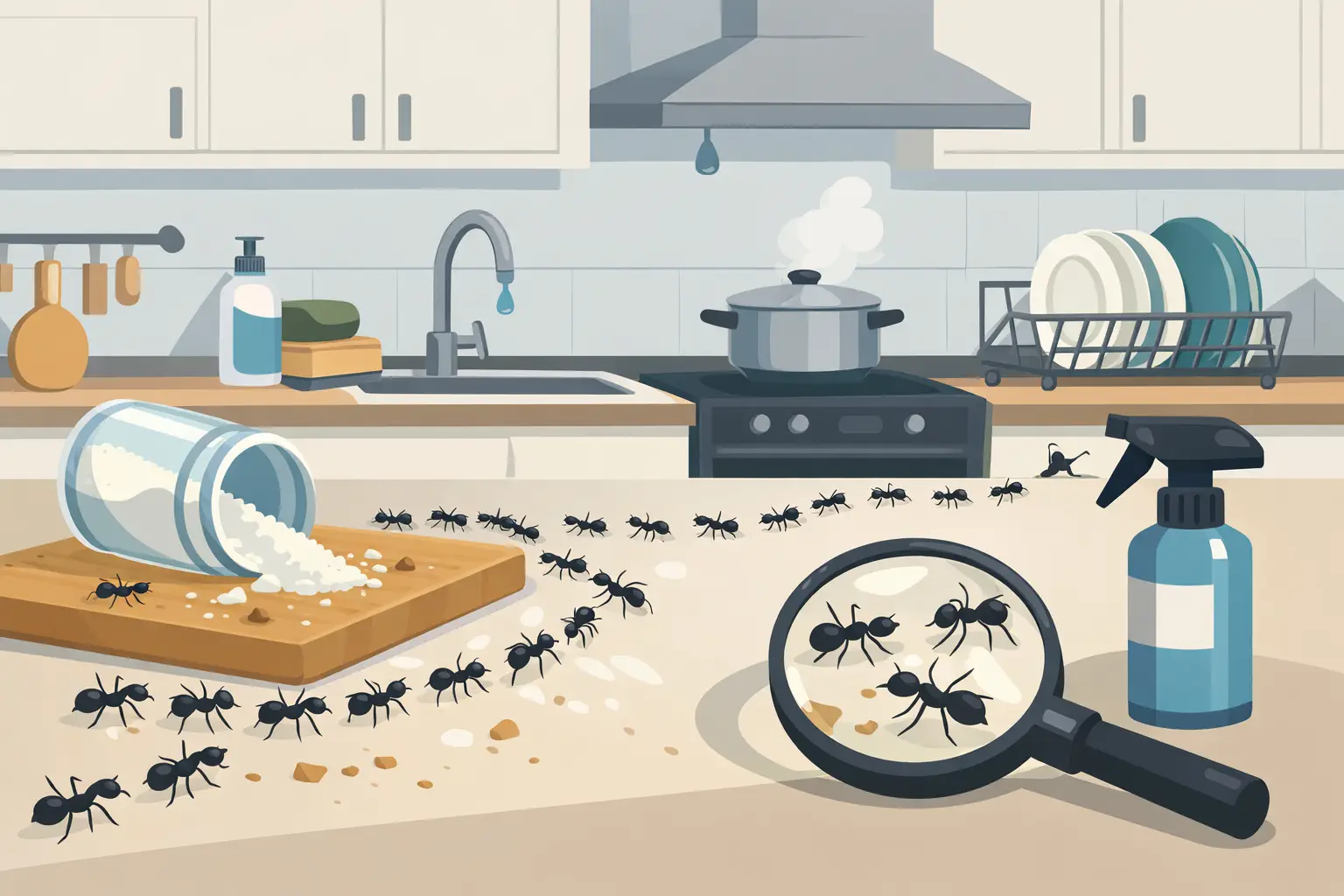
You wipe the worktop, put the food away, and by morning there is a neat line of ants back at the same spot. An ant infestation in kitchen areas rarely starts as a major problem, but it can build quickly once a food source is found. The sooner you deal with it properly, the easier it is to stop ants returning.
In most homes, ants in the kitchen are not a sign of poor hygiene. They are opportunists. A few crumbs under an appliance, a sticky jar lid in the cupboard, pet food left down overnight, or even moisture around a sink can be enough to attract foraging workers. Once they locate something worth collecting, they leave a scent trail for the rest of the colony to follow. That is why you often see them moving in a steady, organised line rather than randomly.
Kitchens offer three things ants need – food, water, and shelter nearby. Warm weather often brings the problem to the surface, especially in spring and summer when colonies become more active. But ants can turn up at any time if conditions suit them.
The usual route in is through small gaps around doors, window frames, pipework, air bricks, or cracks in masonry. In some properties they may nest outside and simply forage indoors. In others, particularly where wall voids, flooring gaps, or older structures provide cover, a nest may be much closer than you think.
The species matters to a point, but the pattern is usually the same. Worker ants search widely, find a reliable source of food, then keep returning until the source is gone or the trail is disrupted. Killing the few you can see often does very little on its own because the colony remains active in the background.
Most people spot the workers first. You may notice ants around the sink, along skirting boards, across a windowsill, or disappearing behind kitchen units. Sometimes the trail is obvious. Sometimes it only appears at certain times of day, especially early morning or evening when the kitchen is quieter.
You might also see small piles of soil-like debris near cracks or thresholds, though this is less common indoors. Winged ants can appear seasonally, but a few flying ants in summer do not always mean there is a nest inside the kitchen itself. It depends where they are emerging from and how often you see them.
If the activity keeps repeating after cleaning, that is usually the point where a minor nuisance becomes an infestation. Repeated sightings in the same area suggest a settled route and a colony with a reason to keep coming back.
Start with the simple measures that reduce what is attracting them. Wipe down surfaces thoroughly, especially around toasters, bins, under kettles, and beside appliances where food particles collect unnoticed. Check cupboards for sugar, cereal, pet treats, sauces, and baking ingredients that may not be fully sealed.
Rubbish should be tied up and removed regularly, and food waste caddies need cleaning rather than just emptying. If you keep pet bowls in the kitchen, do not leave food down longer than necessary. Water matters too. Ants are often drawn to damp areas, so deal with drips under the sink, condensation, and standing water around draining boards.
It also helps to trace where the ants are entering. Follow the line if you can and inspect around window seals, door thresholds, pipe entry points, and cracks in mortar or flooring. Sealing gaps can help, but timing matters. If you block an entry point before the colony is dealt with, ants may simply find another route.
This is where many people get stuck. Aerosols and surface sprays can knock down visible ants quickly, which feels like progress, but they often fail to deal with the nest. In some cases, heavy use of repellent products can even scatter activity and make the source harder to trace.
Baits tend to work better than sprays because foraging ants carry the treatment back to the colony. Even so, results depend on correct placement, the size of the infestation, the species involved, and whether competing food sources are still available. Put simply, if ants can reach jam, grease, pet food, and crumbs, they may ignore the bait altogether.
There is also an it-depends element with kitchens because treatment must be safe and sensible around food preparation areas, children, and pets. What is suitable in a utility room, empty rental property, or commercial store may not be right beside a family kitchen worktop.
If you have cleaned thoroughly, removed food sources, tried sensible control measures, and the ants keep returning, professional treatment is usually the quickest route to a proper fix. The same applies if activity is widespread, if you cannot locate the entry point, or if the problem affects a business kitchen, holiday let, rental property, farmhouse, or food-related premises where repeat pest activity can quickly become a bigger issue.
A professional approach is not just about applying stronger products. It starts with working out where the ants are coming from, what is sustaining them, and whether the nest is likely to be indoors, under paving, in a wall void, or elsewhere close to the building. From there, treatment can be tailored to the property and the level of activity.
That matters because no two infestations are quite the same. A modern sealed kitchen in a new-build often needs a different approach from an older cottage with multiple access points, uneven floors, and hidden voids. Rural and agricultural properties can bring their own challenges too, especially where outbuildings, feed stores, animal areas, or neighbouring land influence pest pressure.
With an ant infestation in kitchen areas, the aim is to eliminate the colony or break the foraging cycle effectively enough that it does not restart a few days later. Treatment may involve targeted baiting, residual products applied in the right places, and advice on proofing and hygiene adjustments to reduce the chance of recurrence.
Done properly, the process should be straightforward and no fuss. You should know what has been found, what treatment is being used, whether follow-up is needed, and what practical steps will help in the meantime. In some cases one visit is enough. In others, especially where nests are established in awkward areas or multiple colonies are involved, further attention may be needed.
That is why experience counts. A lot of kitchen ant problems look simple on the surface but have a persistent cause underneath. A field-based pest controller who has seen the same pattern across homes, farms, rentals, cafés, and commercial sites will usually spot the weak point faster than trial-and-error with off-the-shelf products.
Prevention is a mix of housekeeping, maintenance, and knowing the risk areas in your property. Keep dry goods sealed, clear crumbs promptly, and do not let spills sit around edges and corners. Move white goods occasionally if practical and clean underneath them, because hidden debris is a common draw.
Outside the kitchen, look at what is happening around the building. Ant activity near patios, paths, exterior walls, bins, and back doors often links directly to indoor sightings. Trimming back vegetation, reducing standing water, and dealing with cracks and gaps around the structure can all help lower the chance of re-entry.
For landlords and businesses, speed matters. A small issue reported by a tenant or member of staff can become a recurring complaint if it is left to drift. Early intervention is almost always easier and less disruptive than dealing with a well-established infestation later on.
Elimipest South West deals with these problems in a practical way – identify the source, treat it properly, and give clear advice to prevent it happening again. That is often what people want most when ants keep appearing in the same kitchen no matter how often they clean.
If ants are turning up day after day, do not waste weeks chasing the visible ones. A calm, targeted response usually solves more than panic cleaning or repeated spraying ever will, and the sooner the real source is dealt with, the sooner your kitchen feels like your own again.


