
Ashburton | Bovey Tracey | Brixham | Buckfastleigh | Dawlish | Exeter | Teignmouth | Totnes | Torquay | Paignton | Newton Abbot
07950 609768
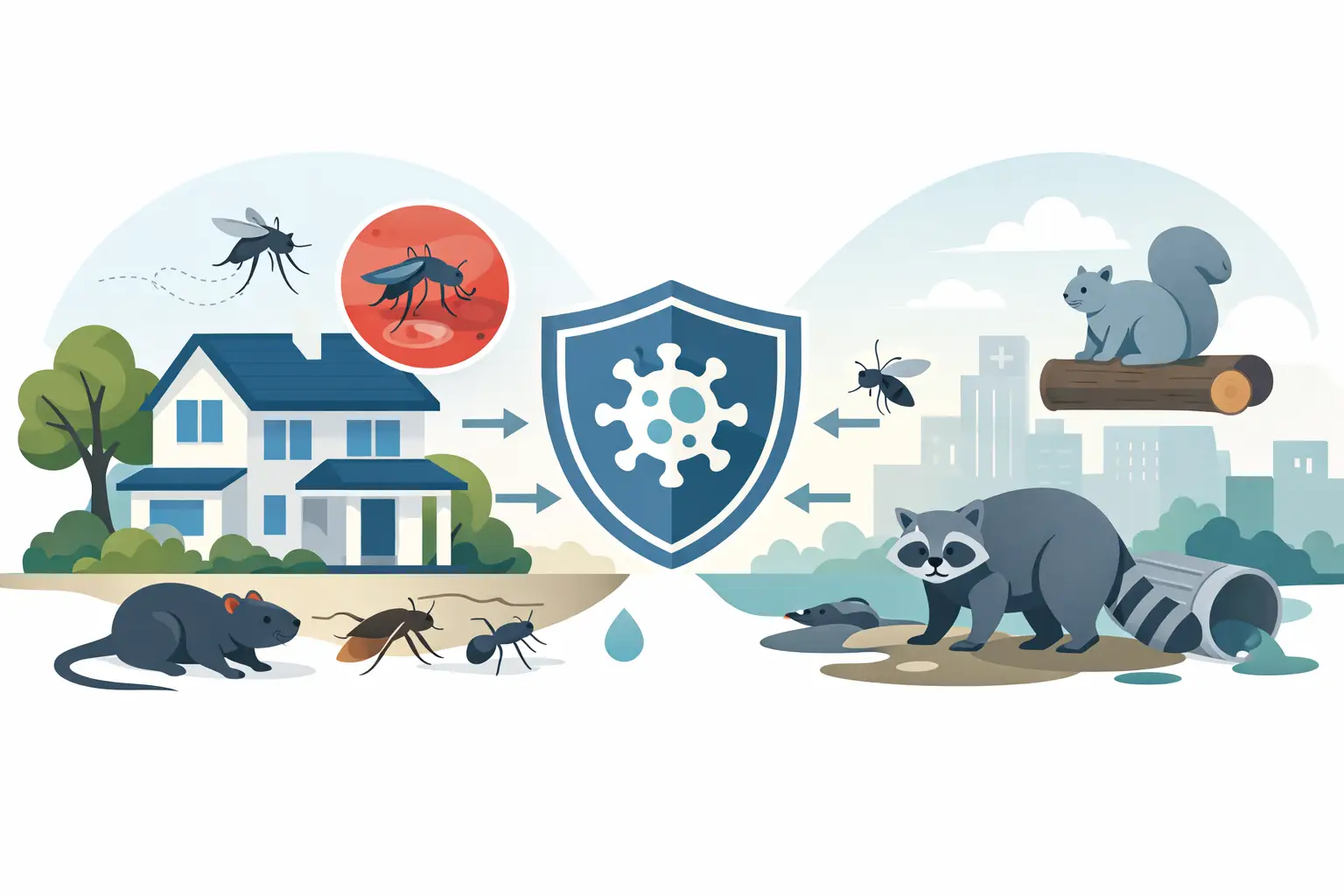
A rat seen at the back of a kitchen unit, flea bites after a pet has been indoors, or bird fouling around a business entrance is more than an unpleasant nuisance. In the right conditions, pests can contaminate food, surfaces, water and living areas. So, can pests spread diseases? Yes, some can – but the level of risk depends on the pest, the number present, where they have been active and how quickly the issue is dealt with.
The sensible approach is not panic. It is practical control: remove the source, clean affected areas safely, block access points and prevent the problem returning.
Pests spread disease in several ways. Some carry germs on their feet or fur after moving through drains, bins, animal waste or contaminated areas. Others leave droppings, urine, shed skin, nesting material or bites behind. Fleas and other biting pests may also pass infections between animals and people in certain circumstances.
Direct contact is not always needed. A mouse running across a worktop overnight can leave contamination behind, while droppings in a loft can become a concern if dust is disturbed during clearing or renovation. Food premises, rental properties, farms and homes with young children, older residents or vulnerable occupants need particular care, but any active infestation deserves prompt attention.
It is also worth keeping perspective. Finding one insect does not automatically mean someone will become ill. Health risks tend to rise when pests have access to food areas, when numbers build up, when cleaning is difficult, or when the infestation is left untreated.
Rodents are among the most common concerns because they can move between outdoor harbourage, drains, sheds, roof spaces and food storage areas. They may contaminate surfaces and food with urine, droppings and bacteria picked up from their surroundings.
Rats are associated with illnesses including leptospirosis, sometimes known as Weil’s disease. The risk is especially relevant around stagnant water, farm environments, drains and areas where rodent urine may be present. Mice can also contaminate stored food and preparation surfaces. Chewed packaging, greasy rub marks, droppings and a stale smell are all signs that should be investigated rather than ignored.
Do not sweep dry rodent droppings straight into a dustpan. Wear suitable gloves, ventilate the area, dampen droppings before lifting them with disposable paper, and disinfect the surface afterwards. If the activity is widespread, or droppings are in a loft, food area or commercial premises, professional treatment and safe proofing are usually the better option.
Fleas are most often brought indoors by pets or wildlife activity around the property. Their bites can cause itching, skin irritation and, for some people, a stronger allergic reaction. Although the chance of serious illness is generally low in a typical UK home, fleas should not be allowed to establish themselves.
Successful flea control is rarely just a matter of treating the room where bites have occurred. Eggs and larvae can be present in carpets, cracks, pet bedding and soft furnishings. Pets need appropriate veterinary treatment at the same time as the environment is treated, otherwise the cycle can continue. Vacuuming thoroughly before and after treatment, then emptying the vacuum outside, helps remove developing stages.
Bed bugs are not generally regarded as a significant disease-spreading pest in the UK. However, that does not make an infestation harmless or something to put off. Repeated bites can lead to severe itching, disturbed sleep, anxiety and secondary skin infection if bites are scratched.
They are expert hitchhikers and can arrive in luggage, second-hand furniture or shared accommodation. Bed bugs are difficult to eliminate with off-the-shelf sprays alone because they hide in bed frames, skirting gaps, sockets, furniture joints and soft furnishings. Early, properly targeted treatment gives the best chance of stopping them before they spread through a property.
Bird activity around roofs, warehouses, farm buildings and commercial premises can create hygiene concerns where fouling builds up. Droppings can contaminate ledges, walkways, equipment and stored materials. Dried fouling may also create dust when disturbed, particularly during cleaning or maintenance work.
The practical answer is to prevent roosting or access where it is causing a problem, then arrange safe cleaning. This needs to be done with the correct protective equipment and with consideration for legal responsibilities around wild birds and active nests. Simply washing fouling away without addressing the reason birds are returning often leads to the same issue a few days later.
Flies can move quickly from waste, animal matter and drains to food or preparation areas. Ants are less commonly linked with illness but can still contaminate food as they travel through a building. Cockroaches are a more serious hygiene concern in premises where food, warmth and moisture are available, as they can carry contamination from unsanitary areas.
In a café, kitchen, care setting, shop or food store, one sighting may justify a closer inspection. Regular monitoring, good waste control and fast treatment are part of protecting customers and meeting hygiene expectations.
Most pest-related health concerns have a simple starting point: a pest finds food, warmth, water or shelter, then gains repeated access. An overflowing bin, pet food left out overnight, a cracked air brick, a leaking pipe or a gap around pipework can be enough to support an ongoing problem.
The risk becomes greater when pests can travel freely between dirty and clean areas. For example, rodents may move from a drain or compost heap into a kitchen cupboard. Flies may breed close to waste and then land on uncovered food. On farms and rural properties, feed stores, poultry areas, livestock housing and outbuildings need close attention because they can offer ideal harbourage.
This is why spraying or trapping alone is not always a complete answer. Treatment deals with the immediate population, but prevention deals with the reason they arrived.
First, protect food. Put dry goods into sealed containers, dispose of anything that may have been contaminated and wipe down food preparation surfaces. Keep bins closed, clear spilled pet food and avoid leaving pet bowls down overnight where possible.
Next, look for the entry point and the conditions supporting the pest. Check gaps around pipes, damaged vents, loose roof edges, overflowing gutters, broken drain covers and cluttered storage areas. Outside, keep compost, feed and refuse managed sensibly and away from the building where practical.
Avoid handling live rodents, nests, droppings or unknown insects without suitable protection. Household products may reduce visible activity, but they can also drive pests deeper into voids or leave the underlying problem untouched. This is particularly frustrating with rats, mice, fleas and bed bugs, where incomplete treatment often means the issue returns.
If you run a business, record sightings and action taken. It helps identify patterns, supports hygiene checks and gives a pest controller a clearer starting point. For landlords, prompt investigation is also fairer to tenants and can limit damage to the property.
Call for advice when you are seeing repeated signs, finding droppings in living or food areas, receiving bites, hearing activity in walls or lofts, or dealing with pests at a commercial, agricultural or rental property. Faster action normally means less contamination, less damage and a simpler treatment plan.
A professional inspection should focus on the pest involved, the extent of activity, entry points and any risks to people, pets, livestock or food. The right treatment may involve trapping, targeted insect control, proofing, monitoring or a combination of methods. There is no benefit in applying a one-size-fits-all solution to a problem that has a clear local cause.
For homes, farms and businesses across South Devon, Elimipest South West provides practical, discreet pest control based on what is actually happening at the property. The aim is straightforward: deal with the active problem safely, then help stop it becoming the next one.
A pest problem is easier to manage when it is caught early. If something does not look right – fresh droppings, recurring bites, damaged food packaging or persistent activity – act before a small sign becomes an established infestation.


