
Ashburton | Bovey Tracey | Brixham | Buckfastleigh | Dawlish | Exeter | Teignmouth | Totnes | Torquay | Paignton | Newton Abbot
07950 609768
A few pigeons on a roofline can turn into a real problem faster than most people expect. Once birds start roosting or nesting, the mess builds up, noise becomes a nuisance, and damage to buildings, stock areas or equipment often follows. Good bird control is about more than moving birds on for a day or two. It means dealing with the reason they are there in the first place, then putting the right measures in place to stop the problem returning.
For householders, landlords, farmers and business owners, bird activity can range from a mild irritation to a costly ongoing issue. The right response depends on the species involved, the layout of the site, the time of year and how established the problem has become. There is no one-size-fits-all fix, and quick DIY measures often fail because they do not address how birds behave around food, shelter and nesting points.
Birds around a property are not always a pest issue. Many are simply passing through. The trouble starts when they settle and begin using a building, yard, outbuilding or agricultural unit as a regular roosting or nesting spot.
At that stage, the impact is usually practical rather than theoretical. Droppings stain walls, paths, vehicles and signage. Gutters block. Roof spaces become contaminated. On commercial and agricultural premises, birds can affect hygiene standards, damage stored materials and create slip hazards around entrances and walkways. On farms and rural sites, feed stores and livestock buildings are particularly attractive, which can make the problem persistent.
There is also the question of reputation. For shops, hospitality venues, offices and managed properties, heavy bird fouling around an entrance does not give the right impression. For landlords and managing agents, unresolved bird problems can quickly lead to complaints from tenants. In short, bird control is often about protecting property, hygiene and day-to-day use just as much as removing a nuisance.
The type of issue often tells you a lot about the best solution. On domestic properties, pigeons are a regular problem on roofs, chimneys, solar panels and loft areas. Gulls can be aggressive in some coastal locations, especially during nesting season, and smaller birds may find access into eaves, vents or sheds.
Commercial sites tend to see problems where birds can perch above customers, loading bays or staff entrances. Warehouses, food-related premises and larger buildings often need a more considered approach because one weak point can undermine the whole job.
Agricultural settings are different again. Barns, feed stores and open-sided buildings naturally attract birds looking for food and shelter. In those cases, control measures need to be effective without getting in the way of day-to-day farm work. What works on a town-centre shopfront may be completely unsuitable in a livestock or grain storage environment.
The most effective bird control measures are the ones matched properly to the site. That sounds obvious, but it is where many problems start. People often buy visual deterrents or low-cost gadgets expecting a permanent fix, only to find the birds ignore them once they realise there is no real threat.
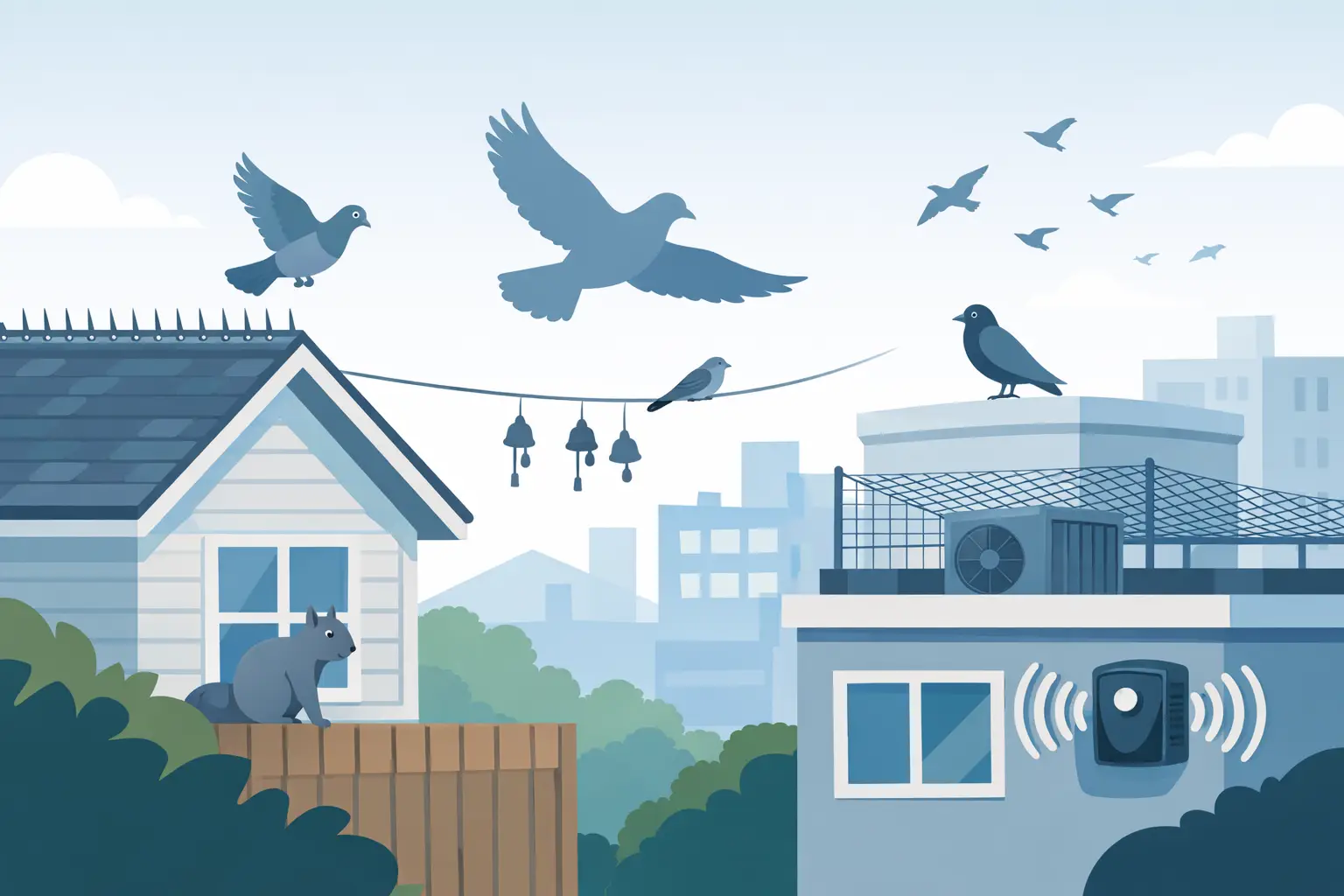
Physical proofing is often the most reliable option where birds are roosting on ledges, roof edges, signs or structural features. Spikes can prevent larger birds from settling on narrow surfaces, while netting is commonly used to exclude birds from larger areas such as roof voids, loading bays or canopies.
That said, the quality of installation matters as much as the product itself. Poorly fitted netting can fail quickly or look unsightly. Spikes placed on the wrong surface may simply push birds a short distance along the building. Proper proofing should be discreet, effective and suited to how the building is actually used.
Visual and sound deterrents can have a place, particularly on larger open sites or where bird activity is still at an early stage. Their weakness is predictability. If birds are comfortable, well-fed and used to the setting, they often adapt.
This is why deterrents work best as part of a wider plan rather than as a standalone fix. Changing the environment, reducing food sources and removing access to favoured roosting points usually makes a much bigger difference than relying on scare methods alone.
Sometimes the simplest improvements have the biggest impact. Open food waste, overflowing bins, spilled feed and easy access to sheltered spaces all encourage repeat bird activity. On commercial and agricultural sites in particular, a few changes to storage, waste handling or building maintenance can reduce the pressure significantly.
This side of bird control is easy to overlook because it does not feel like treatment. In reality, it is often what makes the treatment last. If birds keep finding food and cover, they will keep coming back.
This is one area where people should be careful. Wild birds, nests and eggs are protected by law in many situations, and that affects what can and cannot be done, especially during nesting season. Acting without checking the position first can turn a straightforward job into a legal problem.
That does not mean every bird issue has to be left alone. It means control work needs to be carried out properly, with the species identified and the site assessed before any action is taken. Timing matters. So does method. A professional approach keeps the job effective while staying within the rules.
There is no shortage of off-the-shelf bird deterrents, but many give only short-term results. Reflective tape, imitation predators and similar products may appear to work briefly, especially if birds are only investigating a site. Once roosting patterns are established, however, birds tend to become much harder to shift.
The bigger problem is misdiagnosis. A property owner may focus on where birds are seen, but the real attraction could be a food source round the back, a sheltered access point under solar panels, or nesting opportunities higher up on the structure. Treating the symptom rather than the cause usually leads to wasted time and money.
There is also the issue of access and safety. Working at height on roofs, installing netting, or handling contaminated nesting material is not something to take lightly. For many homes and businesses, bringing in a specialist is the safer and more cost-effective option.
A sensible bird control plan starts with a clear look at the site. Which birds are involved? Are they feeding, roosting or nesting? Is the issue seasonal or constant? Is the property domestic, commercial or agricultural? Those details shape what will work.
For a householder, the answer might be targeted proofing around rooflines or solar panels. For a business, it may involve protecting customer-facing areas while keeping the building presentable. For a farm or estate, the focus could be on reducing access to feed and fitting practical exclusion measures that stand up to daily use.
This is where experience counts. Bird behaviour varies, and so do buildings. Older properties, modern units, barns and coastal premises all present different challenges. A tailored approach is usually the difference between a short-lived improvement and a proper result.
In the South West, local conditions can make bird problems more stubborn. Coastal towns may see stronger gull pressure, while rural sites often deal with repeat issues around feed, grain and open buildings. A contractor who understands both domestic pest control and wider wildlife management is better placed to judge what is proportionate, lawful and likely to hold up over time.
If birds are returning despite repeated attempts to deter them, if there is heavy fouling or nesting activity, or if the issue affects hygiene, safety or business operations, it is time to deal with it properly. The same applies where access is difficult or the legal position is not clear.
A professional assessment should not overcomplicate matters. It should identify the source of the problem, explain the realistic options and recommend a safe, effective way forward. That practical, no-fuss approach is what most customers need, whether it is a family home, a tenanted property, a farm building or a commercial site.
Bird problems rarely improve on their own once a site becomes established. Deal with them early, and you usually have more options, less damage and a better chance of keeping the property clear for good.


