
What makes a nest visit more straightforward
Species checked first
We confirm whether the problem is wasps or hornets before any treatment is chosen.
Clear re-entry advice
Every treated nest comes with guidance on when people and pets can use the area again.
Sensitive sites considered
We take nest position, access and wildlife protections into account before acting.
Know what the nest is before anyone gets close
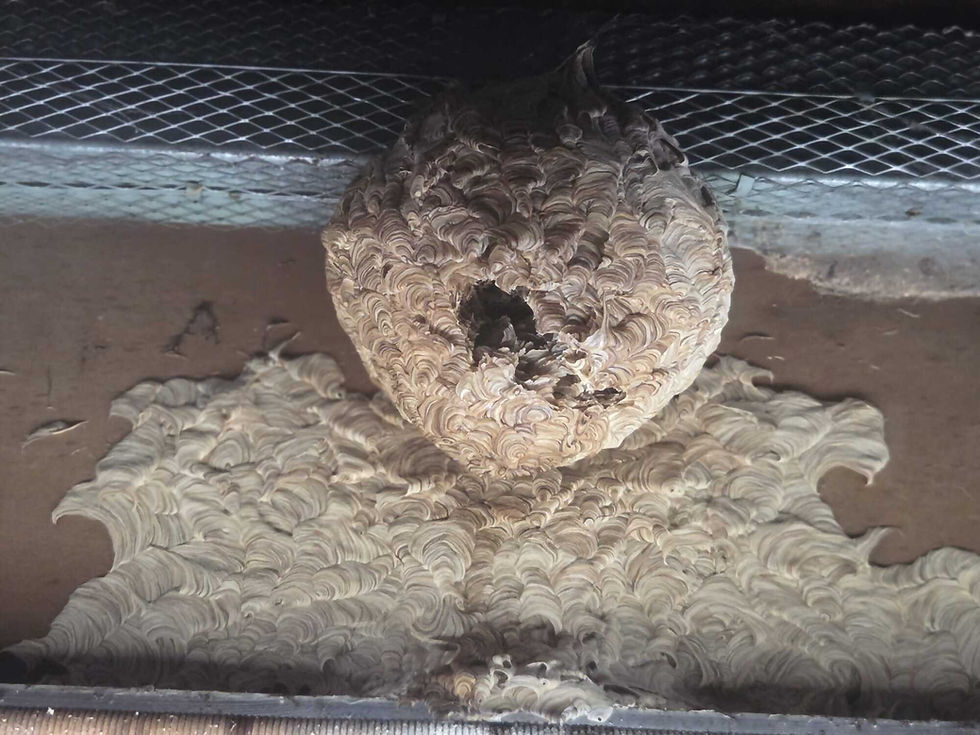
A stream of wasps around a roof edge or shed door can make part of your property feel unusable, especially in warmer months when activity builds quickly. We begin wasp nest removal in Newton Abbot with a telephone assessment and an on-site survey to locate the nest and confirm whether you're dealing with wasps or hornets. That check matters because treatment depends on both insect type and nest position. We look at lofts, eaves, wall voids, garages, hedges and other likely areas, then explain the safest next step so you know what will happen before work begins.

Treatment chosen for the nest and location
We use professional liquid, spray or powder insecticides according to where the nest is, how active the insects are and how the area can be accessed safely. Wasps and hornets are often most aggressive from June to September, although activity can continue later in mild weather. After treatment, we give clear safety guidance on how long people and pets should stay away from the area. If bats are present we can use other methods to treat the nest.
Frequently asked questions
How long should people and pets stay away after treatment?
That depends on the treatment used and where the nest is. Once the nest has been treated, we give a safety report with practical re-entry guidance so you know when the area can be used again and what to avoid in the meantime.
Do wasps use the same nest every year?
No. Wasps do not normally reuse an old nest the following year. A new queen usually builds a new nest in spring, although she may choose a similar location if it offers suitable shelter and access.
What are the signs of an active wasp nest?
Regular wasp activity around the same roof edge, wall opening, shed, loft or other entry point can indicate an active nest. Avoid disturbing the area and contact us so we can assess the activity and recommend the appropriate next step.