
Ashburton | Bovey Tracey | Brixham | Buckfastleigh | Dawlish | Exeter | Teignmouth | Totnes | Torquay | Paignton | Newton Abbot
07950 609768
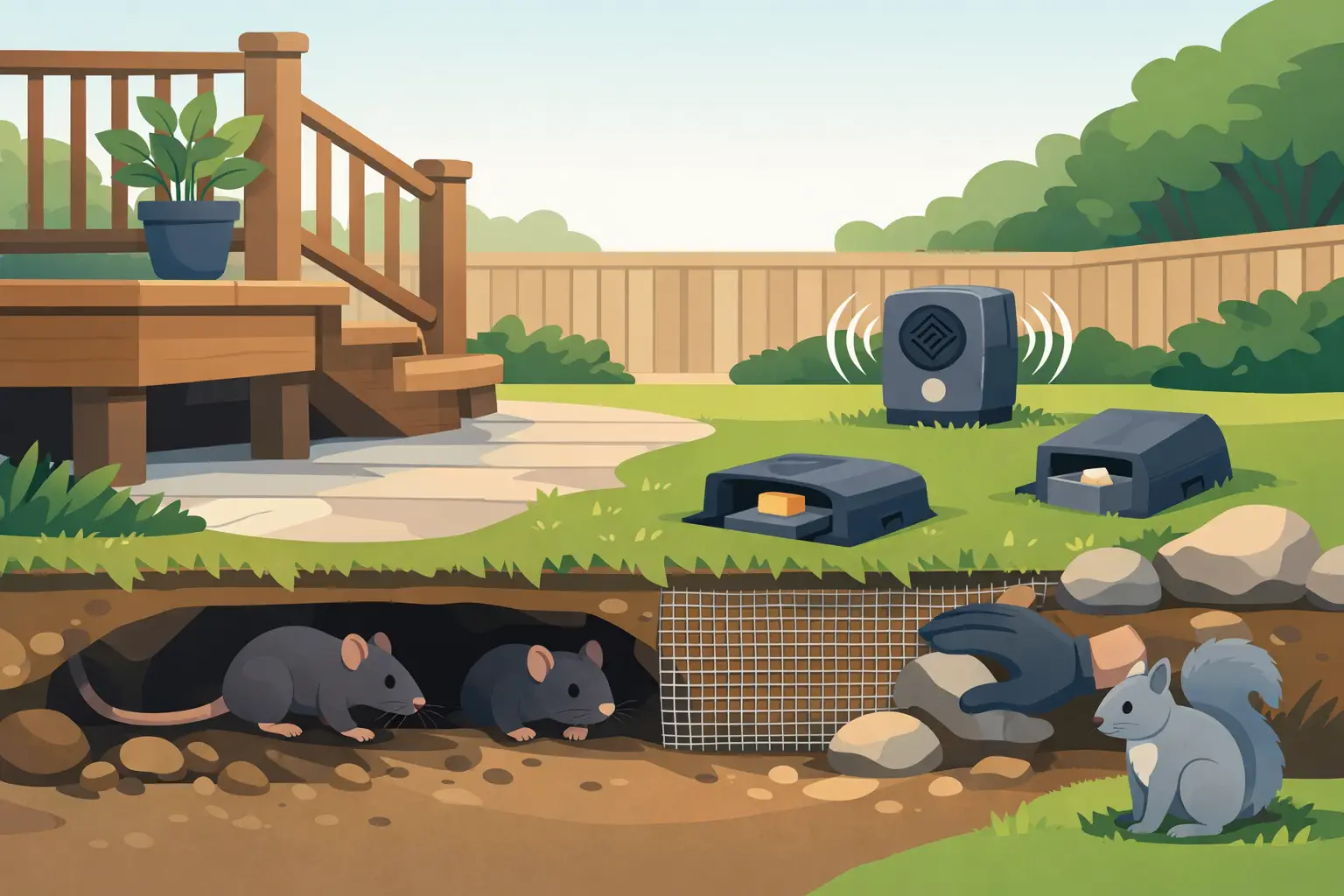
A quiet scratching sound beneath the decking, gnawed timber, droppings near the steps or a sudden smell can all point to one problem: rats have found a sheltered place to live. Knowing how to stop rats under decking means dealing with more than the visible gap around the boards. You need to remove what is attracting them, treat the active activity properly and then prevent a return.
Decking gives rats exactly what they look for – cover from weather and predators, dry ground for nesting, and concealed routes around a property. In Devon gardens, especially where there are mature hedges, compost, bird feeding areas, outbuildings or open countryside nearby, a deck can become part of a regular rat run surprisingly quickly.
Rats do not always stay beneath the deck during the day, so it is worth checking for clear signs before blocking holes or putting down any treatment. Fresh droppings are dark, moist and roughly the size of a large grain of rice. You may also see disturbed soil, rub marks along fence lines, chewed plastic or timber, and small runs leading under the decking.
Look around the full perimeter, not just where you first noticed activity. Rats can enter through gaps around pipes, beneath a gate, through broken air bricks and from neighbouring gardens. A gap of around 20mm is enough for a rat to squeeze through.
If the noise is coming from a roof space, wall void or shed as well as the deck, the problem may be wider than one nesting area. This is when a proper inspection saves time and prevents repeated treatment.
Rats rarely settle where there is no reliable food source. The deck may be their shelter, but the attraction is often elsewhere in the garden or property.
Start by clearing fallen fruit, securing household waste and keeping compost contained. If you put out food for garden birds, use a catch tray and sweep up spilt seed regularly. Do not leave pet food outdoors overnight, and make sure animal feed is stored in tough, sealed containers rather than sacks in a shed.
Water matters too. Repair dripping outside taps, check leaking water butts and avoid leaving bowls of water out overnight. In rural and semi-rural areas, feed stores, poultry areas and livestock buildings may need attention as part of the same plan. Treating beneath the deck without addressing a nearby food source often gives only a short-term result.
The instinct is to seal every opening straight away. It is understandable, but it can make matters worse if rats are still active beneath the structure. Blocking them in can lead to rats chewing new routes into sheds, garages or the house. If an animal dies under an enclosed deck, the smell can be difficult to resolve.
Deal with the active infestation first, then proof the space once you are confident activity has stopped. This order is particularly important with raised decking, where access is limited and nests may be hidden well back from the edge.
Cut back dense vegetation from the sides of the decking and avoid storing pots, timber, bags or garden furniture tightly against it. Rats like a protected approach. Creating a clear strip around the perimeter makes it harder for them to move unseen and makes fresh signs easier to spot.
Keep firewood raised off the ground and away from the deck where possible. If there is a compost bin close by, move it to a more suitable position or make sure the base and lid are secure.
Trapping or controlled baiting can be effective, but it needs to be done with care. A rat problem under decking is often close to children, pets and wildlife, so loose bait or poorly placed traps are not a sensible solution.
Professional pest control begins with an inspection of the likely entry routes, feeding points and level of activity. Treatment is then selected for the site, with secure bait stations or traps positioned where they are effective but inaccessible to non-target animals. Follow-up visits are important because a single treatment rarely tells you whether the source of the infestation has been removed.
Avoid relying on ultrasonic devices, strong smells or home remedies. These may cause short-term disturbance, but they do not remove a nest, stop access or take away a food supply. Likewise, avoid putting poison directly beneath boards where you cannot inspect it safely. Responsible rodent control is about monitoring, not simply placing a product and hoping for the best.
When there have been no fresh droppings, no new digging and no signs of feeding or movement for an appropriate monitoring period, it is time to exclude future visitors. The best method depends on the construction of the deck and whether you need access below it for services or maintenance.
A durable galvanised mesh skirt is usually the most practical option. It should be fixed securely to the deck frame and buried into the ground or turned outward below the soil, so rats cannot simply dig beneath it. Mesh needs to be strong enough to resist gnawing and have openings small enough to prevent entry.
Do not use lightweight chicken wire, timber boards alone or expanding foam as the main barrier. Rats can chew through weak materials, and timber can rot at ground level. Where the decking sits close to a wall, inspect the join carefully and seal service gaps with suitable rodent-resistant materials.
If your deck is built over uneven ground, the proofing work may need a tailored approach. A neat finish matters, but the barrier has to follow the ground without leaving low points or corners that can be pushed aside.
Rats under decking are sometimes a garden issue, but they can also indicate a defect in a drain. Repeated activity in the same place, particularly near a kitchen, utility room, soil pipe or inspection chamber, is worth investigating. Damaged drains can provide both a route and a reliable source of water.
Lift inspection chamber covers only if it is safe to do so and you know what you are looking for. Signs such as obvious damage, missing covers or rat activity around drains should be passed to a drainage specialist or pest controller. It is far better to find the route than to keep treating the symptom.
Sheds, garages and extensions also deserve a check. Rats may nest under the deck but feed or shelter elsewhere, particularly during colder weather. Closing a hole in one location is useful only if their other access points are dealt with too.
Call for help if you are seeing rats in daylight, finding regular fresh droppings, noticing damage indoors, or if the deck is too enclosed to inspect safely. Prompt action is also sensible where there are pets, young children, food businesses, rental properties or farm animals involved.
Elimipest South West provides practical rat control and prevention work for homes, businesses and rural properties across South Devon and the wider South West. Treatment can be tailored to the property, with discreet attendance available where needed and clear advice on proofing once the activity is under control.
A deck should be somewhere to sit outside, not a sheltered nesting site. Tackle the food source, confirm the entry routes and proof the area only after treatment has worked, and you give rats far less reason to come back.


