
Ashburton | Bovey Tracey | Brixham | Buckfastleigh | Dawlish | Exeter | Teignmouth | Totnes | Torquay | Paignton | Newton Abbot
07950 609768
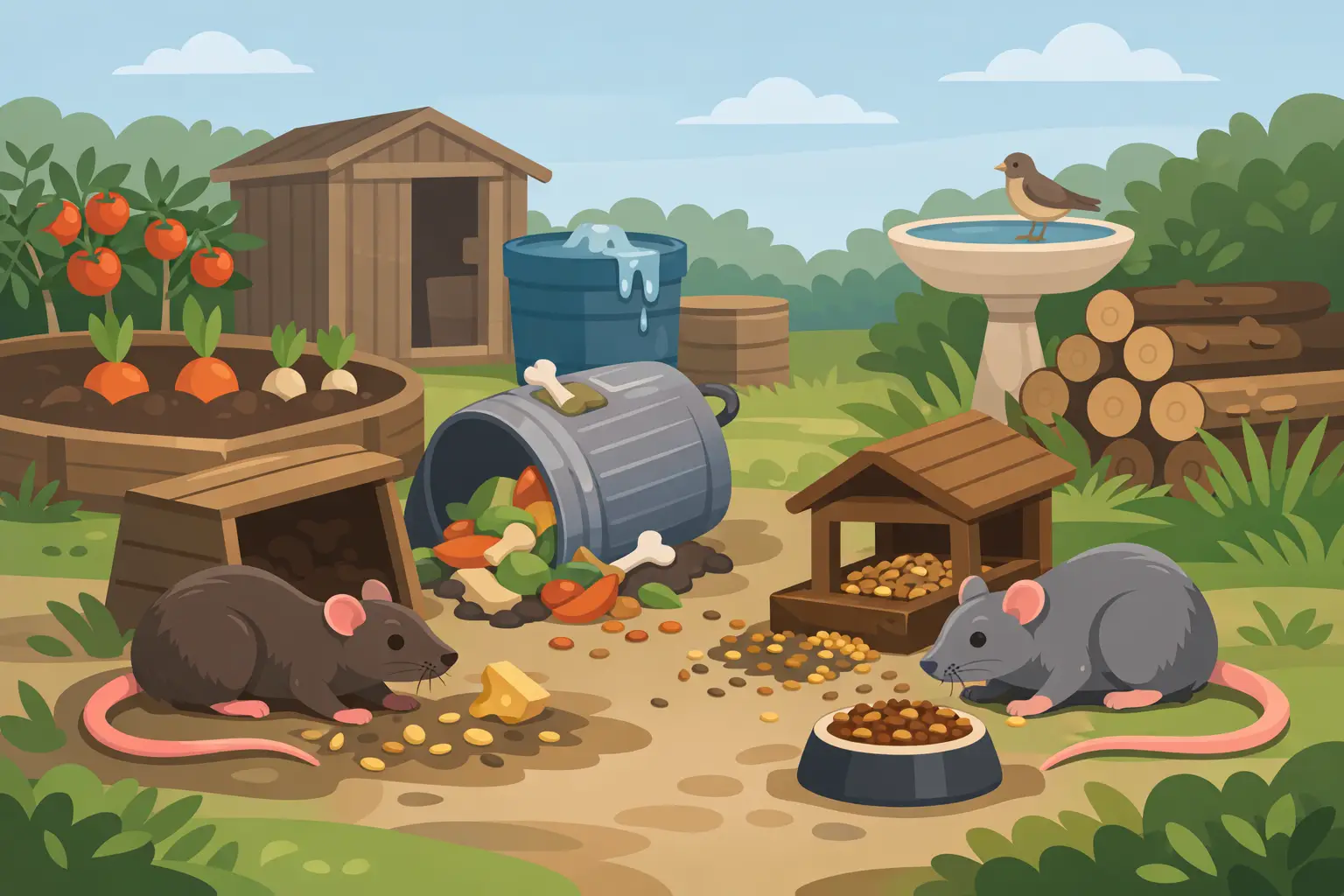
A rat rarely arrives in a garden by chance. If you are asking what attracts rats to gardens, the answer is usually simple: an easy meal, a reliable drink and somewhere quiet to hide. Gardens can provide all three, particularly where food is left out, cover is allowed to build up or there is a gap beneath a shed.
The good news is that many of the things that attract rats can be dealt with quickly. The less attractive your garden becomes, the more likely rats are to move on and look elsewhere. Acting early matters. A single sighting does not always mean there is an infestation, but regular activity, fresh droppings or gnawing around buildings should not be ignored.
Bird feeding is one of the most common reasons rats begin visiting an otherwise tidy garden. Rats are not usually interested in the feeder itself. They are interested in seed, peanuts and fat-based feed dropped onto the ground below it.
A feeder positioned over a patio can make spillages easier to spot and clear. Sweep up loose food each evening if possible, and avoid putting out more than garden birds will eat in a day. A tray beneath the feeder may reduce waste, but it still needs emptying regularly.
Ground feeding is more likely to encourage rat activity, especially if food is left overnight. If you have noticed signs of rats, pause feeding for a short period while you address the rest of the garden. It can be frustrating, but leaving a constant food supply in place makes control much harder.
A well-managed compost heap is useful and need not attract rats. Problems arise when it becomes a warm, undisturbed source of food. Cooked leftovers, meat, fish, dairy products, bread and oily food waste should never go into an open garden compost heap.
Fruit and vegetable peelings are generally suitable, but a heap full of fresh scraps can still interest rodents if it is rarely turned or is easy to get into. A proper compost bin with a secure lid and a solid or fine mesh base is a better option where rats have been seen nearby.
Keep the area around the bin clear too. Bags of compost, piles of timber and neglected pots can create cover that lets rats approach unseen. Turning compost occasionally disturbs a nesting site, although it is not a substitute for dealing with an established rat problem.
Apple trees, plum trees, vegetable beds and raised planters can all offer easy feeding. Rats will take fallen fruit, soft berries, pumpkins, sweetcorn and root vegetables, particularly once colder weather reduces food elsewhere.
Pick ripe produce promptly and collect windfalls from lawns, borders and paths. Check beneath dense plants where fruit can quickly go unnoticed. If you keep vegetables in a shed or greenhouse, store them in sturdy containers rather than sacks that can be chewed through.
This does not mean you cannot grow food. It means harvesting and clearing up needs to be part of the routine. In rural gardens and properties beside fields, that small amount of housekeeping can make a real difference.
Food put down for dogs, cats, chickens or other animals is highly attractive to rats. Pet bowls left outside overnight are an easy target, and even a small amount of dry food can encourage repeat visits. Feed pets indoors where practical, or remove bowls as soon as they have finished.
Chicken feed and other livestock rations need particular care. Store feed in metal bins or heavy-duty containers with close-fitting lids, not in paper sacks or thin plastic tubs. Clear up spillages around runs and feeding areas, and avoid leaving feed available through the night.
Household waste is another draw. Check that bin lids close properly and that food waste is not spilling from bags. A rat can squeeze through surprisingly small spaces and will chew weak plastic if there is food on the other side. Rinse recyclable food containers before putting them out, especially during warm weather.
Rats need water, and a garden with a regular supply is more useful to them than one without. Ponds, dripping outdoor taps, leaky pipes, open water butts and pet water bowls can all help sustain activity.
You do not need to remove a pond, but you should repair leaks, avoid allowing water to collect around taps and make sure water butts are properly covered. Look behind sheds, greenhouses and bins after rain. A hidden puddle or a slow leak can provide exactly the sort of reliable drinking point rats need.
Water alone is unlikely to cause a rat issue. Combined with food and shelter, however, it makes a garden far more appealing.
Rats prefer to move under cover. Overgrown borders, bramble patches, dense ivy, stacked logs and long grass give them protected routes around a garden. They may nest in burrows along fence lines, beneath compost heaps, under sheds or within cluttered outbuildings.
Keep vegetation cut back from walls, fences and sheds so there is a clear gap where possible. Raise log stores off the ground and avoid allowing unused materials to sit in one place for months. There is a balance to strike: wildlife-friendly planting does not need to mean a neglected garden. Regularly checking tucked-away areas is usually enough to identify a problem early.
Sheds and decking deserve a close look. A gap beneath either structure provides dry, sheltered space, especially if food is nearby. Mesh fitted securely around the base can help prevent access, but only once you are confident rats are not already living underneath. Blocking an active entrance can force them to find another route, sometimes into the property.
Even a clean garden can receive visiting rats from elsewhere. They may travel along hedgerows, watercourses, railway edges, allotments, farm buildings, neighbouring gardens or damaged drains. This is common in both town and country locations.
Check for gaps around air bricks, damaged drain covers, holes in fences and breaks around pipework. Rats can climb well, so low rooflines, climbing plants and overhanging branches can also provide routes towards lofts, garages and outbuildings.
If activity seems to continue despite good garden hygiene, the source may not be on your side of the fence. That is where a proper inspection is valuable. The aim is to identify where rats are feeding, harbouring and travelling, rather than treating the most obvious sign and hoping for the best.
Rats are cautious animals. A rarely used corner of the garden, an empty shed or a compost area behind a garage can give them the privacy they need to settle. This is why activity often goes unnoticed until droppings, gnaw marks or burrow holes become obvious.
Typical signs include dark, spindle-shaped droppings, greasy rub marks on walls or fencing, chewed wood and plastic, holes around sheds, and soil pushed out from burrows. You may also hear movement under decking or in a loft, particularly at night.
Do not rely on a single sign in isolation. Old droppings may remain long after rats have gone, while fresh droppings are darker and softer. If you are unsure, avoid handling droppings and seek professional advice.
Start by removing accessible food, clearing fallen fruit, securing bins and cutting back cover. These steps make treatment more effective and reduce the chance of rats returning once activity has stopped.
Avoid putting poison down without understanding where rats are feeding and nesting. Incorrect use can create risks for pets and non-target wildlife, and a dead rat in an inaccessible area can leave an unpleasant smell. Traps and control measures need to be selected and positioned properly, with the wider cause dealt with at the same time.
Where there is repeated activity, signs near the house, a suspected nest under a structure or concern around livestock feed, it is sensible to arrange an inspection. Elimipest South West provides practical, tailored rat control and prevention work across South Devon and the wider area, with discreet attendance available where needed.
A garden does not have to be spotless to stay unattractive to rats. Keep food contained, remove easy water sources, reduce sheltered corners and deal with fresh signs promptly. That gives rats far less reason to make your garden part of their route.


