
Ashburton | Bovey Tracey | Brixham | Buckfastleigh | Dawlish | Exeter | Teignmouth | Totnes | Torquay | Paignton | Newton Abbot
07950 609768
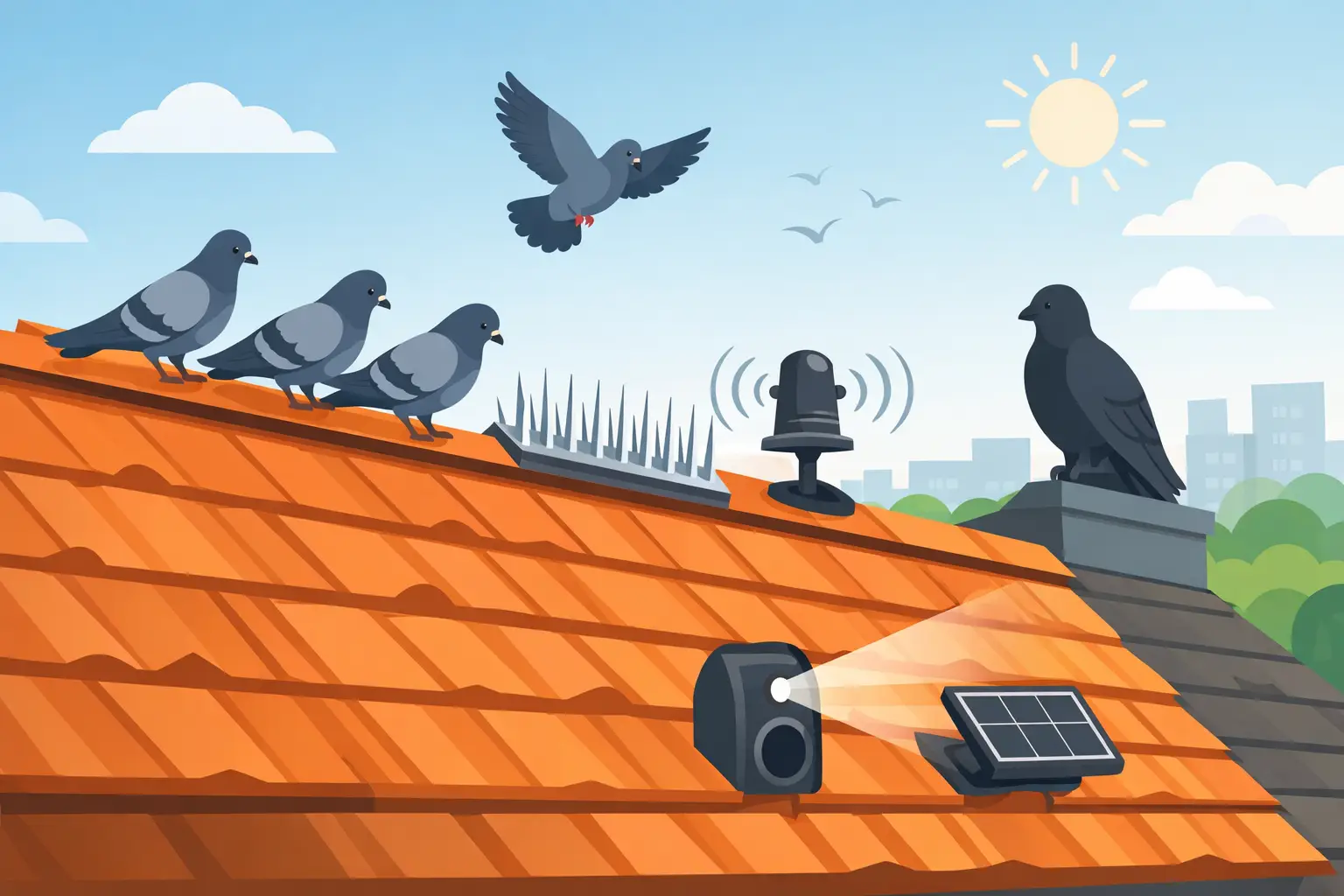
A few pigeons on a ridge tile can soon become a daily nuisance. Once they find a sheltered ledge, warm roof space or reliable food source nearby, they tend to return – bringing noise, droppings, blocked gutters and potential damage with them. Knowing how to deter pigeons from roofs means dealing with the reason they are there, rather than relying on a quick scare tactic that works for a few days.
For homes, farms, shops and managed properties across South Devon, the most effective answer is usually a tailored combination of cleaning, proofing and removing access to favoured nesting or roosting points. The right method depends on the roof type, the scale of the problem and whether solar panels, gutters or outbuildings are involved.
Pigeons favour roofs because they offer height, shelter and a clear view of approaching danger. Chimney stacks, dormer ledges, flat roof edges, guttering and the gaps beneath solar panels all make useful perches. Older properties can be especially attractive where slipped tiles, broken soffits or open eaves create protected spaces.
A roof can also become part of an established route between feeding and roosting sites. Bird food, unsecured bins, spillages around outdoor seating areas, animal feed and food waste can all keep pigeons in the area. If the food source remains, simply moving birds from one part of the building often means they settle on another.
Their droppings are more than an unsightly problem. They can make paths and entrances slippery, block gutters and downpipes, contaminate stored goods or outdoor equipment, and gradually affect some building materials. Nesting material can obstruct drainage and ventilation points too. On commercial premises, there is also the issue of maintaining a clean, presentable site for staff and customers.
The aim is to make the roof difficult to land on, impossible to nest in and less rewarding to revisit. A proper inspection should come first. It identifies where the birds are landing, whether nests or eggs are present, and which proofing method will work without damaging the roof.
Start at ground level. Keep wheelie-bin lids closed, clear food waste promptly and avoid leaving pet food outdoors. Farms, smallholdings and equestrian sites should clear feed spillages and store feed securely wherever practical. Even a small, regular source of grain can support a large local pigeon population.
Check gutters, flat roof sections and areas behind plant equipment for standing water. Water is not always the main attraction, but removing easy access helps make a site less suitable overall. Do not forget neighbouring properties, communal areas or nearby food businesses. In some situations, the cause is beyond your boundary, so roof proofing becomes the main practical defence.
Cleaning is an essential part of prevention, but it needs care. Old droppings and dry nesting material can create dust, while wet surfaces become slippery. Avoid dry brushing or using a domestic pressure washer from a ladder, particularly where debris could be forced under tiles or into roof voids.
Professional cleaning allows the area to be cleared properly before proofing is installed. It also removes scent and visual cues that can encourage birds to return to the same spot. Gutters and downpipes should be checked afterwards, as compacted nesting material often sits where it cannot be seen from the ground.
Solar panels are one of the most common pigeon harbourages. The warm, sheltered void beneath them is ideal for nesting, and birds can be difficult to dislodge once established. Droppings may collect on panels and reduce light reaching the surface, while nesting material can build up around cabling and drainage routes.
The usual answer is a purpose-made mesh fitted around the outer edge of the array. This excludes pigeons while allowing ventilation beneath the panels. It should be secured carefully, without drilling into the panels or compromising the roof. Before mesh is fitted, any active nesting situation must be assessed and dealt with responsibly.
Physical proofing is generally more reliable than visual deterrents. The best option will depend on the landing surface and access requirements for future maintenance.
On suitable ledges, parapets and sign tops, professionally fitted bird spikes can prevent pigeons from settling comfortably. Correct spacing and secure fixing matter: poorly fitted spikes leave gaps, collect debris or simply give birds another structure to perch on.
Tensioned wire systems can be a neater option for long roof edges, gutters and architectural ledges where appearance matters. The wire creates an unstable landing point without making the building look heavily protected.
For open roof voids, eaves, loading bays and covered areas, bird netting may be appropriate. This needs to be installed taut, correctly fixed and regularly checked. Loose or damaged netting can trap birds and creates a welfare issue, so it is not a fit-and-forget job.
Chimneys and vents may need guards or suitable capping to stop access. Any work around flues must allow safe ventilation and should never obstruct an active appliance. This is one reason a site-specific assessment is worth having before fitting anything to a roof.
Reflective tape, plastic birds of prey, ultrasonic units and moving decoys are often sold as simple answers. They can occasionally help for a short period, especially if birds have not yet settled, but pigeons are adaptable. Once they learn that a device poses no threat, it becomes part of the scenery.
These products may have a place as a temporary measure while permanent proofing is arranged. They are rarely a dependable solution for an established roost or nesting site. The same applies to repeatedly chasing birds away – it can move them briefly, but does not remove their preferred landing place.
Roof-level work carries obvious risks. Walking on tiles can crack them, ladders may be unsafe on uneven ground, and a rushed repair can create leaks or leave a gap large enough for birds to use again. It is also easy to overlook the condition of fascias, soffits and flashing when focusing only on the pigeons.
Avoid using poisons, sticky substances or any method likely to injure birds. Apart from being unsuitable for a domestic or commercial setting, these approaches can create unnecessary welfare, contamination and disposal problems. A humane exclusion and proofing plan is usually more effective because it deals with the building conditions that allow birds to settle.
If there are nests, eggs or young birds present, timing matters. Bird control work should be planned carefully and carried out with regard to relevant wildlife legislation and welfare considerations. A professional can inspect the site, explain what can be done immediately and schedule exclusion work appropriately where a nest is active.
A single bird occasionally sitting on a ridge may not require intervention. Regular droppings on patios, blocked gutters, birds under solar panels or repeated nesting are different matters. The longer a site is used, the more likely it is that cleaning alone will be wasted effort.
Professional help is particularly worthwhile for high roofs, large commercial buildings, solar arrays, vulnerable historic fabric and agricultural buildings. A practical survey can identify the entry points, specify proofing that suits the structure and avoid spending money on devices that will not last.
Elimipest South West provides tailored bird control and proofing for domestic, commercial and rural properties, with discreet attendance available where needed. The focus is straightforward: assess the problem, remove the opportunity for pigeons to return and leave the property clean, protected and manageable.
The most useful next step is to look at your roof from the ground after a dry day. Note where pigeons land, where droppings are building up and whether gutters, eaves or solar panels offer shelter. Those details make it much easier to choose a solution that keeps pigeons away for good, rather than just until tomorrow morning.


