
Ashburton | Bovey Tracey | Brixham | Buckfastleigh | Dawlish | Exeter | Teignmouth | Totnes | Torquay | Paignton | Newton Abbot
07950 609768
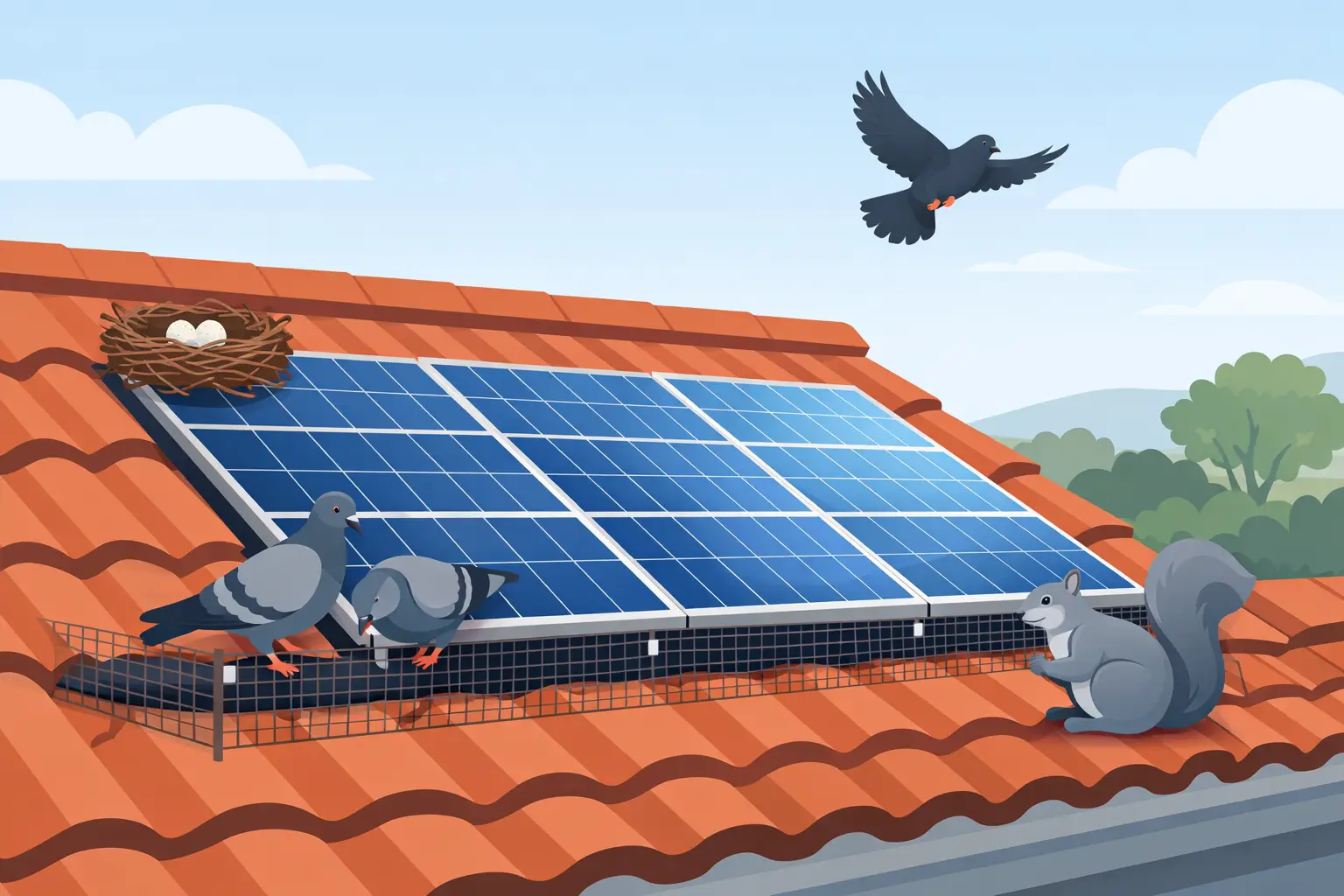
The first sign is often a persistent scratching or cooing from above a bedroom, followed by feathers, droppings and nesting material around the gutters. Bird proofing for solar panels deals with the gap beneath the array before a nuisance turns into damage, blocked drainage or an ongoing cleaning problem.
Solar panels create a dry, sheltered space that appeals to birds, particularly pigeons. Once they have started using it, they tend to return. A proper solution is not about making the roof look hostile. It is about closing off access cleanly, safely and without affecting the performance or warranty of the system.
Panels are raised above the roof on mounting frames, leaving a protected void underneath. It is out of the wind, warmer than the surrounding roof and difficult for most predators to reach. In towns, villages and rural properties alike, that makes it an attractive roosting and nesting spot.
The problem is usually not a bird landing on the panels. It is what happens underneath them. Nesting material can build up around cables and brackets, while droppings collect on panel surfaces, roof tiles, gutters and patios below. The mess is unpleasant, but it can also reduce the amount of light reaching the panels and make routine maintenance more difficult.
Where gutters become packed with feathers and debris, rainwater may overflow against fascias and walls. On older roofs, repeated traffic and accumulated debris can expose minor defects that would otherwise have gone unnoticed. Birds may also attract parasites into roof spaces or through open windows and vents.
You do not need to wait for a large build-up before taking action. Regular noise from the roof early in the morning, droppings below the panel edges, loose feathers in gutters and twigs falling onto the ground are all good reasons to have the installation checked.
A visible nest does not always show the full extent of the issue. Birds can enter through a small gap at the lower edge of the array, then move freely beneath several panels. From ground level, a property may look fine while the space below is heavily used.
It is also worth acting if panel output has dropped for no obvious reason. Dirty panel faces are only one possible cause, and a solar installer should investigate electrical faults. However, a heavy covering of droppings and debris can contribute to poorer generation and should not be ignored.
The most reliable method is a purpose-made, UV-resistant mesh fitted around the perimeter of the solar array. It is secured to the panel frame with suitable clips, rather than drilled into the panels or roof. This blocks access beneath the system while allowing airflow around it.
Good fitting matters as much as the material. The mesh must follow the edge of the array closely, including awkward corners and changes in roof level. If even one section is loose or poorly finished, birds may find a way in and the job becomes a temporary fix.
A professional visit should begin with an inspection. This identifies where birds are entering, whether there is existing nesting material, and whether the roof, gutters or panels need cleaning before exclusion work starts. The fitter should also be able to work safely at height and avoid interfering with the solar system’s wiring, frames and ventilation.
Expanding foam, loose netting and improvised barriers can create more problems than they solve. Foam breaks down in weather, looks untidy and may trap debris. Loose netting can flap, detach or create an entanglement risk. Household mesh held on with unsuitable fixings can scratch frames or come away in strong winds.
Spikes are sometimes suggested, but they are not normally the best answer for the void under solar panels. They may discourage birds from perching on a narrow ledge, but they do not properly seal the sheltered space underneath. A tailored mesh exclusion system is usually cleaner, more durable and more effective.
Bird control work needs to be carried out responsibly. If there is an active nest with eggs or dependent young, it must not be damaged, moved or blocked in. The correct approach is to assess the situation, allow the nesting cycle to finish where required, then clean and proof the area as soon as it is lawful and practical to do so.
This is one reason a quick visual check from a ladder is not always enough. A trained operator can assess signs of activity and advise on the appropriate next step, rather than fitting mesh that leaves birds trapped beneath the panels or causes unnecessary disturbance.
If there are no active nests, early exclusion is generally far easier than waiting until several birds have established a regular site. It also means less contamination to remove and less likelihood of debris reaching the gutters.
Proofing without clearing the existing mess can leave odours, parasites and blocked drainage behind. Before the mesh is installed, nesting material and droppings should be removed carefully from beneath and around the panels, with suitable protective equipment and safe working methods.
The panel surfaces may also need cleaning, but this should be done with care. Abrasive tools, harsh chemicals and high-pressure washing are not suitable for every system and can cause damage. The aim is to remove soiling safely, not to force water under seals or into electrical components.
For properties with a long-standing problem, it is sensible to inspect the gutters at the same time. There is little value in stopping future nesting if a gutter is already holding enough debris to overflow during the next heavy spell of rain.
Correctly fitted mesh should not affect solar generation. It sits around the outside edge of the array and does not cover the panel surface. In fact, preventing birds from roosting and fouling the panels can help keep the system cleaner and easier to maintain.
The important point is that the mesh is fitted to the panel frame with an appropriate system and does not restrict the airflow needed beneath the array. Avoid any contractor who proposes drilling through panels, mounting rails or roof tiles simply to secure a barrier. Solar installations are valuable assets, and exclusion work should protect both the panels and the roof beneath them.
A small amount of bird activity may be manageable with a prompt inspection. Repeated nesting, heavy fouling, blocked gutters, roof access issues or a large solar array are best handled professionally. Working at height carries obvious risks, and the area beneath panels can be awkward to reach without the right equipment.
For homes, farms, rental properties and commercial premises across South Devon, Elimipest South West provides practical inspection, clean-up and exclusion work tailored to the site. Discreet attendance can be arranged where needed, and the focus is on a durable fix rather than a visible, short-lived patch.
A well-fitted mesh system is usually a one-off preventative measure, but it is still worth looking at the panel edges and gutters from the ground a few times each year. If you hear activity again, see a loose section or notice fresh droppings, deal with it early. The quiet roof you get afterwards is often the clearest sign the job has been done properly.


