
Ashburton | Bovey Tracey | Brixham | Buckfastleigh | Dawlish | Exeter | Teignmouth | Totnes | Torquay | Paignton | Newton Abbot
07950 609768
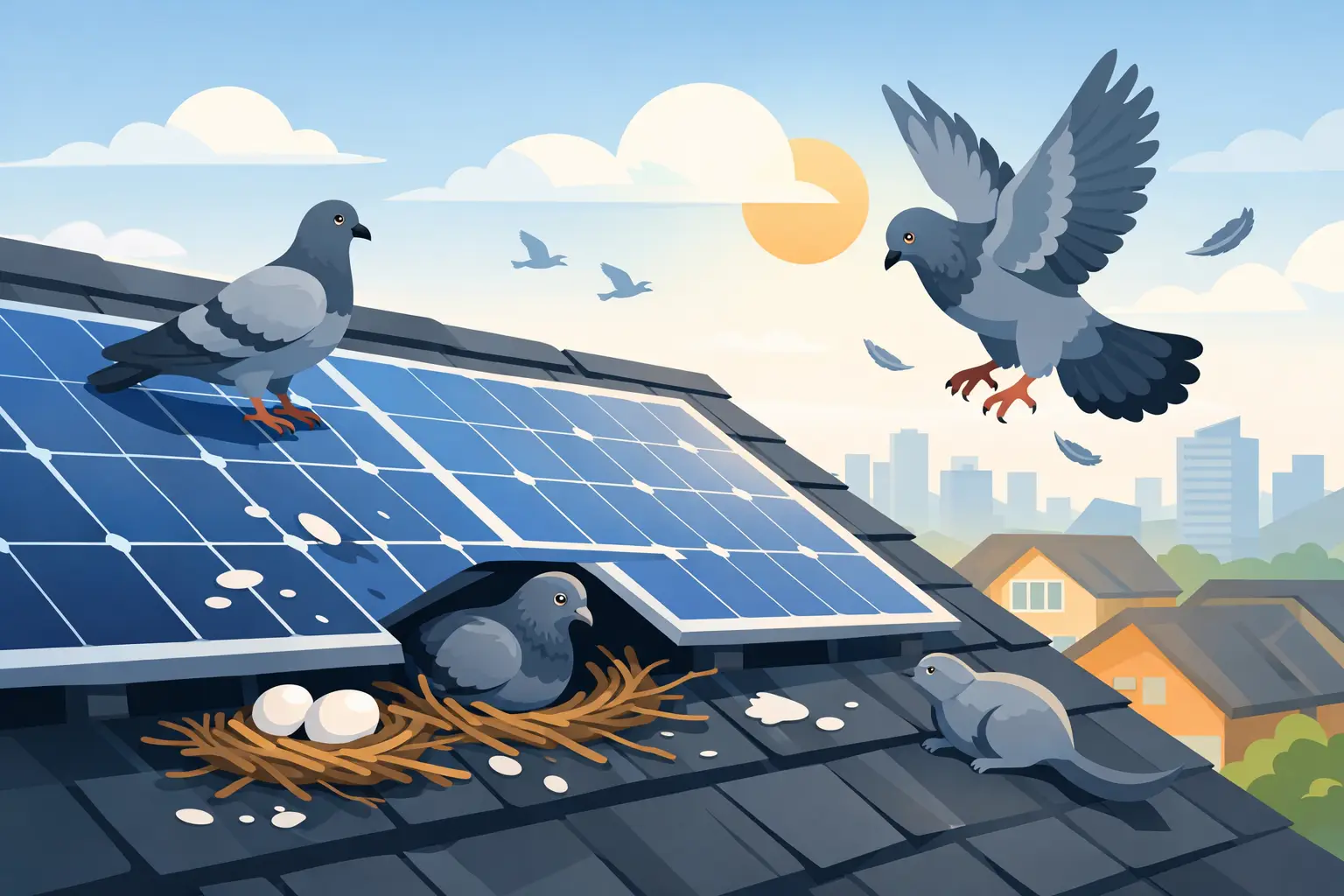
A pair of pigeons landing on a roof is rarely a concern. A settled flock beneath a solar array is different. Homeowners often ask, can pigeons damage solar panels? The short answer is yes, although the panels themselves are usually tougher than people expect. The greater risk comes from nesting, fouling, blocked drainage and damage to the cables, roof coverings and equipment around them.
Solar panels provide pigeons with a dry, sheltered space that is difficult for predators to reach. Once birds have established a nest under an array, they tend to return repeatedly. Acting early is normally simpler, cleaner and less costly than dealing with a long-standing roost.
Modern solar panels are designed to withstand wind, rain, temperature changes and ordinary outdoor conditions. A pigeon walking or sitting on the glass is unlikely to crack a correctly installed panel. The issue is what happens around and underneath it.
Pigeons carry nesting material into the gaps between panels and the roof. Twigs, leaves, feathers and litter can build up surprisingly quickly. This material holds moisture, restricts airflow and creates a sheltered area for more birds. On a low-pitched roof, it may also interfere with water run-off.
Bird droppings can reduce the amount of light reaching the panel surface. A light scattering is usually more of a cleaning issue than a serious fault, but heavy fouling can affect generation, particularly where it creates persistent shaded patches. Droppings are also acidic and unpleasant to remove once baked on by the sun.
The most significant direct risk is to wiring. Pigeons may peck, pull or dislodge cables while building nests. Rodent activity can also be encouraged by a dry, undisturbed nesting area. Damaged insulation or loose cables should always be assessed by a qualified solar installer or electrician, not simply washed or pushed back into place.
The space under solar panels can turn into a busy nesting site without being obvious from ground level. By the time a property owner notices feathers on the lawn, noise in the loft space or droppings around the patio, there may already be several nests under the array.
Nest material does not always stay beneath the panels. Wind and rain move twigs, moss, feathers and droppings into gutters, valleys and downpipes. Blocked gutters can overflow onto fascias, walls and paths. During heavy Devon rainfall, a small blockage can soon become a damp problem or cause water to track where it should not.
Pigeons commonly perch along the panel edge, ridge tiles and gutters. Their droppings collect beneath these points, often staining roof surfaces and patio areas below. If there are gaps around eaves, damaged tiles or loose flashing, birds and debris may gain access to roof voids.
A nest in a loft or eaves space brings further problems: odour, insects associated with nest material, noise and contamination. For landlords and commercial premises, this can become a hygiene and maintenance issue as well as a nuisance.
Panels need an air gap below them to help control temperature. Nesting material packed into this gap can restrict ventilation. It will not necessarily cause an immediate breakdown, but consistently high temperatures can reduce efficiency and place extra stress on components over time.
Nesting material is dry for much of the year and can sit close to electrical cabling and connectors. A bird nest alone does not mean a fire is likely. However, if it combines with damaged wiring, loose connections or a fault in the system, the risk should not be ignored. Any signs of damaged cables, burning smells, error messages or falling generation need prompt attention from the appropriate electrical professional.
You do not need to climb onto the roof to identify a likely issue. Regular bird traffic to the same section of roof, cooing from beneath the panels, and feathers or twigs appearing below the array are common early signs. Droppings concentrated on the lower panel edges, gutters or ground directly beneath the system also point to established activity.
A sudden drop in solar generation may be caused by many things, including weather, inverter faults or ordinary seasonal changes. It is not proof of pigeon damage. But where it occurs alongside visible fouling or nesting, arranging an inspection is sensible.
Do not attempt to lift panels, reach into gaps or work from a ladder without suitable access equipment and training. Aside from the risk of a fall, solar arrays and roof coverings can be damaged by well-meaning DIY work.
The most effective approach is exclusion. Purpose-made solar panel mesh is fitted around the perimeter of the array to close the gaps where pigeons enter. It is designed to keep birds out while allowing air to circulate beneath the panels. Correct fitting matters: poorly secured mesh can come loose in high winds, leave entry points at corners or rub against the roof and panel frame.
Before mesh is installed, existing nests and debris should be removed safely. This prevents organic material being sealed beneath the system and allows the roof, cables and panel edges to be checked. Cleaning the panels may also be worthwhile where fouling is heavy, but cleaning alone will not stop birds returning.
Spikes, wire systems and visual deterrents can have a place on ledges, gutters and nearby perching points. They are not usually the best first answer for the void underneath a solar array. Pigeons are persistent and will use any accessible gap. Exclusion is generally more reliable than trying to frighten an established flock away.
Timing also matters. Active nests and eggs may be protected, so any work has to be planned lawfully and with bird welfare in mind. A professional assessment can establish whether removal and proofing can proceed immediately or whether work needs to be timed around the nesting situation.
No two roofs are quite the same. Panel layout, roof pitch, gutter position, surrounding trees, nearby food sources and access all affect how pigeons behave. A detached home with a small array may need straightforward mesh proofing. A block of flats, farm building or commercial unit may need a broader plan covering multiple rooflines, loading areas and regular monitoring.
The condition of the installation should guide the work as well. If the panels are new and birds have only just started investigating, prompt proofing can prevent a larger problem. If nests have been present for months, the job may involve debris clearance, sanitation, gutter attention and a recommendation to have the electrical side checked separately.
For properties across South Devon, Elimipest South West provides practical bird control based on the site rather than a one-size-fits-all treatment. The aim is to stop repeat nesting without creating unnecessary disruption for the household, tenants or business.
It is sensible to arrange professional advice if pigeons are regularly entering beneath panels, nesting material is visible, gutters are overflowing, or fouling is becoming difficult to manage. It is especially worthwhile where access is awkward, the roof is steep, or the array is close to electrical equipment.
A quick response can protect the system’s performance, keep roof maintenance under control and prevent a small roost becoming an established colony. If pigeons have chosen your solar panels, dealing with the entry points now is usually the no-fuss way to keep them from choosing the same spot again next season.


