
Ashburton | Bovey Tracey | Brixham | Buckfastleigh | Dawlish | Exeter | Teignmouth | Totnes | Torquay | Paignton | Newton Abbot
07950 609768
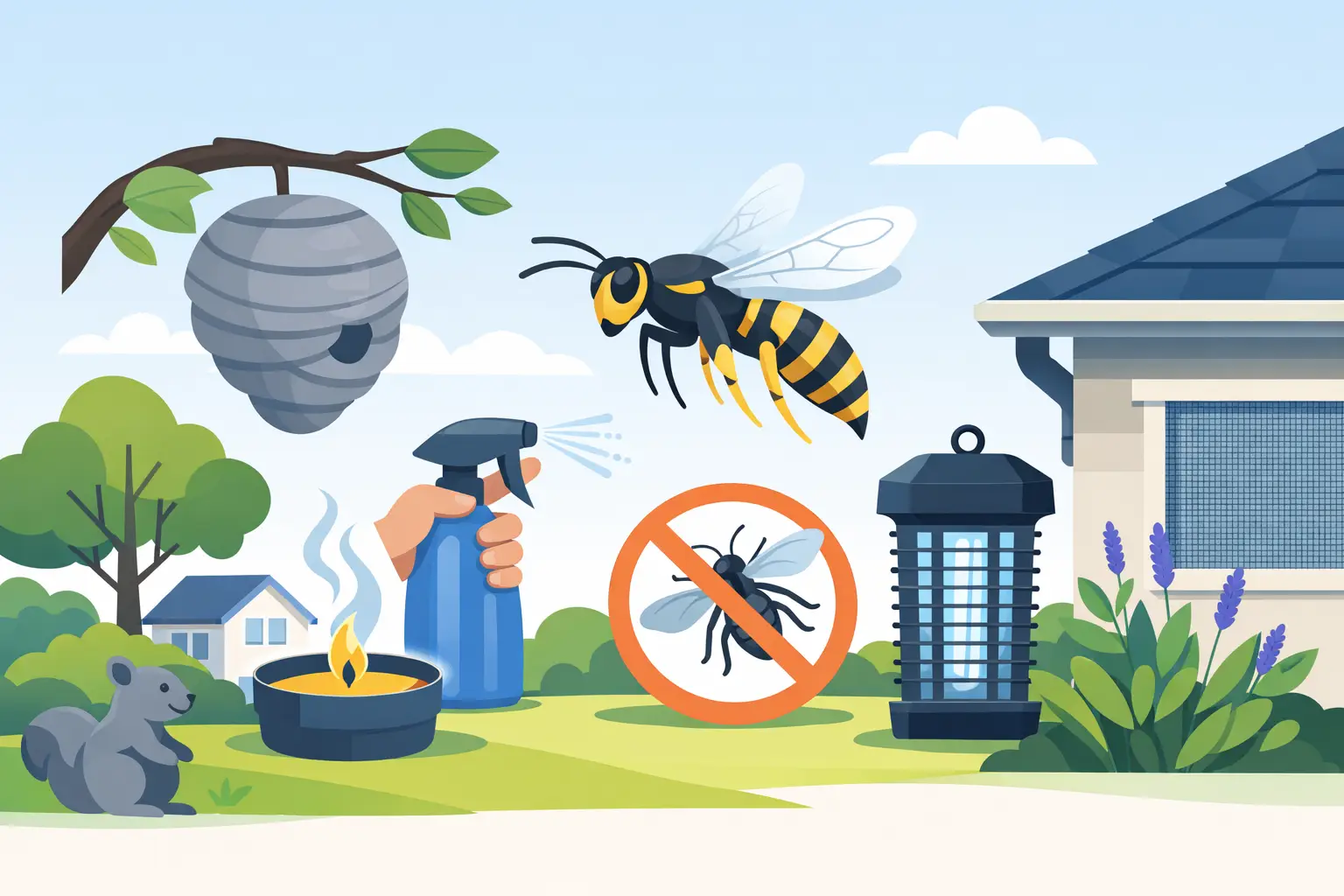
A wasp hovering around a picnic table is irritating. A steady stream disappearing into a gap in the roofline, shed or loft is a different matter. The best ways to keep wasps away are usually simple, practical jobs that make your property less attractive before a nest becomes established. The key is to deal with food, shelter and access points early, rather than waiting until activity is at its busiest.
Wasps are most noticeable from late spring through to early autumn. A small nest at the beginning of the season can grow quickly, and late-summer wasps are often more persistent around food and drink. Prevention will not remove every wasp from a garden, but it can reduce the chances of them settling close to your home, business or outdoor seating area.
The most effective prevention starts with removing the things wasps are looking for. Sweet food, protein, water and sheltered nesting spaces all encourage activity. Small changes made consistently are more useful than one-off remedies or heavily scented products that promise a quick fix.
Outdoor bins are a common source of wasp activity, particularly where lids are left open or bags have split. Use a bin with a close-fitting lid, clean spills from the outside, and avoid leaving food waste beside the bin waiting for collection. If you run a café, pub, holiday let or other customer-facing premises, bin areas need regular attention during the warmer months.
At home, clear plates and drink cans promptly after eating outside. Wasps can be drawn to sugary drinks, jam, fruit, barbecue marinades and discarded meat. Cover serving dishes where possible and do not leave pet food outdoors for long periods. A rinsed can or bottle is less appealing than one with sticky residue left inside.
Fallen fruit deserves the same attention. Apples, plums and other fruit left rotting beneath trees provide an easy food source. Gather windfalls regularly, especially if the tree is near a patio, children’s play area, stable yard or entrance.
Wasps often choose quiet, protected sites that are not disturbed often. Eaves, fascia boards, loft voids, wall cavities, air bricks, sheds, garages and garden buildings are all potential nesting locations. Check these areas in spring and early summer, when activity may be limited to a few wasps investigating a suitable gap.
Repair loose soffits, broken tiles, damaged cladding and gaps around pipework once you are certain there is no active nest inside. Fit fine mesh over suitable vents where this will not restrict necessary airflow. Keep shed doors closed when not in use, and avoid allowing piles of unused timber, boxes or garden materials to build up against walls.
Take care not to block an opening simply because you have seen wasps using it. If a nest is already active, sealing the entrance can force them to find another route into a loft, room or neighbouring cavity. It can also make professional treatment more difficult. Active nests should be assessed first.
Wasps need water, particularly during dry spells. Dripping taps, leaking hose connectors, uncovered water butts and shallow containers can encourage repeated visits. Fix leaks where practical and keep water butts covered. If livestock, poultry or pets need an outdoor water source, it may not be realistic to remove it. In those cases, focus on keeping feeding areas clean and check surrounding buildings for nesting activity.
There is no need to stop using your garden because wasps are about. A few sensible habits can make eating and relaxing outside far more comfortable.
Avoid wearing strong sweet fragrances when you know wasps are active, and keep brightly scented sprays away from outdoor dining areas. Use lidded cups for children’s drinks and check cans before taking a sip. This is particularly worthwhile later in the season, when wasps may be more interested in sweet foods than they were earlier in the year.
If one or two wasps approach, remain calm and avoid swatting. Fast movements can make the situation worse, especially if there is a nest nearby. Move food indoors if activity increases, rather than trying to chase them away. A fan can help around a small outdoor table because wasps are not strong fliers in moving air, but it is a comfort measure, not a solution to a nest.
Decorative traps and strong-smelling deterrents are often over-relied upon. They may catch a small number of insects or mask odours for a short time, but they do not address a nest in the roof, wall or shed. Some traps can also draw wasps towards the area you are trying to protect. If used at all, they should be placed well away from doors, patios and working areas.
Early checks are one of the best ways to keep wasps away from places where people, customers or animals are regularly present. Walk around the property every week or two from spring onwards. Look at eaves, garages, loft entrances, sheds, under decking and around exterior pipework.
A single wasp repeatedly following the same flight path into a crack or gap is a stronger sign than the occasional wasp passing through the garden. You may also hear a faint buzzing in a wall or ceiling, or spot activity around a rarely used building. Farms, estates and rural properties should include barns, machinery stores, field shelters and stable blocks in routine checks, as these quiet structures offer plenty of nesting opportunities.
Do not poke, spray or knock down a suspected nest. Disturbing it can lead to defensive behaviour and stings, particularly where a nest is concealed and larger than it appears. This is not a job for ladders, improvised chemicals or a hosepipe.
Not every nest causes an immediate problem. A small nest well away from doors, paths, living areas and workspaces may be left alone in some circumstances. However, treatment is sensible where wasps are entering a home, nest activity is close to a public or family area, or the nest is in a commercial, agricultural or food-handling setting.
Professional help is also the right call if the nest is in a loft, cavity wall, roof void or high location. These sites need the correct treatment method and safe access. Trying to deal with them yourself can put you at risk and may leave the nest active.
A proper visit should identify the entry point, treat the nest directly where possible, and give clear advice about what to expect afterwards. There may still be some movement for a short period following treatment, so avoid the area and do not seal access points until activity has stopped. If there are repeated nests in the same part of a property, the cause may be a building defect or neglected access point that needs addressing once the site is inactive.
For householders, landlords and businesses across South Devon, a fast assessment can prevent a minor nuisance becoming a difficult problem during the busiest part of summer. Elimipest South West provides practical, tailored wasp treatment where prevention alone is no longer enough.
Keep outdoor areas clean, inspect sheltered gaps early and take any repeated flight path seriously. That calm, practical approach gives you the best chance of enjoying your property without sharing it with an unwanted nest.


