
Ashburton | Bovey Tracey | Brixham | Buckfastleigh | Dawlish | Exeter | Teignmouth | Totnes | Torquay | Paignton | Newton Abbot
07950 609768
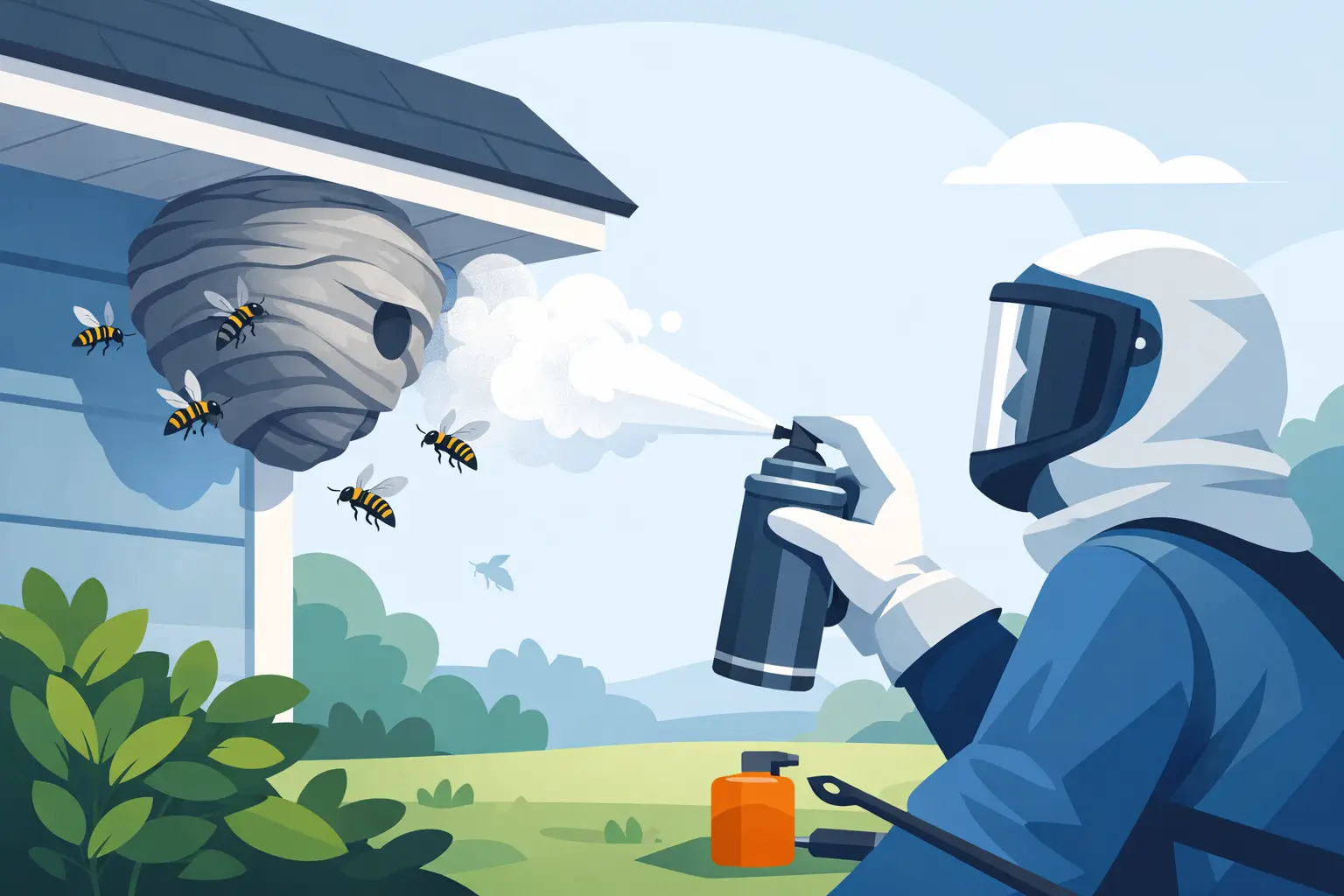
That low, angry buzzing from the loft or eaves tends to focus the mind very quickly. If you are searching for how to get rid of wasp nest problems around your home, farm building or business premises, the first thing to know is this: some nests are straightforward for a professional to treat, but they are not always safe to tackle yourself.
Wasps are more than a nuisance. A single nest can grow quickly through summer, and the more activity there is around an entrance point, the greater the chance of stings, disrupted work, or people avoiding parts of the property altogether. For households with children, pets, or anyone with an allergy risk, it is sensible to treat the matter with caution from the start.
The main mistake people make is disturbing the nest before they know exactly what they are dealing with. Poking, spraying at random, blocking the entrance, or trying to knock it down can turn a manageable problem into an immediate one. Wasps defend their nest aggressively when threatened, and that response is fast.
If you have spotted regular wasp traffic going into a hole in a wall, roofline, air brick, shed roof or loft space, keep your distance and watch the flight path from a safe position. That will usually tell you whether there is a single active nest or simply wasps foraging nearby. It also helps identify where the real access point is, which is not always where the insects seem to gather.
In practical terms, do not seal the hole, do not pour water into it, and do not use a household aerosol unless you are certain the nest is very small, fully exposed and easy to retreat from. Even then, DIY treatment is often less effective than people expect. If the insecticide does not reach the heart of the nest, surviving workers stay active and the problem carries on.
There is a big difference between seeing a few wasps around the garden and dealing with a nest inside the structure of a building. A nest in a shrub might be visible and clearly accessible. A nest under roof tiles, in cavity walls, loft insulation, barns, stables or commercial units is a different job altogether.
DIY becomes risky if the nest is above head height, difficult to reach, partly hidden, or in a place where escape is awkward. The same applies if there is heavy wasp activity, more than one entry point, or any chance that treatment could drive wasps into occupied rooms. Properties with young children, elderly residents, staff, customers, livestock, or pets nearby also need a more careful approach.
Then there is the question of species. Most people simply call them wasps, but behaviour and nesting habits can vary. Hornets, for example, need calm handling and proper identification. Bees should never be treated as though they were wasps. If there is any doubt, get the species confirmed before anything is done.
Professional treatment is usually the quickest route because it starts with the right diagnosis. An experienced pest controller will identify the insect, locate the active nest, assess access and risk, apply the correct treatment, and advise whether a return visit is needed. That saves guesswork and, quite often, prevents repeat trouble.
Across homes and rural properties in Devon and the South West, nests regularly appear in lofts, soffits, sheds, garages, wall cavities and under roof edges. On farms and estates they can also be found in outbuildings, feed stores, machinery sheds and redundant structures that do not see much disturbance.
The pattern is usually the same. A queen finds a sheltered spot in spring, starts a small paper nest, and by midsummer the colony expands. People often do not notice the nest at first because early activity is light. By the time dozens of workers are coming and going, the nest may already be established deep inside the structure.
That matters because access affects the treatment plan. An exposed nest hanging in a shed is one thing. A hidden nest behind cladding or inside a cavity may need a different application method and a more measured approach.
People sometimes expect treatment to mean removing the nest immediately, but that is not always necessary on the first visit. In many cases, the priority is to apply a professional product safely so worker wasps carry it into the nest. Once the colony has been neutralised, activity drops off rapidly.
If the nest is accessible and safe to remove later, that may be done. If it is buried in a wall or roof void, removal is often impractical and unnecessary once it is inactive. Old nests are generally not reused by new colonies, although another queen may build nearby in a future season if the location still offers shelter.
A proper treatment should also include advice on reducing the chance of another nest in the same area. That might mean repairing gaps, fitting insect mesh to vents, checking damaged soffits, or changing how often little-used buildings are inspected through spring and early summer.
If by “for good” you mean permanently, the honest answer is that no one can promise wasps will never return. What you can do is make your property less attractive and spot activity earlier next time.
Wasps favour dry, sheltered voids with easy access. Small openings around fascia boards, lifted tiles, gaps around pipework, damaged air bricks and poorly sealed outbuildings all give them an opportunity. Regular maintenance matters more than most people realise. So does early observation. A nest the size of a golf ball in May is very different from a mature nest in August.
Food sources play a part as well. At domestic properties, open bins, fallen fruit and sugary residues can draw wasps into the area, even if the nest itself is elsewhere. On commercial and agricultural sites, feed storage, waste handling and seasonal activity around produce can increase pressure. Prevention is not complicated, but it does need to be practical and site-specific.
There are plenty of bad ideas that still do the rounds. Burning a nest, flooding it, blocking the entrance, striking it with a stick, or climbing up with a can of spray and no protective kit are all common examples. None of them are sensible.
Blocking an entrance is especially counterproductive. If the nest remains active, wasps may chew out through another route and end up inside the building. That creates more disruption and can make treatment harder. Equally, trying to remove a live nest physically is one of the quickest ways to provoke a swarm response.
If you are not sure whether the nest is active, do not assume silence means safety. Activity changes with temperature, weather and time of day. A quiet nest can still contain live wasps.
Season affects both behaviour and urgency. In spring and early summer, nests are smaller and easier to manage. By late summer, numbers peak and wasps tend to be more noticeable around food and outdoor areas. This is when many people first realise there is a problem, even though the nest has been there for weeks.
Autumn often causes confusion. As the colony declines, activity can look less organised, and people assume the issue has solved itself. Sometimes it has. Sometimes there are still enough active wasps to make access dangerous. If the nest is in a sensitive location such as a school setting, customer entrance, loft hatch, stable block or work area, it is worth having it properly assessed rather than waiting and hoping.
If a nest is active and affecting daily life, quick action is usually the best option. The longer a mature nest is left, the more chance there is of accidental disturbance, especially around doors, rooflines, sheds and workspaces. A fast, no-fuss treatment saves time and lowers risk.
For property owners, tenants, landlords and business operators, the value of using a local specialist is simple: you get someone who knows the area, understands the kind of buildings common across the South West, and can give practical advice that fits the site rather than a generic script. That is the approach Elimipest South West takes with wasps and wider pest issues alike.
If you suspect a nest, keep clear of the area, keep others away, and resist the urge to interfere. The safest answer is often the most straightforward one – identify it properly, treat it correctly, and make sure the same spot is less inviting next season. That way, the job gets done with less stress and a lot less buzzing around your head.


