
Ashburton | Bovey Tracey | Brixham | Buckfastleigh | Dawlish | Exeter | Teignmouth | Totnes | Torquay | Paignton | Newton Abbot
07950 609768
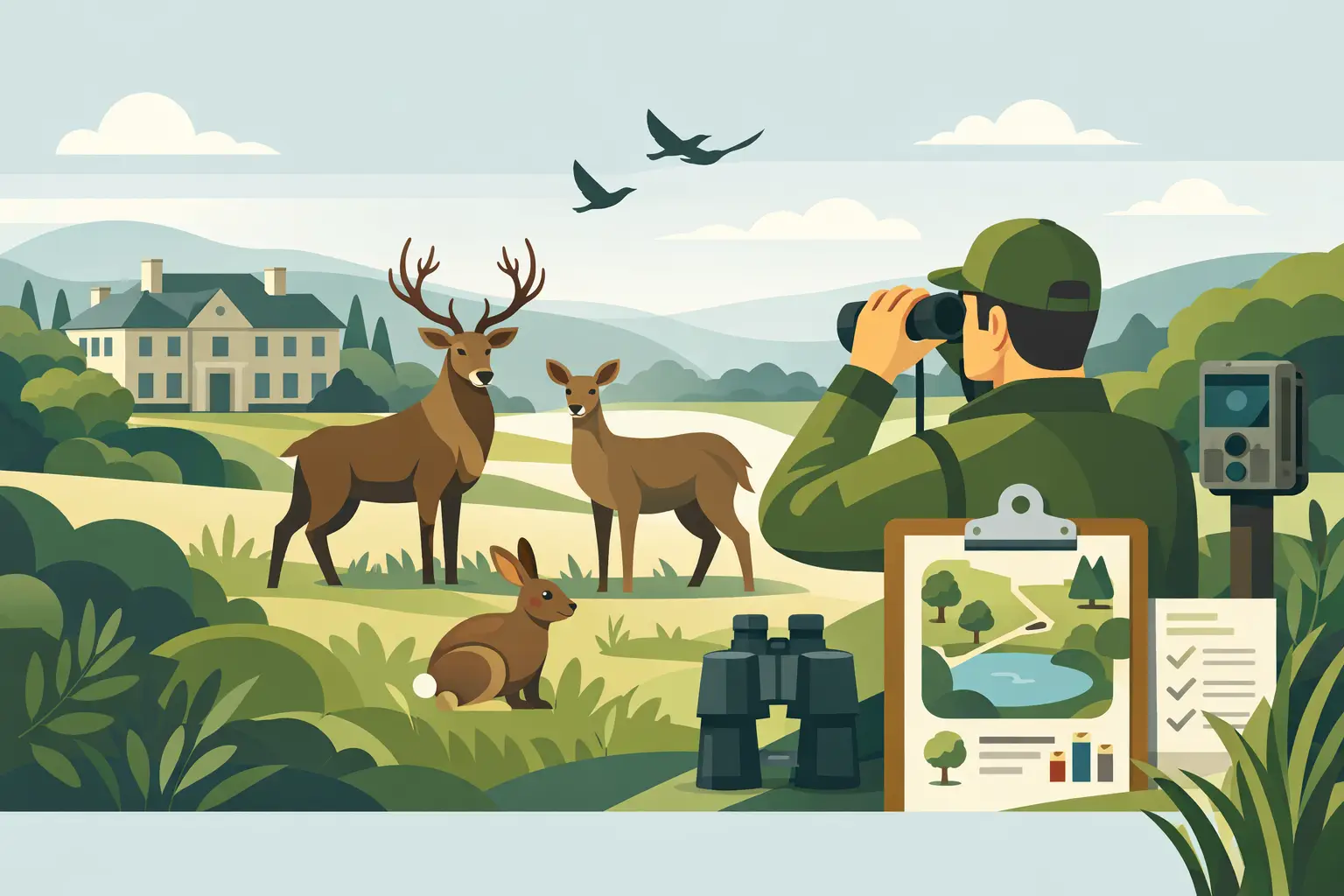
A pheasant cover strip stripped overnight, rabbit pressure along young planting, deer pushing through boundaries, and corvids working the same vulnerable spots day after day – this is where wildlife management for estates stops being a theory and becomes a practical job. On a working estate, the challenge is rarely one species in isolation. It is the combined effect on crops, woodland, game, livestock areas, buildings and reputation.
Good estate management is about balance. You want healthy wildlife populations and a landscape that functions well, but you also need to protect land use, income and safety. That means looking beyond one-off fixes and putting proper control, monitoring and prevention in place.
On an estate, wildlife management covers far more than dealing with nuisance animals when they become obvious. It means understanding what species are present, where pressure points sit, how the land is used across the year and what level of intervention is sensible.
That can include managing rabbits around young trees and pasture, reducing rat activity around feed stores and buildings, dealing with squirrels in woodland, controlling moles where they affect paddocks or machinery, and addressing bird issues around barns, grain stores or formal grounds. In some cases the problem is direct damage. In others, it is contamination, burrowing, disease risk or the knock-on effect on other wildlife and estate operations.
The right approach depends on the estate itself. A small private estate with formal gardens, let properties and a bit of woodland has very different pressures from a mixed agricultural estate with shoot interests, livestock and broad acre cropping. The principle stays the same though – manage wildlife in a way that is lawful, proportionate and grounded in what is actually happening on the ground.
A reactive approach often ends up costing more. If control only starts once damage is severe, you are normally dealing with a bigger population, wider spread and more urgent operational pressure. By that stage, the conversation is not just about wildlife. It is about lost grazing, failed planting, undermined banks, contaminated feed, complaints from tenants or safety concerns on footpaths and roads.
Planned wildlife management for estates gives you a clearer picture of seasonal patterns. You can identify where recurring issues start, whether current measures are working and where resources are being wasted. It also helps avoid over-treating one area while missing the real source elsewhere.
There is also the compliance side. Estates have to work within wildlife law, countryside obligations and, in some settings, tenant or public-facing expectations. Not every species can be treated the same way, and timing matters. What is suitable in one month may be unsuitable in another, particularly where nesting, breeding or protected species are involved.
Rabbits remain a major issue across many rural properties. They can hammer young planting, weaken banks and create trip hazards in paddocks and amenity areas. If left unchecked, numbers build quickly, especially where cover, dry banks and quiet boundaries give them ideal conditions.
Rats and mice are a constant concern where feed, grain, livestock housing or older buildings are involved. They contaminate stored materials, damage structures and create obvious hygiene risks. The trouble with rodent activity on estates is that it often spreads across multiple locations, so treating one building without addressing the wider harbourage rarely solves the issue for long.
Grey squirrels can cause serious damage in woodland by stripping bark, and they also find their way into roof spaces, stores and outbuildings. On estates with commercial or amenity woodland, their impact can be more than a nuisance.
Bird pressure varies by site. Pigeons, corvids and gulls can create problems around grain stores, livestock units, roofs and ornamental areas. The issue is not only mess. It is fouling, feed loss, disease risk and ongoing disturbance.
Then there are moles, foxes, deer and other species that may or may not require intervention depending on the estate’s priorities. There is no sense pretending every animal on every estate is a problem. The real job is deciding what level of activity is acceptable and where it becomes damaging.
This is where experience matters. Estates are often trying to achieve more than one thing at once – protect crops, improve woodland, support game, maintain biodiversity and keep the place presentable and safe. Those aims can support each other, but not always automatically.
For example, creating valuable habitat margins may also increase cover for rabbits or rats if nearby management is poor. Retaining mature trees and woodland edges is good estate practice, but squirrel pressure may then need proper control to protect regeneration. Pond, wetland or rough grass management can benefit wildlife generally while also increasing certain pest pressures if not monitored carefully.
That does not mean habitat improvement is the problem. It means wildlife management has to be joined up. Blanket control without thought can be wasteful, while a hands-off approach can allow preventable damage to build. The sensible middle ground is to protect what matters most, keep records, review results and adjust methods as conditions change.
The best plans start with a site-led assessment rather than assumptions. Where is damage occurring? What signs are present? Which species are definitely involved? How does pressure change through the year? Where are the likely harbourage points, food sources and access routes?
From there, a practical plan usually combines direct control with prevention. That may involve targeted treatment around buildings, proofing vulnerable structures, reducing access to feed, managing vegetation around key areas, ongoing checks in known hotspots and seasonal intervention before numbers peak.
On larger estates, monitoring is just as important as treatment. Without it, you can mistake a temporary reduction for a long-term fix. A good programme should show whether activity has genuinely dropped, whether fresh movement is developing elsewhere and whether the land management side needs tightening up.
Discretion also matters. Estates often have tenants, guests, shoot days, holiday lets, events or public rights of way to think about. Wildlife and pest work needs to be carried out professionally, safely and with as little disruption as possible.
No two estates in Devon or the wider South West behave in exactly the same way. Ground conditions, boundary types, woodland structure, farm buildings, weather exposure and neighbouring land use all affect wildlife movement. The same species can behave very differently on coastal ground, mixed farmland or sheltered inland estates.
That is why local, practical knowledge counts. Someone used to working rural sites will spot the patterns quickly – where rabbits are likely to hold up, how rodents are moving between stores and cover, or why bird pressure has increased around a yard that looked fine a month earlier. Field experience also helps when deciding what is realistic. Some sites need intensive short-term action. Others benefit more from steady monitoring and targeted intervention over time.
For estate owners and managers, that usually means fewer wasted visits, clearer advice and measures that fit the working routine of the property.
If damage is recurring, spreading across multiple areas or affecting high-value land use, it is worth getting specialist support early. The same applies if you are dealing with legal uncertainty around certain species, concerns about non-target wildlife, or a site that has become too large or too sensitive for ad hoc control.
Professional support is especially useful where estates need a mix of pest control and broader wildlife management rather than a single treatment. That is often the reality on rural properties. Rodent pressure near buildings, squirrel damage in woodland, rabbit activity on boundaries and bird issues around farm structures can all be connected by the same wider management weaknesses.
A company with hands-on rural experience can help separate urgent action from long-term prevention. That keeps the work practical and avoids spending money in the wrong place. For estates across the South West, Elimipest South West takes that straightforward approach – assess the site properly, act where needed and build a plan that suits the land.
Wildlife management on an estate is never about chasing perfection. It is about keeping the ground productive, protecting assets and staying ahead of problems before they become expensive.


