
Ashburton | Bovey Tracey | Brixham | Buckfastleigh | Dawlish | Exeter | Teignmouth | Totnes | Torquay | Paignton | Newton Abbot
07950 609768
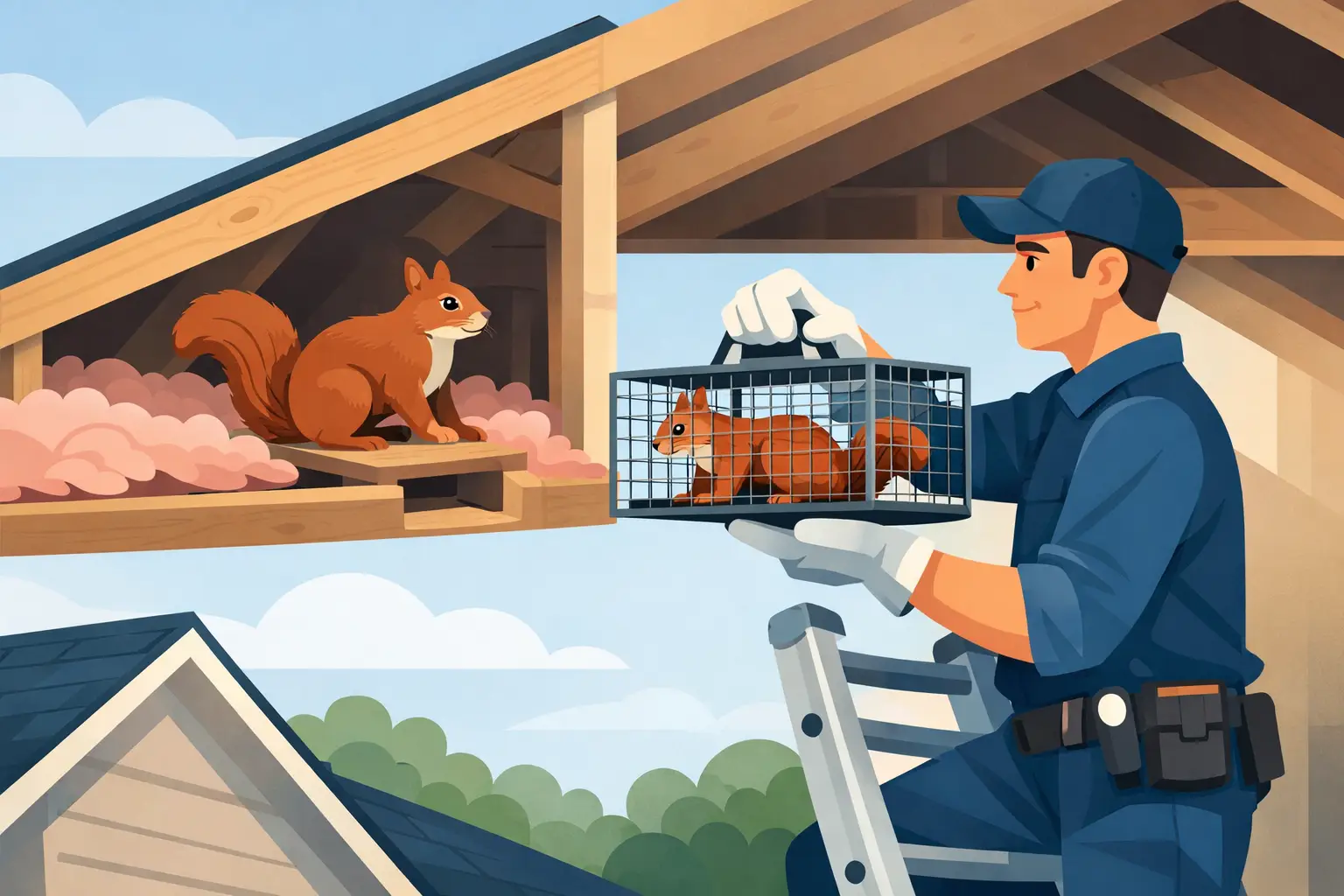
If you are hearing heavy scurrying above the ceiling at first light, you are probably not dealing with mice. Squirrels are louder, bolder, and far more destructive once they get into a roof space. Squirrel in loft removal is not just about stopping the noise. It is about preventing wiring damage, insulation disturbance, chewed timber, and repeat access to the same property.
In Devon and across the South West, this is a problem that often starts quietly and then escalates fast. A small entry point under the eaves, a gap around rotten fascia boards, or a lifted tile can be enough. Once a squirrel finds warmth, shelter, and a safe route in and out, your loft can become a nesting site rather than just a temporary stop.
A squirrel in the loft is more than a nuisance. Grey squirrels are persistent gnawers. They can chew timber, pipe lagging, stored items, and electrical cables. That creates a real fire risk as well as the obvious cost of repairs.
There is also the issue of contamination. Nesting materials, droppings, urine, and disturbed insulation can leave the loft unpleasant and unhygienic. If the problem has been present for some time, the clean-up can be almost as important as the removal itself.
Timing matters too. The longer squirrels remain in place, the more likely they are to settle in properly and return even after being disturbed. Property owners sometimes try to scare them off with noise, lights, or strong smells, but that rarely deals with the actual access point or the reason they came in to begin with.
The sound is usually the first clue. Squirrels are active during the day, especially around dawn and early morning, so the noise pattern is often different from rats or mice. It tends to sound heavier, more sudden, and more frantic, with clear running, scratching, and occasional thumps.
You may also notice gnaw marks around roof edges, soffits, fascia boards, or loft timbers. Insulation may look churned up or pulled aside where nesting has started. In some cases there are visible droppings, a strong musky smell, or signs of daylight where entry points have been opened up.
Outside the property, it is worth checking for overhanging branches, damaged rooflines, and regular squirrel activity around the same section of the house, farm building, or commercial premises. The loft problem nearly always begins with an external route in.
It is understandable that many people look for a quick fix. The trouble is that squirrels are agile, wary, and capable of causing more damage when they are trapped in the wrong place or prevented from leaving without proper planning.
Blocking an entry hole too early is a common mistake. If a squirrel is still inside, it may chew a new way out through weaker parts of the roofline or even into living areas. If there is a dependent litter present, matters become more complicated and need to be handled with care.
There is also the legal side to consider. Wildlife control is not something to guess your way through. The right approach depends on the species involved, the location, the condition of the building, and what can be done lawfully and safely. For householders, landlords, and businesses, that is usually where professional help saves time and avoids making a bad situation worse.
A proper service starts with inspection, not assumptions. The first job is to confirm the pest, identify how it is getting in, and assess whether there is one squirrel or an established nesting problem. A rushed approach can miss secondary access points and lead to repeat call-outs.
From there, squirrel in loft removal is usually handled as part of a wider control and proofing plan. Removal on its own is only half the answer. If the access point remains open, another squirrel may move in quickly, especially in areas with heavy tree cover or regular wildlife activity.
A practical treatment plan may include safe control measures, monitoring, and advice on when and how to carry out proofing. In some cases, proofing can be completed immediately. In others, it needs to be timed carefully to make sure the loft is fully clear first. That is where experience matters. No two roof spaces are exactly the same, and the right method depends on layout, height, access, and the extent of the damage already done.
In houses, the main concerns are noise, damage, and fire risk. Cables are a particular worry because squirrels chew constantly to wear down their teeth. Homeowners often discover the problem only after lights trip, circuits fail, or insulation has been shredded for nesting.
In farms, outbuildings, and estate properties, the issue can spread wider. Roof voids above stores, workshops, holiday lets, offices, and animal housing can all be vulnerable. Older buildings with more access points are especially at risk. Rural sites also tend to have easier squirrel routes through trees, stone walls, and adjoining structures.
Commercial premises have an extra concern – disruption. Noise overhead, damaged fabric, and visible pest activity can quickly become a reputational issue, particularly in hospitality, retail, or customer-facing environments. Discreet attendance and a clear plan are often just as important as the treatment itself.
Once the immediate problem is dealt with, the focus should shift to keeping squirrels out for good. This is where many short-term fixes fall short. If the property still offers easy access and shelter, it remains attractive.
Effective prevention usually means repairing the route in and checking for nearby weak points. That can include lifted tiles, gaps at eaves level, damaged vents, rotten timber, or junctions where roofing materials no longer sit tight. Tree branches close to the roof may also need attention, depending on the setting.
It helps to think of proofing as part of the job rather than an optional extra. A loft that has already been used once is worth protecting properly. Otherwise, you risk going through the same disruption again a few months later.
If you have repeated daytime noise in the loft, visible damage around the roofline, or signs that squirrels are nesting, it is time to get the situation checked. The earlier the inspection, the simpler the solution tends to be.
This is particularly true for landlords, letting agents, farmers, and business owners who have a duty to keep buildings safe and in good order. Delays can turn a manageable wildlife issue into a building repair problem, and that is usually far more expensive.
A specialist will not just look at what is happening inside the loft. They will look at how the property is being used, what risks matter most, and what level of proofing is realistic for the building. That practical view is important, especially with older homes and mixed-use rural sites.
For customers across the South West, the best results usually come from a straightforward approach – inspect properly, remove the problem safely, and secure the building against repeat access. That is the kind of no-fuss, tailored service Elimipest South West is known for.
Most people put up with loft noise for longer than they should, hoping it will sort itself out. Squirrels rarely do. They settle in, chew more, and make the eventual repair bill harder to swallow.
If you suspect squirrel activity, act while it is still one problem and not three. A quiet roof space, safe wiring, and a properly sealed entry point are usually worth far more than the cost of leaving it another week.


