
Ashburton | Bovey Tracey | Brixham | Buckfastleigh | Dawlish | Exeter | Teignmouth | Totnes | Torquay | Paignton | Newton Abbot
07950 609768
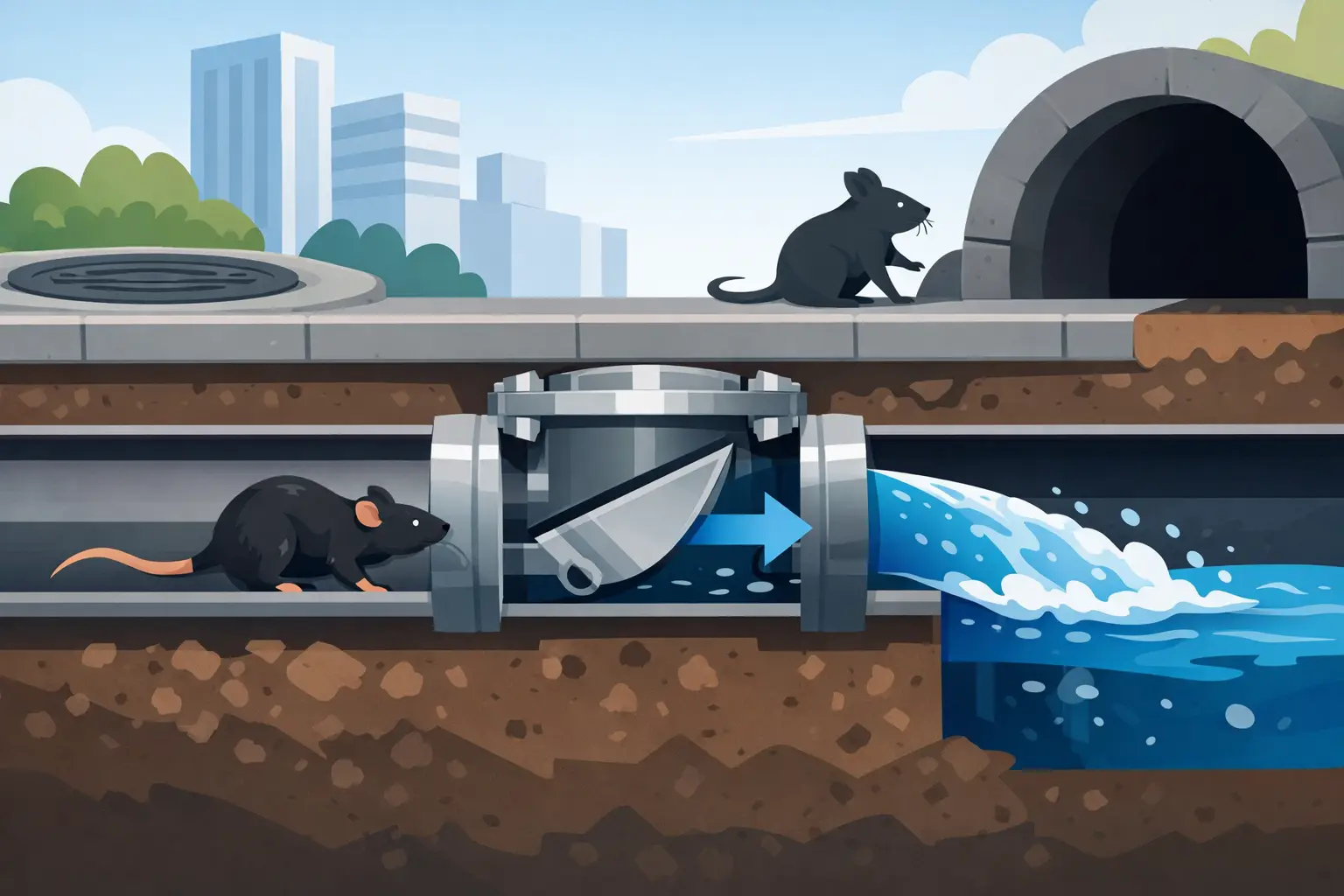
Few things frustrate property owners more than dealing with rats, only to find the problem keeps coming back through the drainage system. In many cases, the advantage of using one way rat valves is simple – they stop rats pushing up through pipework and entering the property from the sewer while still allowing waste to flow out as it should.
For homes, restaurants, farms and commercial premises, that can make a real difference. It is not a cure-all for every rat issue, and it should never be fitted without first understanding where the activity is coming from, but in the right setting it is a very practical line of defence.
A one way rat valve is a device fitted into a drain that allows wastewater to move in one direction only. Waste can leave the building as normal, but the flap or gate inside the valve prevents rats from travelling back up the pipe and gaining access through the drainage network.
This matters because rats are strong, adaptable and very capable in drains. They can move through sewer systems, enter damaged pipework, and exploit weak points around toilets, inspection chambers and older drainage layouts. If the route into a building is through the drain, conventional baiting above ground may only deal with part of the problem.
A properly selected and correctly installed valve targets the access point itself. That is often the most sensible place to start.
The main advantage is prevention. Rather than waiting for rats to emerge and then reacting, a one way valve physically blocks a known route of entry. That reduces the chance of repeat incursions and can help protect the property over the long term.
There is also a hygiene benefit. Where rats are entering through drainage, the concern is not only noise or sightings. There is the risk of contamination, damage, unpleasant odours and the general disruption that follows once rats establish themselves indoors. Blocking access early can spare a household or business from a much larger issue.
For commercial settings, particularly food premises, storage sites and hospitality businesses, this can be especially valuable. A rat seen inside a property is bad enough. A recurring problem linked to drains raises bigger questions around compliance, reputation and downtime. A one way rat valve can form part of a more dependable preventative approach.
For domestic customers, the value is often peace of mind. If a family has already experienced rats entering via toilets or drain runs, they usually want a straightforward answer that reduces the risk of it happening again. A physical barrier in the drainage system is often easier to understand and trust than relying on control measures alone.
Not every rat problem starts in the drains. Some infestations are driven by harbourage in gardens, outbuildings, loft spaces, livestock areas or stored feed. In those cases, fitting a valve may do little or nothing to solve the main issue.
That is why inspection matters. If the signs point to sewer access – such as rat sightings near inspection covers, evidence around toilets, activity concentrated at lower levels, or repeated re-entry despite treatment – then drain protection becomes much more relevant.
This is where experience counts. The right solution depends on the source of the activity, the condition of the drain, and the wider environment around the property. A valve should be part of a proper pest control plan, not a guess.
These valves are often most useful in properties with a known history of sewer-related rat activity. Older buildings can be more vulnerable, especially where drainage layouts are dated or where there have been previous defects. Premises close to watercourses, dense urban drainage networks or high-rat-pressure areas may also benefit.
In rural and agricultural settings, the picture can be a bit different. Farms and estates may face rat pressure from multiple directions at once – feed stores, livestock housing, midden areas, sheds and drains. In these cases, a one way valve can still be useful, but only as one part of a wider control programme.
For landlords and property managers, they can be worth considering where repeated complaints suggest a persistent access route through the sewer. Rather than treating each report as a standalone event, it often makes sense to address the structural route that is allowing entry.
A one way rat valve is effective when it is fitted in the right place and the drain is otherwise in suitable condition. That said, there are limitations.
First, it does not remove rats already present on the property. If rats have already established a nest under floors, in cavity walls, or around outbuildings, those animals still need dealing with properly.
Second, not every drainage system is appropriate for the same type of valve. Pipe size, flow rate, existing defects and access points all matter. Fit the wrong valve, or fit it badly, and you can create drainage issues rather than solve a pest problem.
Third, if there is broken pipework or an alternative route into the property, rats may simply find another way in. That is why pest control and drainage assessment often need to go hand in hand.
There is also the simple fact that physical devices need checking. A valve is not a fit-and-forget answer forever. Over time, debris, wear or damage can affect performance. Ongoing inspection helps ensure it continues working as intended.
Where sewer access is the root cause, repeated baiting alone can become an expensive cycle. Rats are dealt with, activity drops, and then more arrive through the same drain route. The property owner ends up paying for the same battle more than once.
That is one clear advantage of using one way rat valves. They tackle the access problem directly. In the right circumstances, this can reduce the need for repeated reactive treatments and provide a more stable result.
That does not mean poison or trapping have no place. They often remain necessary, especially at the start of a job. But blocking entry is usually a stronger long-term move than relying on control measures after the event.
For many customers, that is the difference between short-term relief and proper prevention.
It can be tempting to see a rat valve as a quick fix. Sometimes it is straightforward, but often the real question is whether the drainage system is genuinely the source of the issue.
A professional inspection looks at the full picture – signs of activity, likely entry routes, environmental factors, building layout and any structural weaknesses. That makes it far easier to decide whether a one way valve is the right investment or whether the problem lies elsewhere.
This matters because pest control works best when it is tailored. A house in a village with an ageing drain run is not the same as a restaurant in a town centre, and neither is the same as a livestock unit with feed attracting rodent pressure from all sides. The control plan should match the setting.
That practical, case-by-case approach is often what saves time and money in the long run.
If you have had repeat rat activity with signs pointing to drains, it is worth getting the system assessed. The same applies if rats have entered through toilets, appeared around inspection chambers, or kept returning despite previous treatment.
For businesses, early action is usually the right call. Waiting until repeated sightings affect staff, customers or compliance puts unnecessary pressure on the business. For homeowners and landlords, it is often better to deal with a likely access route before the problem escalates.
At Elimipest South West, the focus is always on practical solutions that fit the property and the level of risk. Sometimes that means treatment, sometimes proofing, and sometimes it means looking hard at the drains.
A one way rat valve is not the answer to every rat problem, but where sewer access is involved it can be one of the most effective steps you can take. The real advantage is not just keeping rats out for now. It is reducing the chance of facing the same problem again a few weeks down the line.


