
Ashburton | Bovey Tracey | Brixham | Buckfastleigh | Dawlish | Exeter | Teignmouth | Totnes | Torquay | Paignton | Newton Abbot
07950 609768
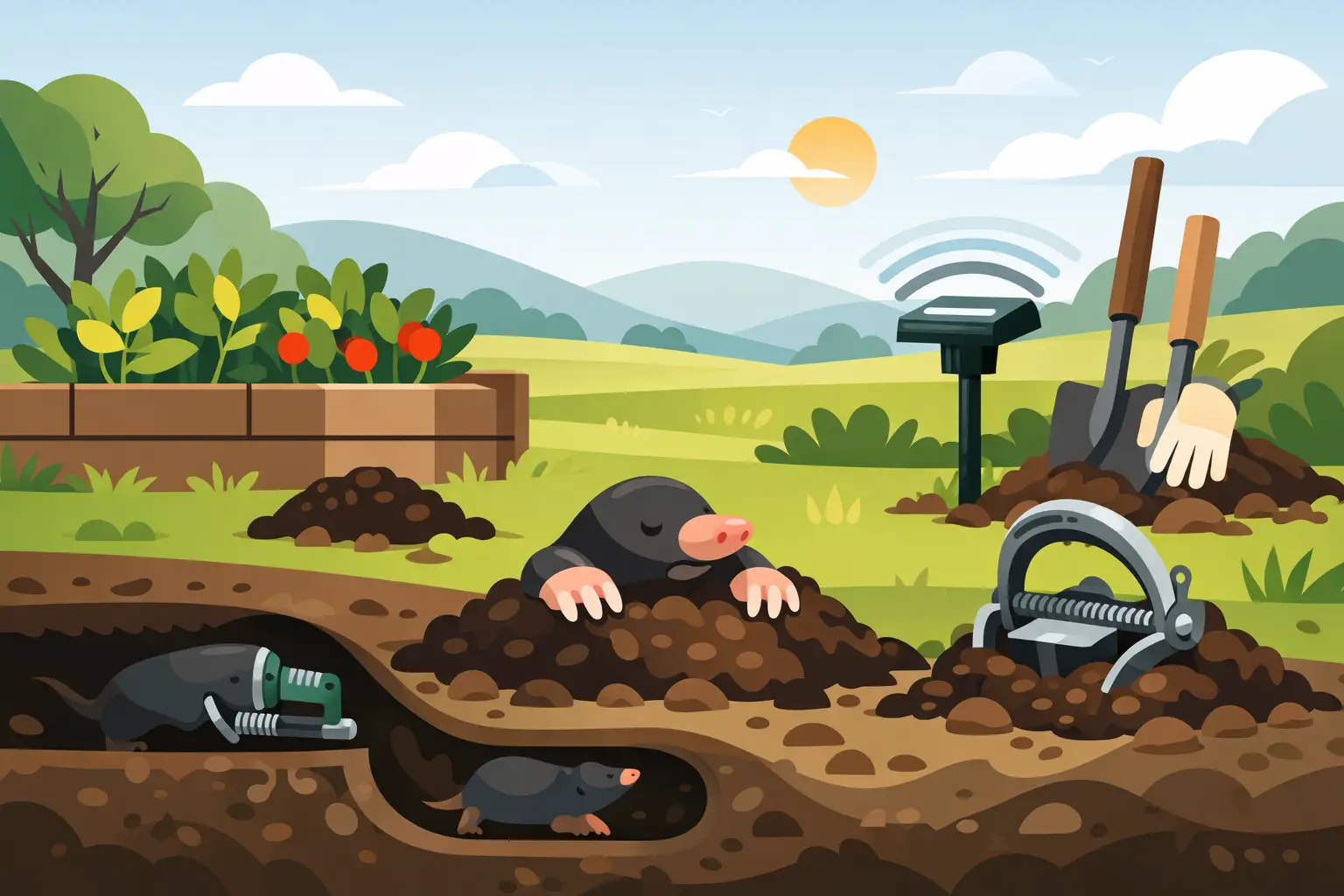
Fresh molehills across a lawn are bad enough. When they start pushing through borders, lifting roots and turning neat paths into a mess, the problem quickly becomes more than cosmetic. Good mole control for gardens is about acting early, choosing the right method for the setting, and avoiding wasted time on fixes that simply do not deal with the animal below ground.
Moles are a regular issue in parts of Devon and the wider South West, particularly where soil is moist, healthy and full of earthworms. That is the trade-off. The same conditions that help a garden thrive also make it attractive to moles. They do not eat bulbs, roots or vegetables in the way some people assume, but their tunnelling can still do real damage by disturbing root systems, drying out young plants and making lawns uneven and difficult to maintain.
A mole is not interested in your roses or runner beans. It is interested in food and workable ground. Soft, well-kept soil is easier to tunnel through than compacted or stony ground, and a garden with plenty of worms and insect larvae offers a reliable food source. That is why productive vegetable plots, ornamental lawns and established borders can all become targets.
Weather also plays a part. After prolonged wet periods, or during mild spells in winter and early spring, mole activity often becomes more obvious. Breeding season can increase movement too, as younger moles disperse and create fresh runs. In practical terms, that means a garden that was fine one month can suddenly show several new hills the next.
The obvious sign is fresh molehills, but not every hill means the same thing. A cluster of new hills in a straight or gently curving line often points to an active feeding run. Larger, more central mounds may be linked to deeper tunnels or nest chambers. The pattern matters because successful control depends on locating live routes, not just reacting to the visible spoil on the surface.
You may also notice ridges in the lawn, loose patches of soil that sink underfoot, or plants that seem to dry out for no clear reason. In vegetable gardens, seedlings can fail because roots lose firm contact with the soil after tunnelling beneath them. On banks and edges, mole runs can also undermine the ground and make maintenance awkward.
Old hills are less important than fresh ones. If the soil is dark, damp and recently pushed up, the mole is likely still active in that section. Dry, weathered spoil suggests historic activity and may not need immediate treatment.
There is no shortage of home remedies for moles, but most of them are unreliable at best. Bottles buried in the ground, strong-smelling substances, noise devices and shop-bought repellents are often tried first because they seem simple. The problem is that moles live in a sheltered underground system and can often avoid disturbances that barely affect them. At best, these methods may shift activity to another part of the same garden. At worst, they do nothing while the tunnel network expands.
For active infestations, the most dependable approach is targeted control based on identifying live runs and applying the right treatment properly. That may involve trapping by an experienced operator, which remains one of the most effective methods when carried out correctly. It is precise, avoids guesswork and can be adapted to the layout of the garden.
The detail matters. Trap placement, tunnel selection, ground conditions and follow-up checks all affect the result. This is why DIY efforts often fail. People set traps in old runs, disturb the tunnel too much, or choose the wrong type for the soil and depth involved. A mole may only pass a point occasionally, so poor positioning can waste days.
In larger grounds, paddocks, orchards or estate gardens, a broader management plan may be needed. One-off treatment can stop immediate damage, but where surrounding land supports regular mole movement, ongoing monitoring is often the sensible option.
If you have a single small lawn with one fresh run, you may be tempted to try handling it yourself. Sometimes that works, but many householders end up spending money on gadgets and weekend fixes that do not touch the real problem. The challenge is not just removing a mole. It is doing so quickly enough to prevent continued damage and repeated disturbance.
DIY control tends to fall short when the garden is large, the activity is spread across several areas, or the tunnels connect to neighbouring land, fields or banks. It also becomes more difficult where ornamental planting, raised beds or sensitive lawn areas make trial and error a costly option. In those cases, bringing in a specialist is usually the faster and more economical route.
There is also the question of safety and legality. Any control work needs to be carried out responsibly, using suitable methods and proper judgement. A professional will know how to assess the site, avoid unnecessary disruption and choose an approach that fits the setting.
No honest pest controller will tell you that gardens can be made permanently mole-proof in every case. If your property sits beside pasture, open land or unmanaged banks, there is always a chance of future activity. What you can do is reduce the conditions that make repeat problems harder to manage.
Good garden maintenance helps with detection. Keeping lawns cut and borders tidy makes fresh activity easier to spot before it spreads. Re-firming lifted soil around roots, repairing damaged turf promptly and flattening old hills after treatment all help restore the ground and show whether new movement appears.
Physical barriers can work in very specific situations, such as protecting a raised bed or a small high-value planting area with buried mesh. For whole gardens, though, barriers are rarely practical and can be expensive to install properly. That is another area where it depends on the layout. What makes sense for a kitchen garden does not always suit a large domestic lawn.
The key is realistic prevention, not gimmicks. Fast identification and prompt action are usually more effective than trying to create a garden moles will never enter.
Not every garden has the same level of risk. Rural properties often see repeat mole activity because surrounding land provides constant access and ideal habitat. Farms, smallholdings and homes backing onto pasture or woodland edge are especially prone. In these settings, treatment often needs to consider the wider ground, not just the visible lawn damage.
Suburban gardens can still be affected, particularly where there are green corridors, railway embankments, parks or connected strips of soft soil between properties. A neatly fenced garden is not a barrier to a mole travelling below ground. That catches people out. They assume the problem must have started within their own boundary, when in fact the animal may have moved in from some distance away.
This is why local knowledge matters. Soil type, drainage and surrounding land use all influence how mole activity develops. A practical assessment on site is often the quickest way to judge the scale of the issue and the best response.
A fresh mole problem is easier to deal with than one that has been left for weeks. Early treatment limits tunnel expansion, reduces lawn and border disruption, and lowers the chance of secondary problems such as unstable ground and damaged planting. It also means less restoration work once the activity stops.
Waiting rarely improves the situation. A garden may go quiet for a few days, then show fresh hills in a new area. That does not mean the problem has gone away. It often means the mole is simply working deeper or elsewhere in the run system.
For householders, landlords and land managers, the sensible approach is straightforward. If you are seeing fresh molehills, repeated surface runs or plant disturbance, get the problem assessed before the damage spreads. A no-fuss, tailored service is usually the quickest route back to normal, whether the issue is confined to a small lawn or part of a wider rural property. Elimipest South West deals with mole problems in a practical, discreet way, with treatment suited to the ground and the level of activity.
A garden does not need perfection to be healthy, but it does need firm ground, protected roots and a chance to recover. Deal with moles early, use methods that genuinely work, and you save yourself a lot of repair later.


