
Ashburton | Bovey Tracey | Brixham | Buckfastleigh | Dawlish | Exeter | Teignmouth | Totnes | Torquay | Paignton | Newton Abbot
07950 609768
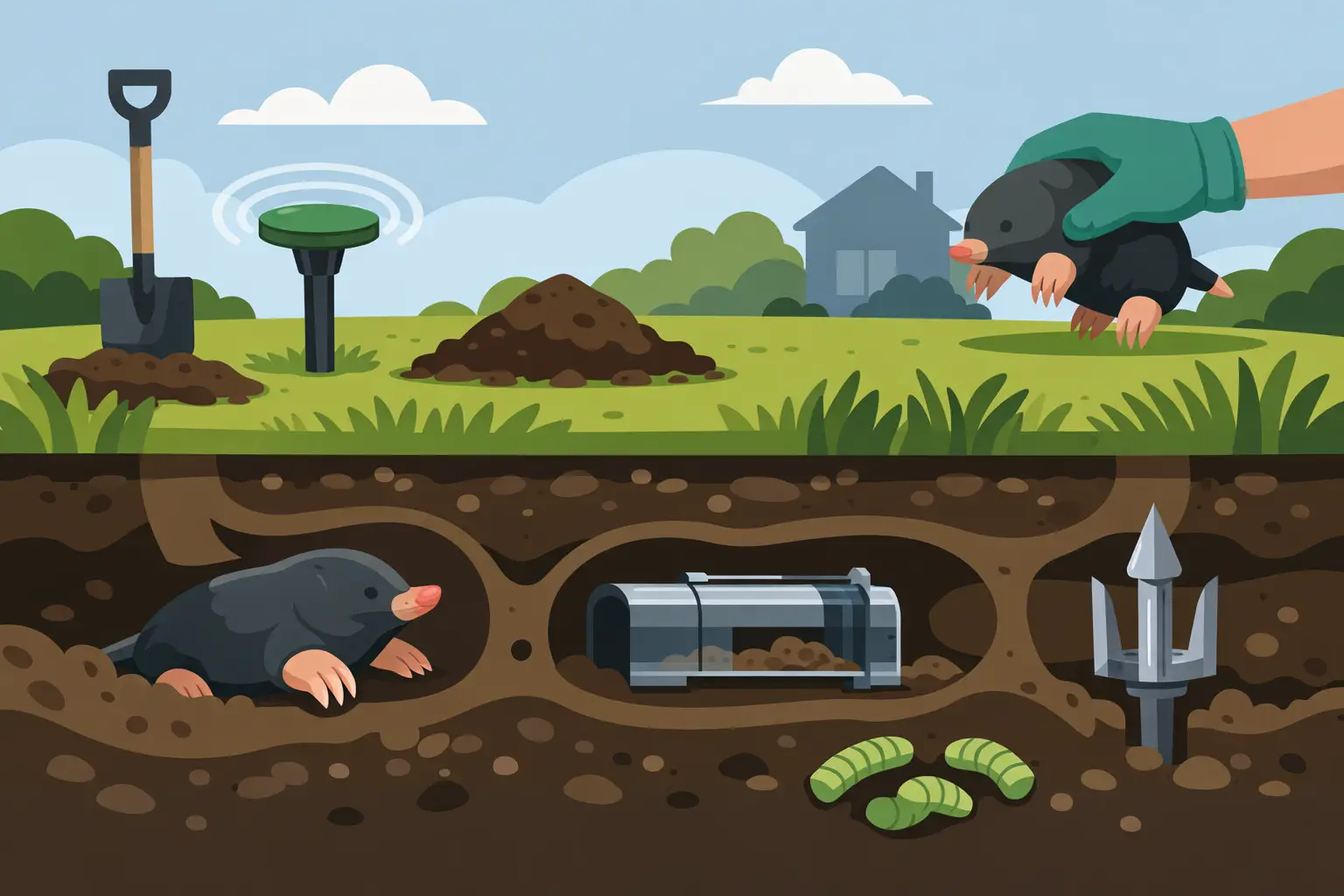
Fresh molehills across a lawn or paddock can appear almost overnight. One day the ground is tidy, the next it is ridged, uneven and difficult to manage. Good mole control is not just about appearance. It is about stopping further damage, protecting usable ground and dealing with the issue properly before it spreads.
For some property owners, moles are a nuisance in ornamental lawns and borders. For others, they are a practical problem affecting horse paddocks, silage ground, gardens, golf areas, sports surfaces or landscaped spaces around commercial premises. The right response depends on the setting, the level of activity and how quickly the damage needs to be brought under control.
Moles are not feeding on plant roots, but that does not mean they are harmless. Their tunnel systems disturb the soil, push up molehills and create weak or uneven ground. In a domestic garden that can ruin a well-kept lawn and spread soil over paths or patios. On farmland or managed land, the effects can be more serious.
Molehills in paddocks and fields can contaminate grass, blunt machinery and create trip hazards for livestock and people. On sports turf or formal grounds, even minor activity can spoil the surface and make routine maintenance harder. Where presentation matters, mole activity is often one of those problems that gets worse the longer it is left.
There is also the issue of repeat disturbance. A single run through soft ground can turn into a much wider network if conditions suit the animal. That is why early action usually saves time, disruption and cost.
Moles are drawn to ground that offers food and workable soil. They feed mainly on earthworms and other soil invertebrates, so healthy, moist soil often gives them exactly what they need. Lawns, meadows, paddocks and sheltered gardens can all be attractive if the ground is easy to tunnel through.
Seasonal conditions play a part as well. Activity often becomes more noticeable when the soil is neither too hard nor too dry. After wet weather, fresh runs and molehills may appear very quickly. In rural settings, field margins, banks and undisturbed ground can allow activity to move gradually into more valuable areas.
That is one reason mole control is rarely just about the visible hill. The real issue is the active tunnel system beneath the surface and whether the mole is still working it.
The best approach is not the same for every site. A small domestic lawn needs a different response from a farm, estate or business premises with larger areas to protect. What matters is identifying active runs, assessing how far the problem has spread and choosing a method that is suitable for the location.
In gardens, the main priority is often limiting damage quickly and restoring the surface before the network expands. In paddocks or fields, the concern may be preventing ongoing disturbance where horses graze or machinery operates. Around commercial sites, presentation, safety and discretion may matter just as much as the treatment itself.
This is where local experience counts. Ground type, weather patterns and site use all affect how practical and effective different treatments will be.
There is no shortage of home remedies suggested for moles. People try vibration devices, strong-smelling products, noisy deterrents and various shop-bought repellents. In practice, results are mixed at best. Some may appear to reduce activity for a short time, but they rarely solve a well-established problem.
The difficulty is simple. Moles live below ground, and if the feeding conditions remain favourable, they often continue tunnelling despite attempts to drive them away. By the time repeated DIY efforts have failed, the tunnel system is usually larger and the damage more extensive.
Professional mole control focuses on locating active runs and using proven treatment methods in the right place. That matters because inactive or old tunnels waste time. Success depends far more on field judgement than many people realise.
It is also worth being realistic. On some sites, especially larger rural areas, control is not always a one-off matter forever. Neighbouring land, banks, hedgerows and unmanaged ground can all allow reinvasion over time. In those situations, the sensible aim is effective control and sensible monitoring, not pretending the issue can never return.
If you are seeing repeated fresh molehills, new ridges in the ground or activity spreading across valuable areas, it makes sense to get help early. The same applies if you have already tried DIY measures without success.
A professional will look at the extent of the activity, the type of ground involved and the most practical way to deal with it. That is particularly important on farms, equestrian land, formal lawns, managed estates and commercial grounds where speed and reliability matter.
There is also the question of doing the job safely, legally and with minimal fuss. Property owners do not want guesswork. They want the problem handled properly, with as little disruption as possible.
For customers across South Devon and the wider South West, Elimipest South West provides that kind of straightforward, experienced support – practical treatment, sensible advice and a response based on what is actually happening on the ground.
Fresh molehills are the clearest sign, but the pattern tells you a lot as well. New hills appearing in a line often suggest an active feeding run. Larger clusters in one area may indicate a frequently used section of tunnel. Ground that keeps lifting after being levelled is another obvious clue that activity is continuing.
Older hills tend to flatten with weather and time. Fresh spoil is darker, looser and more visible. If new mounds are appearing every day or two, the mole is active and the problem is unlikely to settle on its own.
This matters because timing affects results. Dealing with active runs is more effective than waiting until the system extends further into lawns, beds or grazing areas.
It is not always possible to prevent moles entirely, especially in rural parts of the South West where surrounding land provides ideal habitat. Still, there are situations where sensible site management can help reduce repeat disruption.
On managed grounds, keeping a close eye on vulnerable areas allows early intervention before activity becomes widespread. For farms and estates, regular checks around paddocks, boundaries and productive ground can stop a small problem becoming a larger one. In domestic gardens, prompt attention after the first signs of molehills usually limits surface damage and makes restoration easier.
What does not help is relying on folklore. Bottles in the ground, ultrasonic gadgets and strong-smelling substances are often more frustrating than useful. If the ground suits moles, they tend to carry on regardless.
Most customers are not looking for a long lecture on mole behaviour. They want a clear answer on what is happening, whether it can be dealt with, and how quickly someone can attend. That is fair enough.
A good service should be practical, reliable and suited to the site. For domestic customers, that means clear advice and no fuss. For commercial and agricultural clients, it also means discretion, professional standards and an approach that fits around the way the property is used.
It helps to work with someone who understands both rural and residential settings. Mole activity on a lawn is one thing. Mole activity on working land, around livestock or across maintained grounds needs broader field experience and a more tailored response.
The key point is simple. Mole control works best when it is based on the actual conditions on site, not a one-size-fits-all answer.
If you have noticed fresh molehills or ongoing ground disturbance, acting sooner is usually the better option. A quick, sensible response can save a lot of repair work later, and it is far easier to deal with a developing problem than a well-established one.


