
Ashburton | Bovey Tracey | Brixham | Buckfastleigh | Dawlish | Exeter | Teignmouth | Totnes | Torquay | Paignton | Newton Abbot
07950 609768
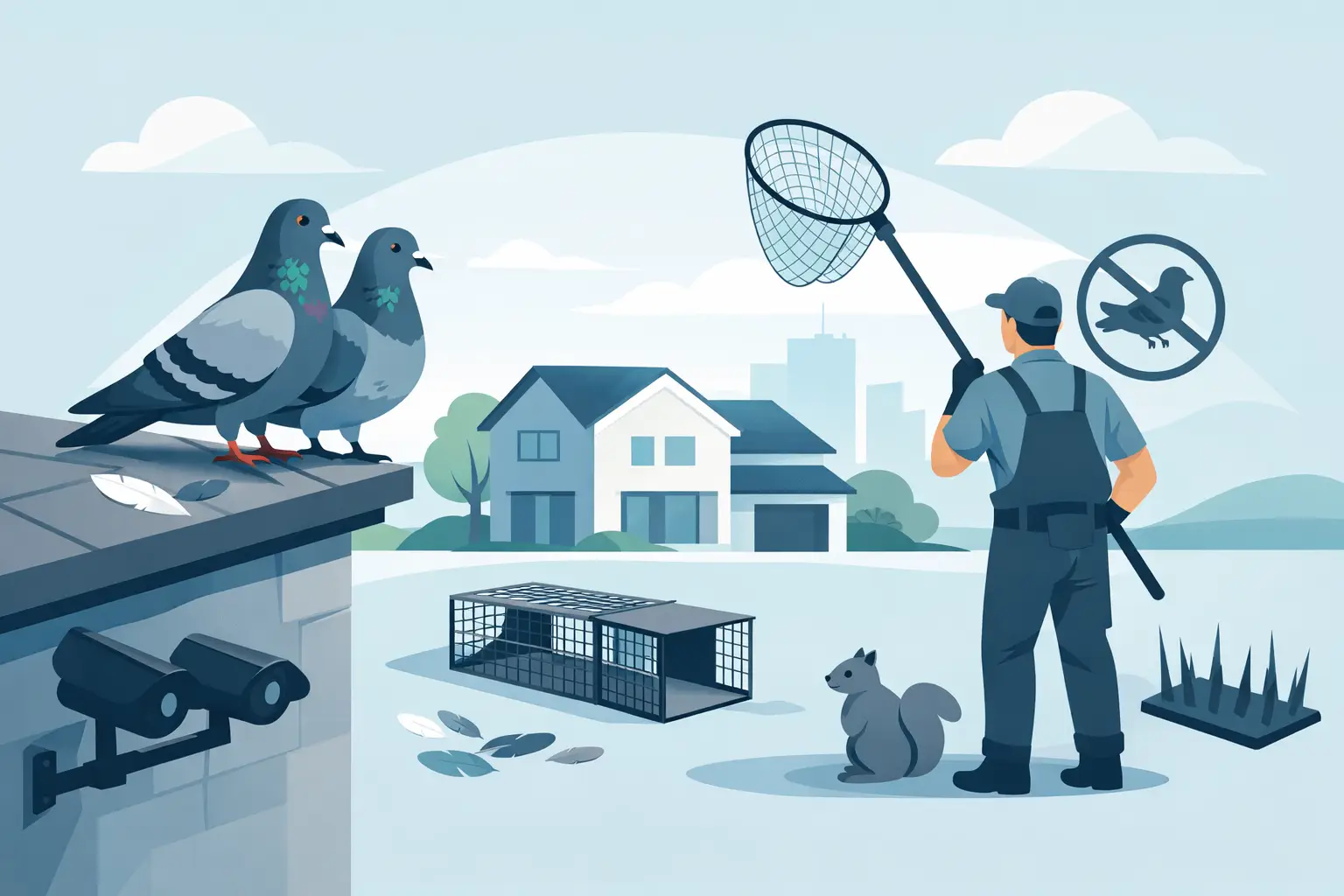
A few pigeons on a roof can quickly become a bigger problem when they start nesting in gutters, fouling entrances or gaining access to lofts and outbuildings. Knowing how to remove pigeons safely means dealing with the reason they are present, not simply frightening them away for an afternoon.
For homes, farms and commercial premises, the safest approach is usually a combination of careful inspection, humane exclusion and proper proofing. It protects the property, reduces health risks from droppings and avoids causing unnecessary harm to birds or other wildlife.
Pigeons return to places that offer food, shelter and a reliable nesting ledge. Roof valleys, solar panels, unused chimneys, loading bays, farm buildings and loft spaces are all common problem areas. If those conditions remain unchanged, pigeons will often return shortly after a temporary deterrent has been fitted.
Start by identifying where the birds are landing, roosting and entering. Look for fresh droppings, feathers, nesting material and blocked guttering. From ground level, check roof edges, under solar panels, broken air bricks, open eaves and gaps around cladding. Avoid climbing onto a roof or handling nests without suitable equipment and a clear understanding of the risks.
The aim is to prevent access to the chosen roosting or nesting point once it is safe and lawful to do so. This may involve fitting bird-proof mesh, sealing gaps, protecting ledges with correctly installed deterrent systems, or screening a particular opening. The right method depends on the building and the level of activity.
A small number of birds using a garden fence needs a different response from an established colony in a warehouse canopy. Over-treating a minor issue can be unnecessary, while a long-running infestation may need a planned programme of cleaning, proofing and follow-up checks.
In the UK, wild birds, their active nests and eggs are protected by law. That means a nest should not be damaged, removed or disturbed while it is in use, unless the work is covered by the appropriate legal authority or licence. This is one reason why timing and inspection matter.
Pigeon nesting can happen in several cycles through the year, particularly where buildings provide warmth and shelter. Do not assume that a nest is empty because you cannot see a bird sitting on it at that moment. A professional inspection can establish whether there is an active nest, whether young birds are present and what work can safely be carried out.
Where nesting is inactive, proofing should be completed promptly. Leaving a gap open after clearing old nesting material gives pigeons an easy route back in. Where a nest is active, the sensible option may be to monitor the site and arrange exclusion work once it is lawful and appropriate to do so.
Pigeon control works best when the property is made less rewarding to visit. This is often the most overlooked part of the job.
Keep household and commercial waste in bins with secure lids, clear up spilled animal feed, and avoid leaving food out in areas where pigeons gather. On farms and smallholdings, check feed stores, livestock buildings and grain handling areas for accessible feed. Even a small regular food source can support a persistent flock.
Water can also keep birds returning. Repair dripping outside taps, clear standing water from flat roofs where possible and maintain guttering so it drains properly. If pigeons are entering a loft, shed or barn, remove nesting material only when it is safe to do so, then close the entry point with suitable mesh or solid repair work.
Not every pigeon deterrent is effective in every setting. Visual devices such as reflective tape, decoys and moving objects may discourage birds briefly, but pigeons are quick to learn when there is no real threat. They can be useful as a short-term measure, but they are rarely a long-term answer for established roosts.
Physical deterrents are generally more dependable when properly specified and fitted. Bird spikes can prevent perching on narrow ledges, but they must cover the full landing area and be installed neatly. Poorly fitted spikes can create gaps where birds still land, collect debris or look unsightly.
Tensioned bird wire may be suitable for architectural ledges and signs where appearance matters. Netting is often the strongest option for larger spaces such as canopies, courtyards, loading areas and farm structures. It creates a physical barrier rather than relying on pigeons choosing to stay away.
Solar panel proofing deserves particular care. Pigeons can nest underneath panels, where debris builds up and access is awkward. Specialist mesh can close the gap around the panel edges without drilling into the panels themselves. The work needs to allow ventilation and avoid damaging the roof, cables or panel warranty.
Pigeon droppings are not just unpleasant. Large accumulations can make paths slippery, block gutters, damage paintwork and contaminate stored materials or food-related areas. Dry droppings and dust should not be swept or blown around, particularly in enclosed spaces such as lofts, sheds and roof voids.
Wear appropriate protective clothing, gloves and a suitable face covering when dealing with small amounts of contamination. Dampen deposits first to keep dust down, then carefully remove them and clean the area with an appropriate product. Never use a household vacuum cleaner on dry droppings, as this can spread fine particles into the air.
For heavy fouling, confined spaces or commercial premises, professional cleaning is the safer option. The site may need controlled access, protective equipment and disposal arrangements, especially where droppings have built up over a long period.
There is no need to turn a pigeon problem into a hazard for people, pets or other wildlife. Poison, unsuitable traps and improvised shooting are not sensible household solutions. They can be unlawful, cause suffering and leave you with a more difficult problem to manage.
Avoid blocking an entrance while you know birds or young are trapped inside. Do not use sticky substances, loose netting or badly fitted mesh that could entangle birds. If you are unsure whether a space is clear, arrange an inspection rather than guessing.
Noise devices can also create problems. They may disturb neighbours, livestock or customers, and their effect usually fades once pigeons become accustomed to them. A discreet, physical solution is generally more effective for homes, hospitality sites, offices and managed properties.
Professional help is particularly useful where birds are nesting in roof spaces, access requires ladders or lifting equipment, droppings are extensive, or the building has a public-facing or food-handling role. Landlords and business operators also need to consider their duty to keep tenants, staff and visitors safe.
A proper pigeon control visit should focus on the site as a whole: where birds are getting in, what is attracting them, whether nests are active and which proofing method will last. The answer may be a straightforward repair, or it may require staged work around nesting activity and difficult access.
For properties across South Devon and the wider South West, Elimipest South West provides practical pigeon control, exclusion and prevention work tailored to homes, farms and commercial sites. Discreet attendance can be arranged where needed, with the focus kept firmly on safe, effective results.
The best time to act is when you first notice regular roosting, before blocked gutters, nesting material and droppings turn a manageable issue into costly building damage. A clear inspection and the right proofing can keep pigeons away without unnecessary fuss.


