
Ashburton | Bovey Tracey | Brixham | Buckfastleigh | Dawlish | Exeter | Teignmouth | Totnes | Torquay | Paignton | Newton Abbot
07950 609768
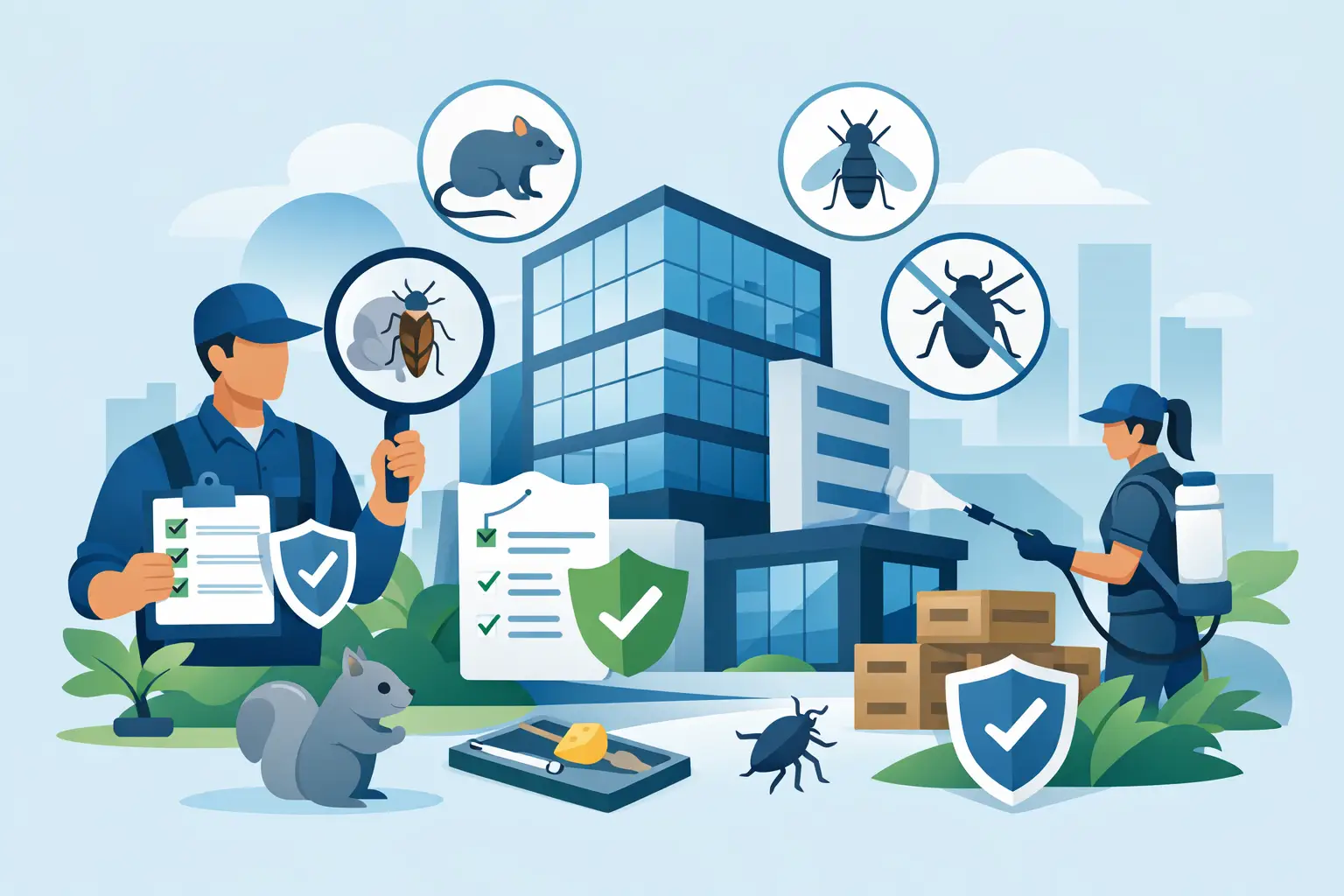
A rat sighting behind a stockroom fridge, flies around a waste area or droppings in a plant room can quickly become more than an unpleasant problem. For many businesses, it can lead to failed inspections, contaminated stock, damaged reputation and costly disruption. This guide to commercial pest compliance explains what a sensible, defensible pest management system looks like in practice.
Pest compliance is not about filling a folder with paperwork and hoping for the best. It is about showing that your business understands its risks, takes reasonable steps to prevent pest activity and acts quickly when evidence appears. The right approach will look different for a café, warehouse, care home, farm shop or office block, but the principle is the same: prevention first, prompt control when needed, and clear records throughout.
Commercial pest compliance is the process of managing pest risks in a way that supports your legal duties, hygiene standards, insurance requirements and any customer or industry audits. In food businesses, the expectation is particularly clear. Food must be protected from contamination, and premises must be kept clean and in good repair so pests cannot gain easy access or establish themselves.
For occupiers of commercial premises, rats and mice also bring wider responsibilities under the Prevention of Damage by Pests Act 1949. Local authorities can take action where rodent activity is not properly dealt with. Other duties may arise through health and safety law, workplace standards, tenancy agreements, environmental health requirements and sector-specific schemes.
There is no single certificate that makes a site permanently compliant. Compliance is ongoing. An auditor or Environmental Health Officer will usually want to see that you have identified likely risks, put controls in place, reviewed them regularly and responded properly to any findings.
A generic pest control plan rarely stands up well to scrutiny. Your risks depend on the building, how it is used, what enters the site and what is stored there.
A restaurant near a busy high street may need close attention around food deliveries, bin storage, grease, drains and external doors. A rural feed store may face pressure from rodents around bulk feed, livestock areas and adjoining land. A hotel may need a clear process for dealing with reports from guest rooms without causing unnecessary alarm. Warehouses often have large loading doors, long quiet periods and hidden voids where activity can go unnoticed.
A proper assessment should consider entry points, food and water sources, harbourage, waste arrangements and areas that are difficult to inspect. It should also account for seasonal changes. Rodents often move indoors as the weather turns, while flying insects can become more noticeable during warmer months.
The result should be a practical plan, not an overcomplicated report. It should state where inspections are needed, what monitoring is in place, who is responsible for housekeeping and maintenance, and what happens if activity is found.
Monitoring tells you what is happening. Control deals with an established problem. Both matter, but they are not interchangeable.
For example, a tamper-resistant monitoring point near a loading bay may indicate rodent movement before it becomes an infestation. A trap or treatment programme may be required where there is confirmed activity. Your records should make the distinction clear, including what was found, what action was taken and whether follow-up checks showed improvement.
Most commercial pest issues are made worse by small maintenance or housekeeping gaps that have been allowed to build up. A broken door brush, overflowing bin, gap around pipework or forgotten spillage may be enough to support pest activity.
Good prevention starts outside. Keep waste contained, lids closed and bins positioned away from doors where practical. Remove clutter from yards, storage areas and service alleys. Check that drains, gullies and external pipe entries are in sound condition. Vegetation should not create an easy bridge into rooflines, vents or upper-floor openings.
Inside, food and ingredients should be stored in suitable sealed containers or packaging, away from walls where possible. Cleaning needs to reach beneath equipment, behind shelving and into areas that are not obvious during a busy shift. Leaks should be repaired quickly, as water can sustain pest activity even where food is well managed.
Proofing is often the best long-term investment. Sealing gaps, fitting door brushes, repairing damaged air bricks and screening suitable openings can reduce repeat callouts. However, proofing must be done carefully. Blocking ventilation, trapping wildlife in a void or sealing an active rodent route without dealing with the population first can create a bigger problem elsewhere.
A pest control file should help you run the site properly. It should not exist solely for an audit day. Records allow managers to spot repeat issues, prove that action was taken and give staff clear instructions.
A well-kept file normally includes a site plan showing monitoring and control locations, visit reports, findings, recommendations, service dates and details of any treatment used. It should also record corrective actions, such as repairing a damaged door, changing a waste collection arrangement or clearing a cluttered store.
Where treatments are used, the information needs to be clear enough for the site to manage risk safely. This includes product details where relevant, safety information and the dates when equipment must be checked or removed. Tamper-resistant equipment is essential where there is any risk of access by staff, visitors, children, pets or non-target animals.
Photographs can be helpful when documenting proofing defects, poor waste storage or signs of activity. They provide a useful before-and-after record, particularly where maintenance work is being handled by a landlord, facilities team or third party contractor.
Your cleaning team, kitchen staff, warehouse operatives and maintenance contractors are often the first people to notice a problem. They do not need to become pest technicians, but they should know what to report and who to tell.
Reports should cover the location, date, type of evidence and, where possible, a photograph. Relevant signs include droppings, gnawing, damaged packaging, grease marks along walls, insect activity, nesting material, unusual smells and live sightings. Staff should never move bait, traps or monitoring equipment unless they are authorised to do so.
It also helps to give staff a simple instruction for urgent incidents. A sighting in a food preparation area, customer space, care setting or stock room should be reported immediately, with any affected food or products isolated until they can be assessed. Fast reporting gives you the best chance of limiting disruption.
When an inspector arrives, confidence comes from being able to show a clear system rather than claiming that there have never been pests. Even well-run premises can experience pressure from neighbouring properties, weather, building works or delivery activity. What matters is whether the business has managed the risk responsibly.
Before an inspection, check that your pest control file is current, outstanding recommendations have been addressed and site plans match the equipment actually in place. Walk the premises with fresh eyes. Look at waste areas, rear doors, ceiling void access, staff rooms, stores and spaces behind machinery. These are the places where standards can slip without anyone noticing.
Do not ignore low-level activity because it seems minor. One mouse dropping or a chewed packet may not prove a major infestation, but it is enough to justify investigation. Early action is usually cheaper and easier than dealing with a well-established issue.
The level of service should reflect the risk. A low-risk office may need periodic inspections and rapid support if activity occurs. A food business, farm shop, hospitality venue or site with regular deliveries will often need planned visits, monitoring, detailed reports and advice on proofing and hygiene.
Price matters, but the cheapest contract is not always good value if it provides little inspection time, vague reporting or no practical follow-up. Ask whether the service includes site-specific recommendations, emergency response, safe treatment options and clear documentation. A qualified local technician who understands how commercial sites operate can often identify the cause as well as the pest.
For businesses across South Devon and the wider South West, Elimipest provides discreet, practical support built around the site rather than a one-size-fits-all schedule. That may mean planned monitoring, targeted treatment, proofing advice or a prompt response when an urgent issue needs dealing with.
Commercial pest compliance works best when it becomes part of everyday site management. Keep the building sound, keep waste under control, act on early signs and make sure your records tell the real story. That leaves your business better protected when it matters most.


