
Ashburton | Bovey Tracey | Brixham | Buckfastleigh | Dawlish | Exeter | Teignmouth | Totnes | Torquay | Paignton | Newton Abbot
07950 609768
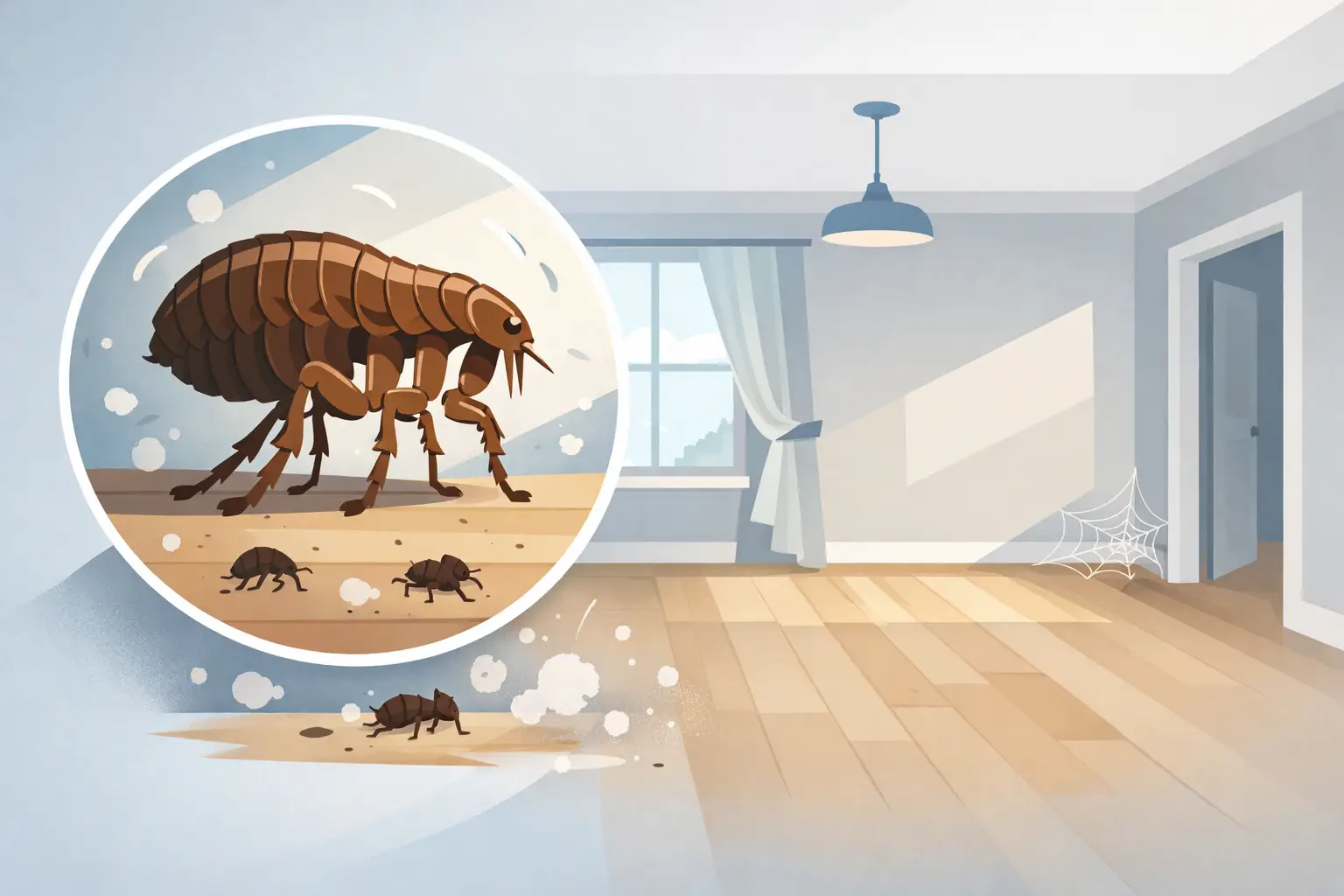
A property can sit empty for weeks, look perfectly clean, and still produce biting fleas the moment somebody walks through the door. So, can fleas live in empty houses? Yes – but the answer depends on the flea’s life stage, the temperature inside, and whether pets or wildlife have been using the building.
This catches out landlords, new homeowners and tenants returning after a long absence. No one may have lived in the house, yet fleas can remain in carpets, cracks in floorboards, upholstered furniture and pet bedding. The lack of a host does not always mean the problem has gone away.
Adult fleas need a blood meal to survive and reproduce, so fully grown fleas do not generally last indefinitely in an empty property. In warm, dry conditions, unfed adults may survive only days to a couple of weeks. In cooler, more humid conditions, they can sometimes persist for longer.
The bigger issue is not usually the adult fleas you can see. It is the developing stages hidden in the environment. Flea eggs hatch into larvae, which feed on organic debris in carpets, bedding and dusty edges of rooms. They then form pupae inside protective cocoons. Those cocoons can wait for the right conditions before an adult flea emerges.
A vacant house may therefore seem flea-free until it is disturbed. Footsteps, vibration, warmth and carbon dioxide from people or animals can trigger adult fleas to emerge from their cocoons. That is why bites may start soon after a property is reopened, even if it has been empty for months.
Pupae are difficult to deal with because the cocoon provides protection from drying out and from many insecticide treatments. Depending on conditions, a flea can remain in this stage for weeks and, occasionally, much longer. Central heating, carpets, soft furnishings and a quiet undisturbed room can all create conditions that favour survival.
This does not mean every empty house will harbour fleas for months. A cold, bare, dry and thoroughly cleaned property is less favourable than a warm home with fitted carpets, pet bedding and undisturbed furniture. However, relying on vacancy alone is rarely a dependable way to clear an infestation.
In most cases, fleas were introduced before the house became empty. A previous resident’s dog or cat may have carried them indoors, leaving eggs throughout the home. Eggs can fall from an animal wherever it rests, including sofas, rugs, stairs, bedrooms and the car if the pet travelled regularly.
Wildlife can also be a source. Rodents in lofts, under floors or within voids may carry fleas, as can other animals that gain access beneath a property or into outbuildings. Treating the visible flea problem without dealing with the animal activity can lead to a repeat issue.
For rental properties, it is sensible to consider the whole history of the building. Was there a pet? Has the property been closed up after a tenancy? Are there signs of rodents, such as droppings, gnawing or noise in wall cavities? Has an outdoor animal been sheltering under decking or in an attached shed? These details help identify whether fleas are left over from the past or are still being brought in.
Fleas are small, fast and easy to miss, particularly in dark carpets. Often, the first sign is a cluster of itchy bites around the ankles or lower legs after entering the property. Bites alone do not confirm fleas, as several insects and skin conditions can cause irritation, but the timing is a useful clue.
You may also see tiny dark insects jumping from carpet edges, rugs or soft furnishings when the area is disturbed. Pets can show the clearest signs: persistent scratching, nibbling at the coat, restlessness or small black specks known as flea dirt. If a pet has been in the property, check it promptly and speak to a veterinary professional about suitable treatment.
A simple practical check is to wear long white socks and walk slowly around carpeted rooms, especially where animals previously slept. Fleas can be easier to spot against a pale surface. This is not a replacement for a proper inspection, but it can indicate where activity is concentrated.
If you suspect fleas, act before moving furniture, luggage or pets into the property. Once people and animals are using every room, fleas have more places to feed and spread.
Start with a thorough vacuum of carpets, rugs, skirting edges, upholstered furniture, mattresses, cracks in floorboards and under radiators. Empty the vacuum contents into a sealed bag and put it straight into the outside bin. Vacuuming does not solve every stage of the problem, but it removes debris, lifts some eggs and larvae, and can encourage pupae to emerge before treatment.
Wash washable bedding, throws, cushion covers and pet items on the hottest setting the fabric allows. If the former occupants have left pet bedding behind, treat it as a likely source. Items that cannot be washed may need professional advice, especially heavily infested upholstered pieces.
Avoid using random household sprays throughout the building. Some products only affect adult fleas, while others can be unsuitable around children, pets, fish tanks or certain surfaces. Overuse can also make a professional treatment less straightforward without solving the underlying problem.
If the property has an active rodent issue, an untreated pet, or wildlife access below the building, dealing with carpets alone will not provide a lasting result. The source must be addressed alongside the flea treatment. This is particularly relevant in older rural homes, farm properties and houses with voids, outbuildings or access under suspended floors.
A flea treatment is often a process rather than a single event. The aim is to treat active adult fleas and developing stages as they emerge. Because pupae may be protected inside their cocoons at the time of the first visit, activity can continue for a short period afterwards.
This is frustrating, but it does not automatically mean treatment has failed. Continued vacuuming, following preparation guidance and allowing treated areas to remain undisturbed for the advised period all matter. In some cases, especially where the infestation is established or the property has been vacant for a long time, follow-up treatment is the sensible option.
Professional pest control is particularly worthwhile where bites are occurring, there are several carpeted rooms, the property is being prepared for new tenants, or the source is unclear. A proper assessment considers the building, likely host animals, the extent of activity and the safest treatment method for the people and animals who will use the premises.
Call for advice if fleas appear after a property has been empty, if you are preparing a house for sale or a new tenancy, or if repeated cleaning has not stopped bites. A prompt inspection can prevent the issue becoming a problem for incoming occupants.
For homes, rental properties, farms and businesses across South Devon and the wider South West, Elimipest South West provides practical, discreet flea control with treatment matched to the property and the likely source. The right approach is not simply to spray and hope. It is to break the flea life cycle, deal with any host activity and give the property the best chance of staying clear.
If an empty house is due to be occupied soon, deal with suspected fleas before the first boxes come through the door. It is easier, cleaner and far less stressful than discovering the problem after everyone has moved in.


