
Ashburton | Bovey Tracey | Brixham | Buckfastleigh | Dawlish | Exeter | Teignmouth | Totnes | Torquay | Paignton | Newton Abbot
07950 609768
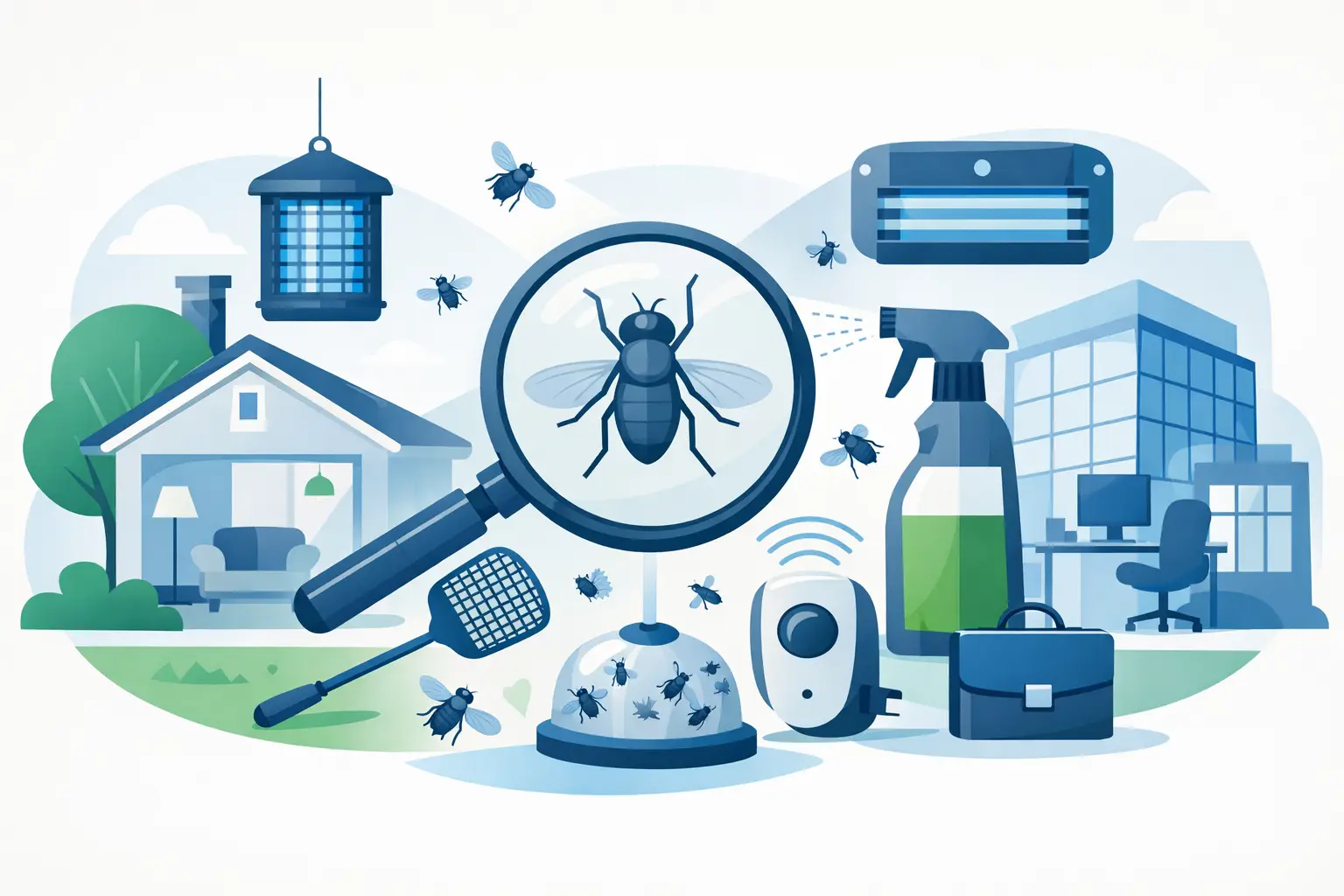
A few flies around an open window on a warm Devon afternoon are normal. A steady number appearing in kitchens, bin areas, animal housing or food premises is different. The best fly control methods deal with the reason flies are breeding or getting inside, rather than simply killing the adults you can see.
Flies reproduce quickly where there is moisture and food. That might be a missed food spill, a blocked drain, a wheelie bin, compost, pet waste, manure, or a dead animal in an inaccessible part of a building. The right solution depends on the type of fly, the setting and how serious the activity has become.
Different flies point to different problems. Large blue or green bottle flies often indicate decaying organic material. That may be rubbish, a soiled bin, pet waste, a dead rodent or bird, or food waste trapped beneath equipment. They can appear suddenly in considerable numbers, particularly in warm weather.
Small flies around fruit bowls, recycling, beer lines or food preparation areas are commonly attracted to fermenting residue. Tiny moth-like flies resting around sinks, showers or floor drains are usually drain flies. Their larvae feed in the organic film inside drains, so spraying the room will not remove the source.
Cluster flies are another issue altogether. They gather in roof spaces, lofts and upper rooms, often in autumn, then become noticeable again when warmer conditions bring them out. They are not normally breeding in the house, which is why a kitchen clean alone will not solve the problem.
Before choosing a treatment, look at where the flies are most active, when they appear and what is nearby. This basic inspection prevents wasted effort and helps avoid treating the wrong area.
Good housekeeping is not a glamorous answer, but it is usually the most effective long-term measure. Adult flies need a place to feed and lay eggs. Remove that opportunity and numbers fall far more reliably than they do with aerosols alone.
In homes, empty internal food bins regularly and wash them when residue builds up. Keep lids closed, rinse food packaging before recycling, clear pet waste promptly and avoid leaving fruit, animal food or dirty plates exposed. Check under fridges, cookers and cupboards where spillages can go unnoticed.
For cafés, pubs, shops and other commercial premises, cleaning routines need to cover the areas customers do not see. Floor drains, waste stores, bottle bins, grease traps, food preparation equipment and external bins all deserve attention. Waste should be stored in suitable lidded containers and collected often enough for the time of year and volume being produced.
On farms, smallholdings and equestrian sites, fly pressure is often linked to manure, damp bedding, feed spillages and standing water. Regular removal or properly managed storage of muck is essential. Bedding should be kept as dry as practical, and leaking drinkers or troughs should be repaired. There is no single fix on a livestock site, but reducing wet, nutrient-rich breeding material makes every other method work better.
Exclusion is one of the most overlooked fly control methods. If a building is clean but flies are still arriving from outside, physical barriers reduce the problem without adding unnecessary chemical treatment.
Fit and maintain fly screens on windows that are regularly opened near food, particularly in kitchens and preparation areas. Door closers, strip curtains and well-fitted seals can make a real difference at commercial entrances, loading doors and agricultural buildings. Repair damaged mesh and check that vents, loft openings and gaps around pipework are not giving flies an easy route indoors.
There is a trade-off. Keeping every door and window shut may not be practical in summer, or in a busy workplace. In those cases, use screens and door management in the highest-risk areas first. A screen over one kitchen window may achieve more than treating the whole room repeatedly.
Traps are useful for reducing adult numbers and monitoring activity, but they should support cleaning and proofing rather than replace them. Sticky traps and baited traps can work well in bin stores, sheds and outdoor areas when positioned away from doors, seating and food preparation spaces.
Electric fly control units are often suitable for commercial kitchens, food stores and hospitality premises. Their position matters. A unit placed close to an open door can draw flies further into the building. It should be installed away from exposed food and ideally where it catches flies travelling through the room, not where it becomes the first thing they encounter.
Glue-board units are commonly preferred in food-sensitive areas because insects are retained inside the unit. Tubes and boards must be checked and replaced as part of a planned service programme. An overflowing or poorly maintained unit does not give a professional impression and may not perform as intended.
Avoid putting outdoor bait traps directly beside the house, patio or business entrance. They can attract more flies to the immediate area. Place them well away from occupied spaces, where they draw activity away from the building.
Drain flies need targeted drain treatment. Start by physically removing the slimy organic build-up from inside the drain and around the plughole, overflow and trap where possible. A drain brush and appropriate cleaning product are more effective than pouring a product down once and hoping for the best.
In commercial settings, floor drains and rarely used outlets can be a persistent source. The work may involve cleaning, flushing and checking for faults such as broken pipework, poor drainage or standing water beneath equipment. If flies continue after cleaning, further investigation is needed because the breeding point may not be in the drain you can see.
For bottle flies and other larger species, inspect refuse areas, lofts, crawl spaces, chimneys, voids and outbuildings. A dead animal or contaminated waste source can produce a large number of flies in a short period. Once it is safely removed and the area cleaned, adult activity normally reduces quickly.
Professional insecticides can be useful where there is significant adult fly activity, especially in commercial, agricultural or difficult-to-access situations. They are not a substitute for removing breeding material. If waste, drains or manure remain suitable for larvae, new adults will continue to emerge after the initial treatment has worn off.
Residual treatments may be applied to appropriate resting surfaces, while space treatments can provide a rapid reduction in flying adults in some situations. The choice depends on the premises, the type of fly, the presence of food, animals or people, and the need to keep disruption low.
This is where a tailored approach matters. A treatment suitable for an external bin compound may not be suitable for a domestic kitchen. Likewise, a farm building may need a programme that combines manure management, monitoring and targeted treatment during peak season rather than a one-off visit.
A single fly is rarely a concern. Repeated activity in the same room, flies appearing at the same time every day, or a sudden increase after no obvious change should be investigated. In food businesses, records from fly units and routine checks can reveal patterns before they become a complaint or hygiene issue.
For householders, make a note of the room, time of day and type of fly if possible. Are they near a sink, a bin, a loft hatch or a particular window? That information helps pinpoint the cause quickly.
Call for advice if flies are appearing in large numbers, returning despite thorough cleaning, emerging from walls or ceilings, or affecting a food business, rental property or livestock environment. It is also worth getting help where the suspected source is in a roof void, under flooring, within drainage or somewhere unsafe to reach.
A professional inspection can identify the species, trace the likely breeding source and set out a practical control plan. Elimipest South West provides discreet, tailored pest control for homes, farms and businesses, with treatment focused on resolving the cause as well as the visible activity.
The quickest route to fewer flies is usually simple: remove the breeding source, block the entry points and use traps or treatment only where they add value. If the source is not obvious, acting early is far easier than waiting for a small nuisance to become a full infestation.


