
Ashburton | Bovey Tracey | Brixham | Buckfastleigh | Dawlish | Exeter | Teignmouth | Totnes | Torquay | Paignton | Newton Abbot
07950 609768
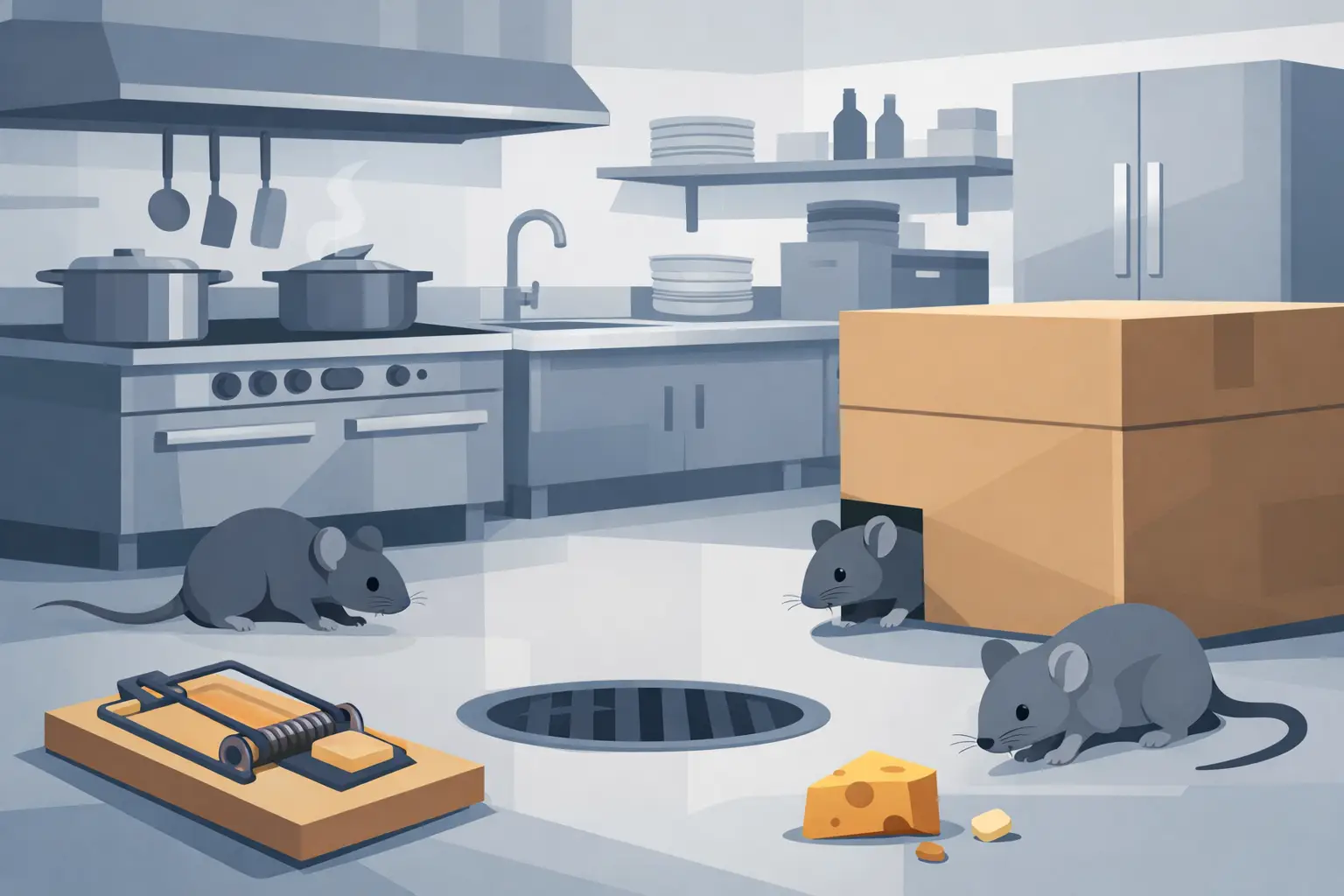
A single dropping beneath a dry-store shelf can be enough to stop a busy kitchen in its tracks. Mice in a commercial kitchen are not a minor housekeeping issue. They present a real food safety risk, can damage stock and equipment, and may leave your business exposed during an inspection. The right response is quick, methodical and focused on stopping the current activity while preventing the next entry.
For cafés, pubs, restaurants, care settings, schools and food production premises, the pressure is understandable. You need to protect customers, keep the kitchen operating and deal with the problem discreetly. That means more than putting down a few traps and hoping for the best.
Mice are drawn to commercial kitchens because they offer three things in abundance: warmth, food and harbourage. Crumbs behind appliances, food debris in floor channels, poorly sealed dry goods and gaps around service pipes can all support an infestation.
They are also much harder to spot than many people expect. Mice are mainly active at night, can move through gaps little wider than a pencil, and often travel along wall edges, behind cupboards and beneath fixed equipment. By the time one is seen during service, there may already be regular activity elsewhere in the building.
The risk is not limited to food being eaten or packaging being chewed. Mice can contaminate surfaces and ingredients through droppings, urine and contact with stored goods. They may chew electrical cables, insulation and pipework too. In a kitchen, that can create costly repairs as well as hygiene concerns.
There is a reputational issue as well. A customer spotting a mouse, or evidence of one, can quickly lead to complaints and damaging reviews. For a commercial operator, early action is almost always less disruptive and less expensive than waiting for the problem to become obvious.
Kitchen teams are often the first people to notice a problem. Staff should know that small signs matter and should be recorded, rather than cleaned away without being reported.
Fresh mouse droppings are small, dark and rice-shaped. You may find them along skirting, under shelving, behind fridges, near dry stores or around waste areas. Other signs include gnawed packaging, shredded paper or insulation used for nesting, a stale musky smell, grease marks along walls, and small holes around pipes or cable routes.
Noises after closing can be another clue. Scratching in ceilings, behind wall linings or under fixed units should not be ignored, particularly if it is recurring. A mouse seen in daylight may indicate heavier activity, although this is not a rule on its own.
Keep a simple record of where and when evidence is found. This helps identify travel routes and gives a pest control technician a clearer picture of what is happening. It also shows that the business has responded responsibly if questions are raised during a hygiene inspection.
The first priority is to prevent contamination and protect food. Do not move stock or start deep cleaning across the whole kitchen before the affected area has been assessed, as this can disturb activity and remove useful evidence. Instead, isolate the issue and take sensible control measures.
Where contamination is suspected, remove exposed food and any stock with damaged or gnawed packaging. Food and packaging that may have been contaminated should not be kept for use. Clean and disinfect affected surfaces using your normal food-safe procedures, then ensure the area is dry and clear of debris.
Your immediate response should cover four practical points:
Avoid relying on loose poison or unsuitable shop-bought products in food areas. Used incorrectly, they can create further hygiene concerns, place bait where it cannot be monitored properly, or leave a dead rodent in an inaccessible void. Commercial premises need a controlled approach that takes account of food safety, staff access and ongoing monitoring.
A proper treatment starts with inspection. The key question is not simply where a mouse was seen, but how it entered, where it is feeding and where it is nesting. In older buildings, particularly those with extensions, voids and a mixture of services added over time, there can be several routes in.
Common entry points include gaps around incoming pipes, damaged air bricks, poorly fitted door sweeps, broken seals around extractor routes, gaps beneath external doors and openings behind stored goods. A mouse does not need a dramatic hole in the wall. A small, overlooked gap behind a dishwasher or beneath a rear delivery door may be enough.
Inside the premises, food and clutter can keep the issue going. Cardboard storage, unattended spillages, open dry goods, overflowing bins and inaccessible debris beneath equipment all give mice somewhere to feed or hide. This is not about blaming staff. Busy kitchens have pressure points, and an effective plan needs to be realistic enough to work during service as well as after closing.
A professional survey should consider the kitchen, dry store, bar area, staff room, bin store, delivery access, ceiling voids and neighbouring units where relevant. The treatment plan may involve trapping, carefully placed secured bait stations where appropriate, proofing recommendations and repeat visits to monitor progress.
Treatment can reduce mouse numbers, but proofing is what makes the improvement last. If access remains open, a kitchen can be reinfested quickly, especially during colder weather or when nearby building works disturb rodents.
Start with doors. External doors should close tightly, with no daylight visible beneath them. Door brushes or suitable seals can make a significant difference, but they need to be maintained rather than fitted once and forgotten. Check that delivery doors are not being held open unnecessarily, especially near waste storage.
Service penetrations deserve equal attention. Pipes, cables and conduits that enter walls or floors should be sealed with materials suitable for the location and resistant to gnawing. The exact method depends on the size of the opening, the building fabric and fire-safety requirements, so it should be considered carefully rather than sealed indiscriminately.
Storage standards also matter. Keep ingredients off the floor where possible, rotate stock, clear damaged cartons promptly and avoid building up unused packaging in corners. Waste should be contained in clean, lidded bins, with the external waste area checked regularly for spillage and damage.
For businesses handling food, pest control works best as part of day-to-day site management rather than a one-off reaction. A clear reporting route means staff know who to tell when they see droppings or damage. A regular inspection routine means minor issues are picked up before they affect service.
The frequency of monitoring depends on the premises. A small café with limited storage may need a different level of cover from a restaurant with a large bin area, several deliveries each week and adjoining commercial units. Rural locations may also face seasonal pressure from surrounding land. The right programme is based on the actual risks at the site, not a generic schedule.
Records are valuable. Keep reports of inspections, findings, treatments, proofing work and staff actions. These documents support your own hygiene systems and show that concerns have been dealt with promptly and professionally.
Call for help as soon as there is evidence of repeated activity, contamination, damaged food packaging or a sighting in a food preparation area. Waiting until you have seen several mice rarely improves the outcome. It usually gives them more time to settle into voids and spread through the premises.
A discreet commercial pest control visit can assess the scale of the problem, identify likely entry points and set out the actions needed to get control quickly. Elimipest South West provides practical, tailored treatment and prevention work for commercial premises across South Devon and the wider area, with discreet attendance available where required.
Your kitchen does not need a dramatic infestation before it deserves attention. Acting on the first signs protects the food you serve, the people who work for you and the reputation you have worked hard to build.


