
Ashburton | Bovey Tracey | Brixham | Buckfastleigh | Dawlish | Exeter | Teignmouth | Totnes | Torquay | Paignton | Newton Abbot
07950 609768
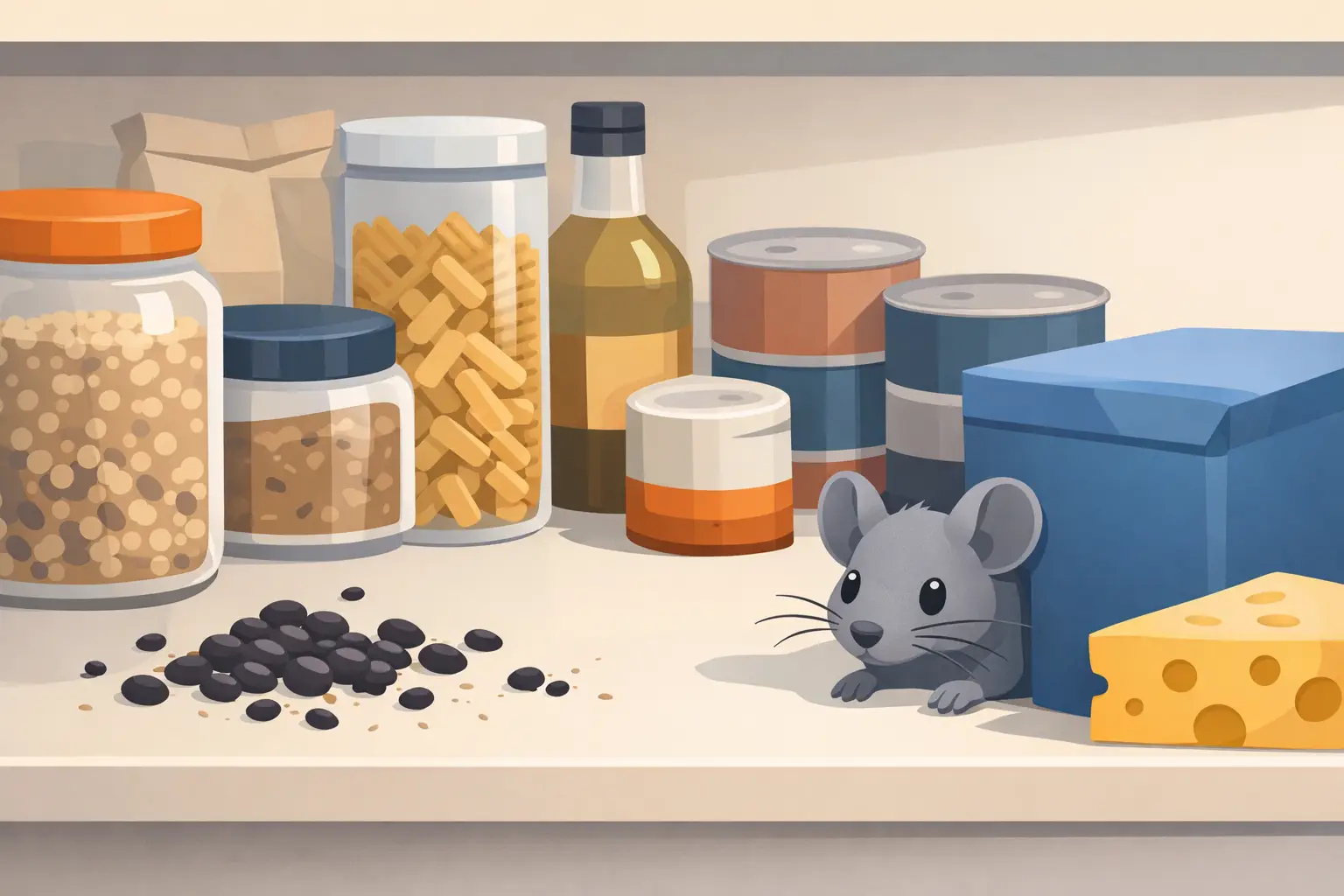
Finding mice droppings in food cupboard space is unpleasant, but it also needs dealing with properly. The immediate priority is to stop using anything that may have been contaminated, clean the area without spreading dust, and work out how the mice got in. A few droppings can be the first visible sign of a much larger problem, particularly behind units, under appliances and in loft voids.
Keep children and pets away from the cupboard while you deal with it. Put on disposable gloves and, if there is a significant amount of droppings or dust, wear a suitable face covering. Do not sweep or vacuum dry droppings. Both can disturb contaminated particles and spread them into the air or around the kitchen.
Take all food, packaging and loose items out of the cupboard. Throw away any open food, including packets closed with clips, cardboard boxes, paper bags, unwrapped produce and items in thin plastic wrapping. If mice have been in the cupboard, it is not worth taking chances with food they may have walked over, gnawed or contaminated with urine and droppings.
Sealed tins, jars, bottles and undamaged rigid plastic containers can usually be kept, provided they are cleaned thoroughly before being put away. Wipe the outside with hot, soapy water followed by an appropriate household disinfectant, according to the label instructions. Check lids, rims and seams carefully, as these are easy places to miss.
Place discarded food and contaminated packaging in a bag, seal it, then put it inside a second bag before disposing of it in the outside bin. Wash your hands well after removing gloves.
Open a window if possible, then leave the cupboard undisturbed for a short while to allow the space to air. Spray droppings, nesting material and affected surfaces with disinfectant until damp. Allow it to sit for the stated contact time on the product label, then lift the material away using disposable kitchen roll. Put the used roll straight into a bag for disposal.
Clean the cupboard with hot, soapy water, paying attention to corners, shelf supports, hinges and the back panel. Disinfect afterwards if the surface permits it. Let everything dry fully before restocking. If you use shelf liners, replace them rather than trying to clean them.
Do not forget nearby surfaces. Mice often travel along skirting boards, worktop edges and the gap behind cupboards. Check the floor, adjacent drawers, the plinth beneath the units and spaces around pipework. Droppings are often found where mice feel sheltered, not necessarily where they are feeding.
Mouse droppings are usually dark brown or black, shaped like small grains of rice, and commonly measure around 3 to 6 mm long. Fresh droppings tend to be darker and may look slightly soft or shiny. Older ones become dry, greyish and crumbly.
Their position matters as much as their appearance. A small number in one corner may be old evidence, especially in an empty or rarely used cupboard. Fresh droppings appearing after cleaning, however, mean mice are still active. Droppings mixed with shredded paper, fabric, insulation or dried plant material may point to a nest nearby.
The rule is simple: if a mouse could have reached the food, dispose of it. Mice can chew through paper, cardboard and light plastic packaging with ease. They can also contaminate food without leaving obvious damage.
This means cereal boxes, flour bags, pasta packets, pet food sacks, tea bags, biscuits, crisps, spices in cardboard tubes and baking ingredients should be discarded if they were stored in the affected cupboard. Fruit and vegetables stored loose should go as well.
There is more judgement involved with sealed containers. An unopened tin or a screw-top jar is normally salvageable after careful cleaning. A packet that looks sealed but has a crease, tear, chew mark or loose edge should not be kept. If in doubt, bin it. Replacing a few cupboard items costs far less than the risk of eating contaminated food.
Cleaning the cupboard solves the immediate hygiene issue. It does not stop the next visit. Mice can enter through gaps far smaller than most people expect, often around pipes, cables, air bricks, damaged vents, old brickwork and gaps beneath doors. In older Devon properties, uneven walls, voids behind fitted kitchens and outbuildings joined to the main house can make access routes particularly difficult to spot.
Look for grease marks along walls, fresh gnawing, shredded material, a stale smell, or small gaps behind kitchen units. Check under the sink first. Water pipes often pass through oversized holes, providing both an entrance route and a reliable water source.
Do not block a suspected entry point while mice are clearly active inside unless you are sure all animals have been removed. Sealing them in can lead to dead mice in wall voids or encourage them to find another route through the property. The right order is control first, proofing second, followed by monitoring.
A clean kitchen helps, but mice do not need much food to survive. Crumbs beneath a toaster, pet food left overnight or a split bag of bird feed in a utility room can keep activity going.
Store dry foods in solid, well-fitting containers rather than original packets. Keep pet food in a sealed tub and clear bowls away overnight where practical. Wipe food preparation areas, empty crumbs from small appliances, and avoid leaving rubbish bags inside for long periods. Outside, keep wheelie-bin lids shut and clear clutter near walls, sheds and doors where mice may shelter.
These measures reduce the available food, but they are not a complete cure if mice have already established a route into the building. A property with accessible voids and regular warmth will still need the entry points addressed.
One old dropping in a rarely used cupboard may not mean an active infestation. Repeated fresh droppings, food damage, noises at night, a strong musky smell or sightings during the day are different. They suggest regular activity and call for a proper inspection.
DIY traps can be useful in a minor, clearly contained problem, but placement is critical and results can be misleading. Catching one mouse does not prove there are no others, and poison used carelessly can create risks for children, pets and non-target wildlife. It can also leave dead rodents in inaccessible areas.
For landlords, food businesses, farms and managed properties, the issue goes beyond a single cupboard. Records, repeat visits, proofing work and a clear treatment plan may all be needed. A professional survey identifies the likely species, harbourage areas, feeding sources and access points, then uses the most appropriate control method for the setting.
Elimipest South West provides practical, discreet mouse control across South Devon and the wider area, with treatment and proofing advice based on what is actually happening at the property. Where required, unmarked attendance can be arranged for homes and businesses that need discretion.
Once the area has been cleaned and treatment has started, check the cupboard every few days for fresh signs. Do not put vulnerable food back until you are confident activity has stopped. Keeping dry goods in sealed containers gives you a safer storage system and makes any future evidence easier to spot.
A food cupboard should be a place you can use without second thoughts. Deal with the contamination carefully, remove the reason mice are returning, and get experienced help early if the signs continue.


