
Ashburton | Bovey Tracey | Brixham | Buckfastleigh | Dawlish | Exeter | Teignmouth | Totnes | Torquay | Paignton | Newton Abbot
07950 609768
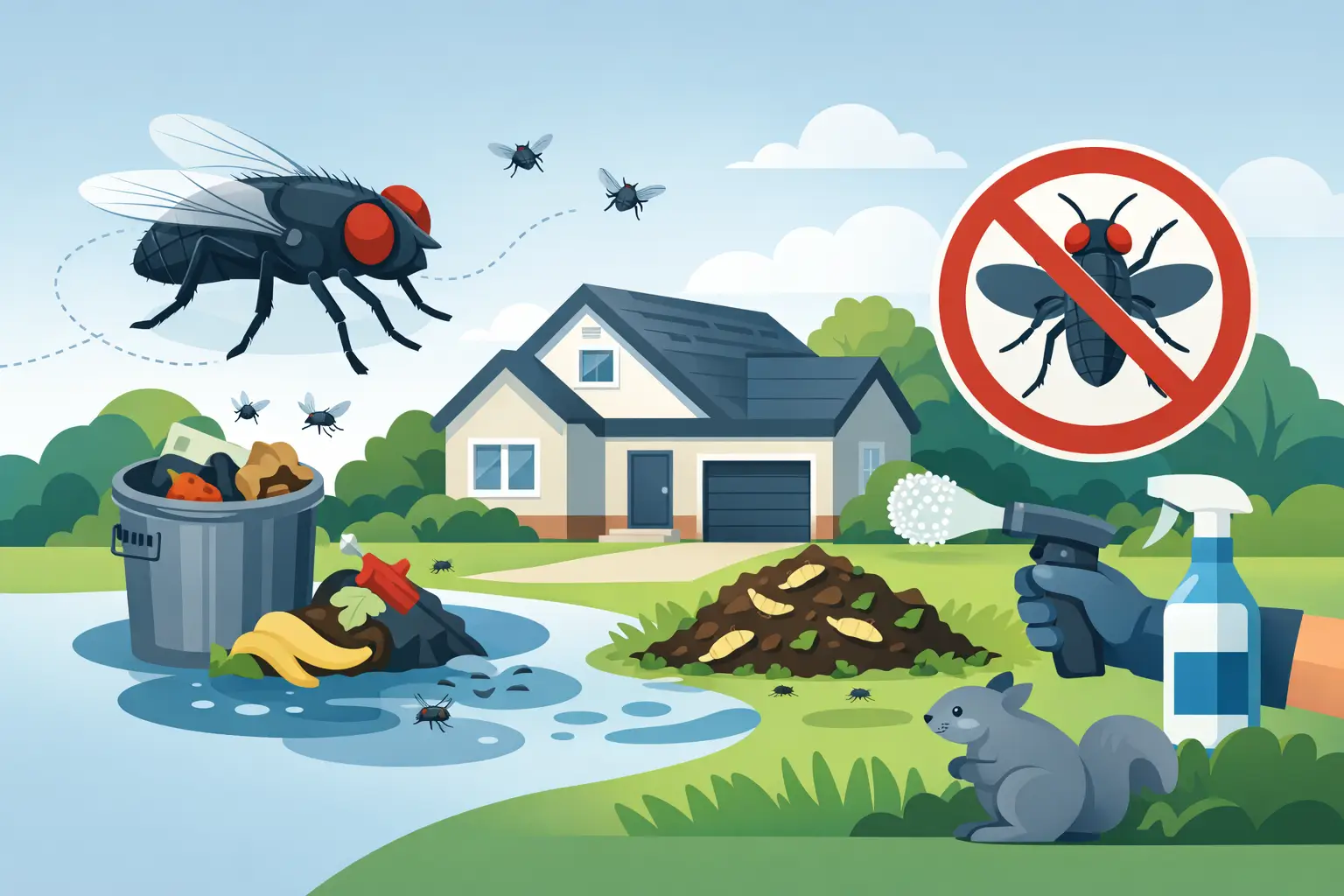
A few flies around an open window can be normal in warm weather. Flies gathering around a bin, drain, pet area or food-preparation space are different: they are often a sign that there is a breeding source close by. Knowing how to stop flies breeding means removing that source, not simply swatting the adults you can see.
A single fly can lay eggs in the right conditions, and warmth speeds the process up considerably. In homes, businesses, farms and rental properties, the answer is usually found in a small patch of overlooked organic matter: a spill beneath a wheelie bin, sludge in a drain, a forgotten food bag or damp waste caught in a gully. Deal with that properly and fly numbers normally fall quickly.
Flies need moisture, warmth and decaying material in which to lay eggs and for larvae to develop. The exact source depends on the type of fly, but the principle is the same. Adult fly sprays, sticky strips and UV units can reduce the visible nuisance, yet they will not solve an active breeding site.
Start by looking where food waste, animal waste, moisture or residue collects. Check both indoors and out. Do not overlook places that seem too small to matter. A thin layer of food debris in the bottom of a kitchen bin or a damp cloth left in a cleaning cupboard can be enough in hot weather.
If you find larvae, often seen as small pale maggots, remove the material immediately. Bag it securely and place it in the correct external refuse container. Clean the affected area thoroughly, paying particular attention to cracks, bin rims, undersides and surfaces where residue has dried on. The aim is to remove the food source as well as the larvae.
Household and commercial bins are among the most common causes of persistent fly activity. Food waste left loose in a bin, especially meat, fish, dairy products and pet food, can become a breeding point very quickly. Line indoor bins, empty them frequently and wash them with hot water and detergent rather than only masking smells with disinfectant.
Outdoor wheelie bins need the same attention. Keep lids shut, rinse spills from the base and clean around the handles and lid hinges. If bin collection is delayed during warm weather, store food waste in securely tied bags and keep the bin in the coolest practical location. Do not allow bags to split or leak onto paving.
For cafés, pubs, food businesses and communal refuse areas, a regular cleaning schedule is essential. One missed waste collection or poorly cleaned bin store can lead to a rapid increase in flies and complaints from customers, staff or neighbouring properties.
Small flies around sinks, floor drains and utility rooms may be breeding in the organic film inside pipework rather than in standing water itself. Pouring a product down the drain may offer a short-term improvement, but it often does not remove the layer of grease, hair, soap residue and food debris attached to the pipe.
Brush accessible drain edges and remove trapped material from sink overflows, shower outlets and floor gullies. Flush with plenty of water after cleaning. Outside, check gullies, channel drains and areas beneath drain covers for leaves, silt and decomposing debris. A blocked or slow-running drain needs attention, as ongoing moisture and contamination create ideal conditions.
If flies repeatedly appear from a drain despite cleaning, the issue may be further along the system or linked to a damaged pipe, poor drainage or a rarely used outlet. This is a sensible point to seek professional advice rather than repeatedly treating the symptom.
Fruit bowls, recycling boxes and food cupboards are obvious places to inspect, but the less visible areas are often more revealing. Pull out the fridge, cooker or freestanding unit where possible. Check beneath and behind them for dropped food, spillages and damp debris. Clean reusable shopping bags, bottle storage areas and the bottom of kitchen caddies as well.
Small fruit flies can build up around overripe produce, alcohol residues and fermenting food waste. Keep ripe fruit covered or refrigerated where practical, empty recycling before bottles and cans become sticky, and rinse containers before placing them in the recycling.
In commercial kitchens, food preparation areas must be cleaned beyond the worktop level. Floor edges, equipment feet, waste stations and the space beneath shelving all deserve routine attention. Fly control is as much about cleaning standards and waste handling as it is about pest treatment.
Animal areas need frequent, practical housekeeping. Pick up dog faeces promptly, clean pet feeding bowls and do not leave opened pet food outdoors. Check hutches, kennels and bedding for wet or soiled material, particularly during humid spells.
On farms, smallholdings and estates, manure, soiled bedding, feed spillages and wet organic matter can support substantial fly breeding. The right approach depends on the stock, housing set-up and waste arrangements. Regular removal or managed storage of manure, keeping feed areas dry and repairing leaking drinkers can make a marked difference.
Carcasses or afterbirth must be dealt with promptly and in line with the relevant disposal requirements. These sources can produce large numbers of flies in a short time and may bring hygiene concerns as well as a nuisance.
Compost heaps are not automatically a problem. A well-managed compost heap should be balanced, turned where appropriate and covered with dry brown material when fresh kitchen waste is added. A wet, compacted heap containing exposed food scraps is far more likely to attract flies. Never add animal waste, meat or cooked food where it is unsuitable for your composting system.
A treatment can reduce adult flies present on the day, only for more to emerge from an untreated breeding source days later. This can make it look as though the treatment has failed when the real issue is that the source has not yet been found.
It also matters which flies are involved. Larger flies around waste may point towards bins, pet waste or animal-related material. Tiny flies around kitchen fruit and bottles usually need a different inspection. Small moth-like flies close to drains often indicate residue in pipework. Correct identification avoids wasted effort and unnecessary chemical use.
Insect screens, door closers and air movement can help prevent flies entering a property, especially at food premises. They are useful supporting measures, but they cannot compensate for dirty bins, blocked drains or unmanaged waste outside the building.
Arrange a professional inspection if flies keep returning after a thorough clean, if you cannot identify the source, or if the numbers are affecting food hygiene, customers, tenants or livestock. A prompt response is particularly worthwhile where larvae are present in inaccessible areas, drains are suspected, or the issue is within a shared building or commercial premises.
A proper visit should focus on inspection and prevention as well as treatment. At Elimipest South West, fly control is tailored to the site, whether that is a home, restaurant, farm building, rental property or estate. The aim is safe, effective action that deals with the cause and gives you practical steps to prevent a repeat problem.
For most properties, the fastest route to fewer flies is simple: remove wet organic waste, clean the areas that are usually missed and keep checking until no new activity appears. Acting early is far easier than dealing with a full breeding cycle once warm weather has taken hold.


