
Ashburton | Bovey Tracey | Brixham | Buckfastleigh | Dawlish | Exeter | Teignmouth | Totnes | Torquay | Paignton | Newton Abbot
07950 609768
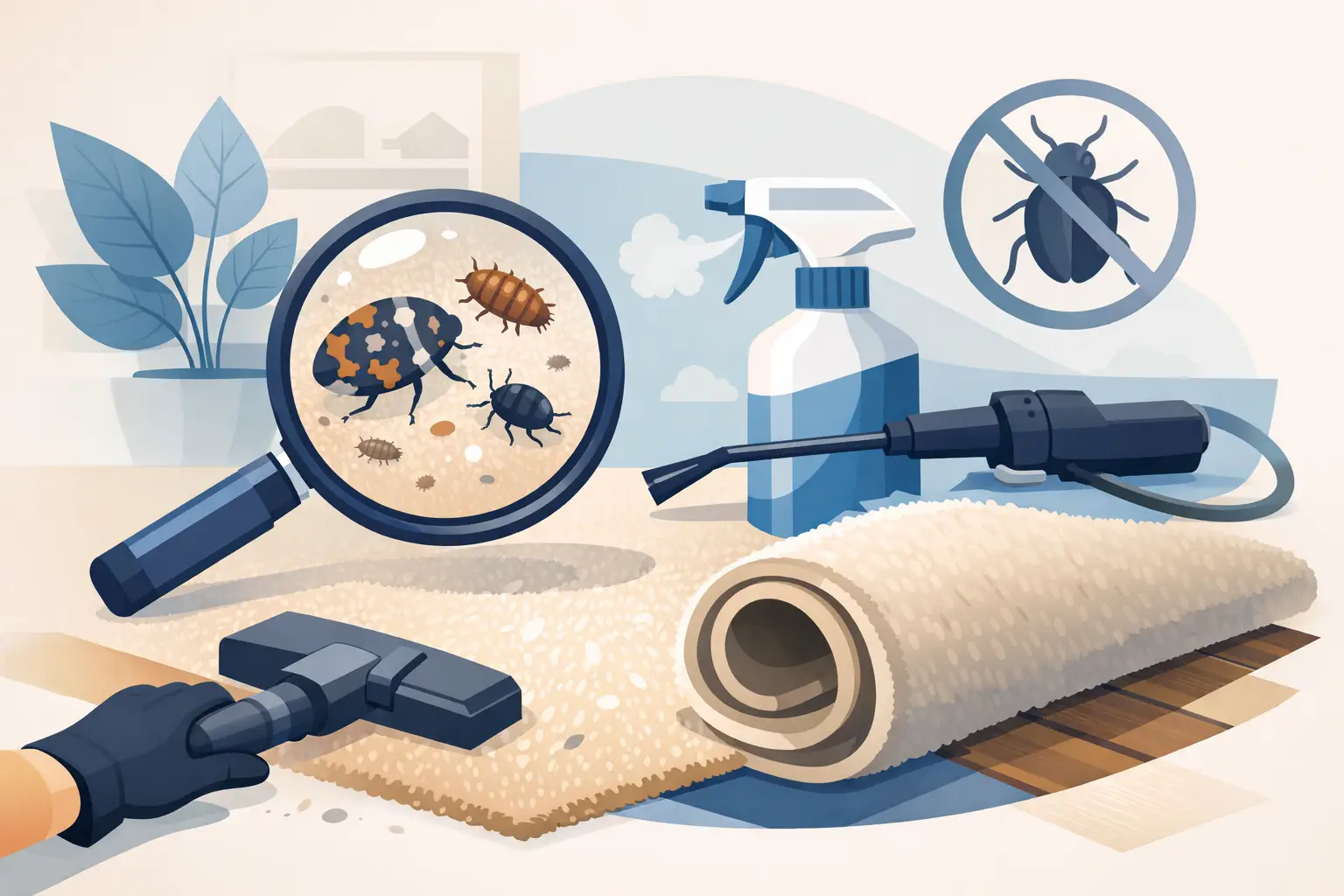
A guide to carpet beetle control needs to start with the damage, not the adult insect on the windowsill. The small, mottled beetles are often noticed first, but it is their larvae that cause the problem. If wool carpets, stored clothes, soft furnishings or animal-based fabrics are showing irregular bare patches, carpet beetles may already be feeding somewhere out of sight.
Carpet beetles are common in homes across the South West, particularly in quieter areas of a property such as lofts, spare rooms, under furniture and along skirting boards. The good news is that a small, early problem can often be dealt with through careful cleaning and source removal. A widespread or recurring infestation needs a more thorough approach.
Adult carpet beetles are small and rounded, commonly with a speckled pattern of brown, cream and black. They are usually harmless to fabrics in their adult form. The larvae are the concern: small, brownish, segmented grubs with noticeable bristles or hairs. They move slowly and tend to avoid light, so they are more often found beneath carpets, inside wardrobes, under beds or in the folds of stored textiles.
Damage can look similar to moth damage, but carpet beetle larvae often leave uneven thinning or holes in natural fibres. They feed on materials containing keratin, including wool, fur, feathers, leather, silk, lint, hair and dead insects. Synthetic materials are less attractive, although larvae may feed on them if they are stained with food, sweat or natural fibres.
Look for shed larval skins as well as live larvae. These are pale, dry-looking cases often found in the same sheltered areas where the larvae have been feeding. A few adults near a window do not always mean there is an infestation, but repeated sightings combined with fabric damage should be investigated promptly.
The most effective carpet beetle control is not simply spraying the visible area. If the food source remains, larvae can continue developing in places that have been missed. Start by checking the edges of carpets, underneath heavy furniture, wardrobes, airing cupboards, loft spaces and stored clothing. Pay particular attention to rooms that are rarely used or cleaned thoroughly.
In many properties, the source is a build-up of pet hair, lint and debris beneath furniture. In others, it may be an old wool rug, a box of stored clothing, a feather-filled item, dead insects in a light fitting or a bird nest in a roof void. Properties that have been empty, recently renovated or have long-unused storage areas can be particularly vulnerable because disturbed debris creates new hiding places.
Do not move contaminated textiles around the house without a plan. Bag affected items before carrying them to the washing machine or outside, otherwise larvae and skins can be spread into other rooms. Where an item is badly damaged or cannot be cleaned properly, disposal may be the sensible option.
A careful clean is the foundation of control. Vacuum thoroughly, including carpet edges, cracks around skirting boards, beneath beds and sofas, inside wardrobes and around radiator pipes. Use the crevice tool rather than making a quick pass over the middle of the carpet. Empty the vacuum outside straight afterwards, sealing and disposing of the contents rather than leaving them in an indoor bin.
Wash washable clothing, bedding and soft furnishings at the highest temperature the care label allows. Dry cleaning can be suitable for delicate natural-fibre items that cannot be washed. Items that can tolerate it may also be sealed and frozen for several days, although this is best used as an additional measure rather than the only response to a large infestation.
After cleaning, reduce the conditions that allow larvae to remain undisturbed. Keep rarely used clothes in clean, sealed storage containers rather than loose cardboard boxes. Lift and inspect rugs periodically, and vacuum under heavy furniture as part of normal cleaning. A clean cupboard is far less appealing than one containing dust, hair and forgotten textiles.
For a light, localised issue, these steps may be enough. The trade-off is that success depends on being exceptionally thorough. Missing one infested wardrobe, loft corner or section beneath fitted furniture can allow the problem to continue.
Where live larvae are being found in several rooms, damage is ongoing, or carpet beetles return after cleaning, a professional treatment is often the more reliable option. A trained pest controller can identify likely harbourage areas, advise which possessions need cleaning or removal, and apply a suitable residual insecticide where it will be effective.
Treatment should never be treated as a substitute for cleaning. Insecticides work best when loose debris, larvae and food sources have already been removed. They may be applied to carpet edges, cracks, voids and other targeted areas, depending on the property and the extent of activity. A professional will also give clear advice about preparation, re-entry and protecting children, pets and sensitive areas of the home.
Avoid relying on smoke bombs or general-purpose products as a quick fix. They rarely reach deep into carpet edges, beneath floorboards or inside cupboards, and can create a false sense that the issue has been resolved. Using more product than the label permits is not safer or more effective.
Carpet beetle prevention is mostly about making sure there is little for larvae to eat and nowhere quiet for them to develop. Regular vacuuming matters, especially in rooms with wool carpets, pets, older furnishings or stored seasonal clothing. It is also worth checking lofts and roof voids periodically, particularly if there has been evidence of nesting material or dead wildlife.
If you buy second-hand rugs, upholstered furniture or clothing, inspect them before bringing them indoors. This does not mean avoiding every pre-owned item, but it does mean checking seams, undersides and folds for larvae, skins and unexplained damage. A proper vacuum and clean before use is sensible.
Landlords and property managers should take reports of fabric pests seriously between tenancies. Empty rooms can give larvae plenty of time to feed unnoticed, and a quick visual inspection is not always enough. Checking carpet edges, cupboards, under radiators and stored furnishings before new occupants arrive can prevent a small issue becoming a complaint later on.
Call for advice if you are seeing larvae regularly, finding new damage after cleaning, or cannot identify the source. The same applies if the affected area includes valuable carpets, antiques, large quantities of stored textiles or hard-to-reach roof and floor voids. In these cases, an incorrect treatment can cost more than a proper inspection and targeted response.
Elimipest South West provides practical, discreet pest control for homes, rental properties and businesses, with treatment plans based on the level of activity rather than a one-size-fits-all approach. For properties in Newton Abbot, Torquay, Paignton, Totnes and the surrounding area, local knowledge can make a real difference when tracking down hidden sources.
The key is to act while the signs are still localised. A thorough clean, careful inspection and prompt professional help where needed will protect the fabrics that matter and stop carpet beetles becoming a repeating household problem.


